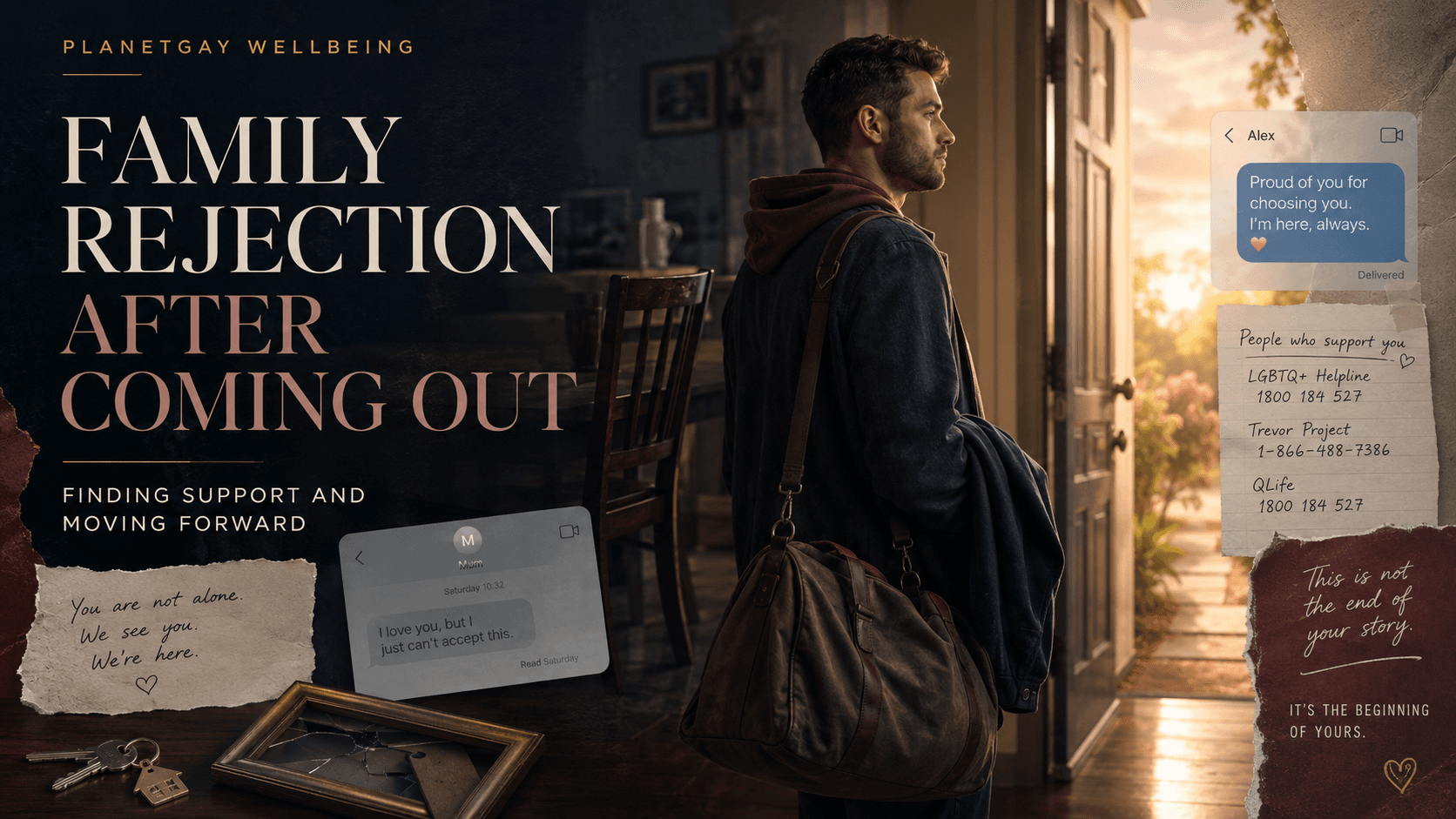
Why this conversation feels different
Coming out to parents is usually the most emotionally loaded version of the coming-out conversation. Parents hold a particular authority — real or internalised — over the sense of whether you are loved, safe and belonging. A bad reaction from a parent can feel like it overrides everything else. A good reaction can feel like an enormous relief.
The stakes are also often practical: housing, financial support, immigration status, family relationships with siblings and extended family all potentially run through parental reaction. That is why preparation — both emotional and practical — matters more here than in most other coming-out conversations.
Before the conversation: practical planning
Before coming out to parents, think through the practical scenario clearly. If the reaction is bad, where will you go? If you are currently living at home, do you have somewhere you could stay? If your parents control your finances, do you have enough independence to manage? If you are a student or dependent on a family health insurance plan, what happens to those arrangements?
These questions are not pessimistic; they are responsible preparation. Most people who come out to parents do not lose their housing or their family — but knowing what you would do if the worst happened allows you to proceed with more clarity and less paralysing fear. LGBTQ+ youth services exist in most countries that provide emergency support for young people who face family rejection, if that is relevant to your situation.
Choosing the timing and setting
Coming out to parents at a time of crisis — during a family argument, at a large gathering, on a significant occasion — tends to merge the coming-out reaction with whatever else is emotionally in the air. Choosing a quiet, private time — when you are alone with one or both parents, when there are no imminent external pressures, and when you have enough time afterward to process whatever happens — gives the conversation a better chance of being what it needs to be.
Some people find it easier to come out to one parent first — usually the one they expect to respond more positively — before the other. This is a legitimate approach, though it can sometimes create complications if parents discuss it before the second conversation happens.
A letter or message is a valid option if a face-to-face conversation feels unmanageable. It gives you control over exactly what you say, means you don't have to manage the visual feedback of their reaction in real time, and gives them time to process before responding.
What to say and what to expect
The opening of the conversation does not have to be complicated. 'There is something I've been wanting to tell you', 'I've been keeping something important from you and I'd like to stop', or simply 'I'm gay' or 'I'm bisexual' are all sufficient openings. What matters is that it is clear, not that it is literary.
After that, you are allowed to let the other person respond and then follow the conversation from there. You don't have to have an answer to every possible question. You don't have to justify your identity. You can say 'I don't know' when you don't know, and 'I need time to think about that' when you need time.
Expect the conversation to feel uneven and incomplete. First conversations rarely resolve everything. Parents often need time to process — to go from a first reaction to a considered one — and the relationship may be in a transitional state for weeks or months after.
Managing difficult reactions
Common reactions that are difficult to handle: silence or visible distress; a focus on religion or morality; questions that feel like interrogations; disbelief ('this is just a phase'); anger; a request that you 'fix' it or keep it secret. Less common but possible: a hostile or threatening reaction.
For reactions that are processing-related — grief, shock, silence, religious difficulty — time often helps more than argument. Pressing a parent to immediately accept something that contradicts a deeply held belief tends to produce entrenchment rather than movement. Giving them time while also not recanting your coming out is usually the most sustainable approach.
Organisations specifically designed to support families through this process — PFLAG in North America and Families and Friends of Gay Men and Lesbians in Australia, for example — can be a useful resource to offer to parents who are struggling. Some parents find it easier to talk to peers than to their own child.
For reactions that are hostile or threatening: prioritise your immediate safety. Know where you can go, and make that move. The conversation can resume later, from a more secure position.
After the conversation
Give yourself time to recover from the conversation, regardless of how it went. Even a positive coming out is emotionally significant. You may feel relief, exhaustion, vulnerability, unexpected grief, or a combination of all of these. Having something concrete planned for afterward — talking to a friend who knows what you've been planning, a long walk, something grounding and familiar — tends to help.
If the reaction was poor, resist the urge to immediately try to fix or re-do the conversation. Give your parents some time while also keeping your own equilibrium. Checking in after a few days — 'I know that was a lot. I'd like to talk again when you're ready' — is often more effective than following up the same day when emotions are still very high.
If the reaction was good, you may still find that the relationship changes in unexpected ways as your parents integrate this knowledge into how they understand you. That is normal and does not indicate a problem with the coming out itself.