There is no correct way to start
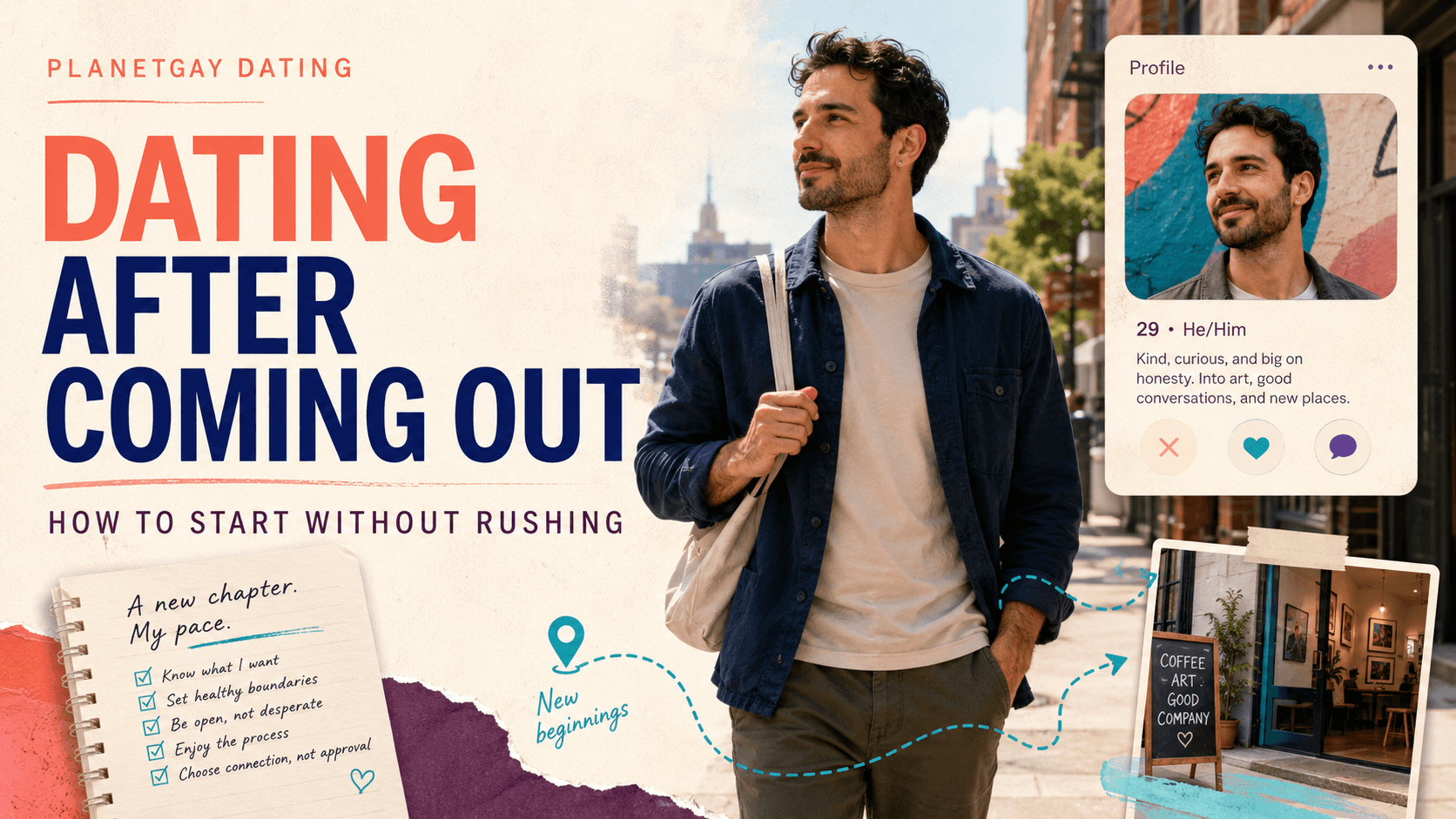
Dating as a gay or bisexual man is not a test with a standard result. Some men start dating in their teens; others first date men in their thirties, forties or later. The timing often has less to do with desire and more to do with safety, geography, family circumstances or how long it took to understand what you wanted. Whatever brought you here, starting later does not mean you have missed anything essential. It means you are starting from where you actually are, which is the only place anyone can start.
The most useful thing you can do before your first date is decide what you want from it. Not in a grand, permanent sense — attraction and preference can shift over time — but in a practical, near-term sense. Are you curious whether you enjoy spending time with men? Are you looking for something longer-term? Are you still working out whether you're gay, bisexual or something else? Each of those starting points leads to a different kind of conversation and a different set of expectations.
How to find someone to date
Dating apps are the most common starting point and can be useful, but they are not the only option and they suit some people better than others. If you decide to try an app, set your profile to reflect what you are actually looking for, not what you think sounds better. Vague profiles attract vague conversations. You do not have to reveal your full identity — a first name and a general sense of what you enjoy is enough to start.
Offline options include LGBTQ+ community groups, sports leagues, volunteering, language exchanges, and events that are explicitly welcoming or that have visible queer membership. The advantage of meeting people in shared activity is that you already have something in common and are not both staring at a screen deciding whether to swipe. The disadvantage is that not every gay or bisexual man in a room is looking to date, and treating social spaces purely as hunting grounds makes them unpleasant for everyone.
If you are not out or are in an area where LGBTQ+ visibility is low, online conversation is often the safest first step.
What a first date actually is
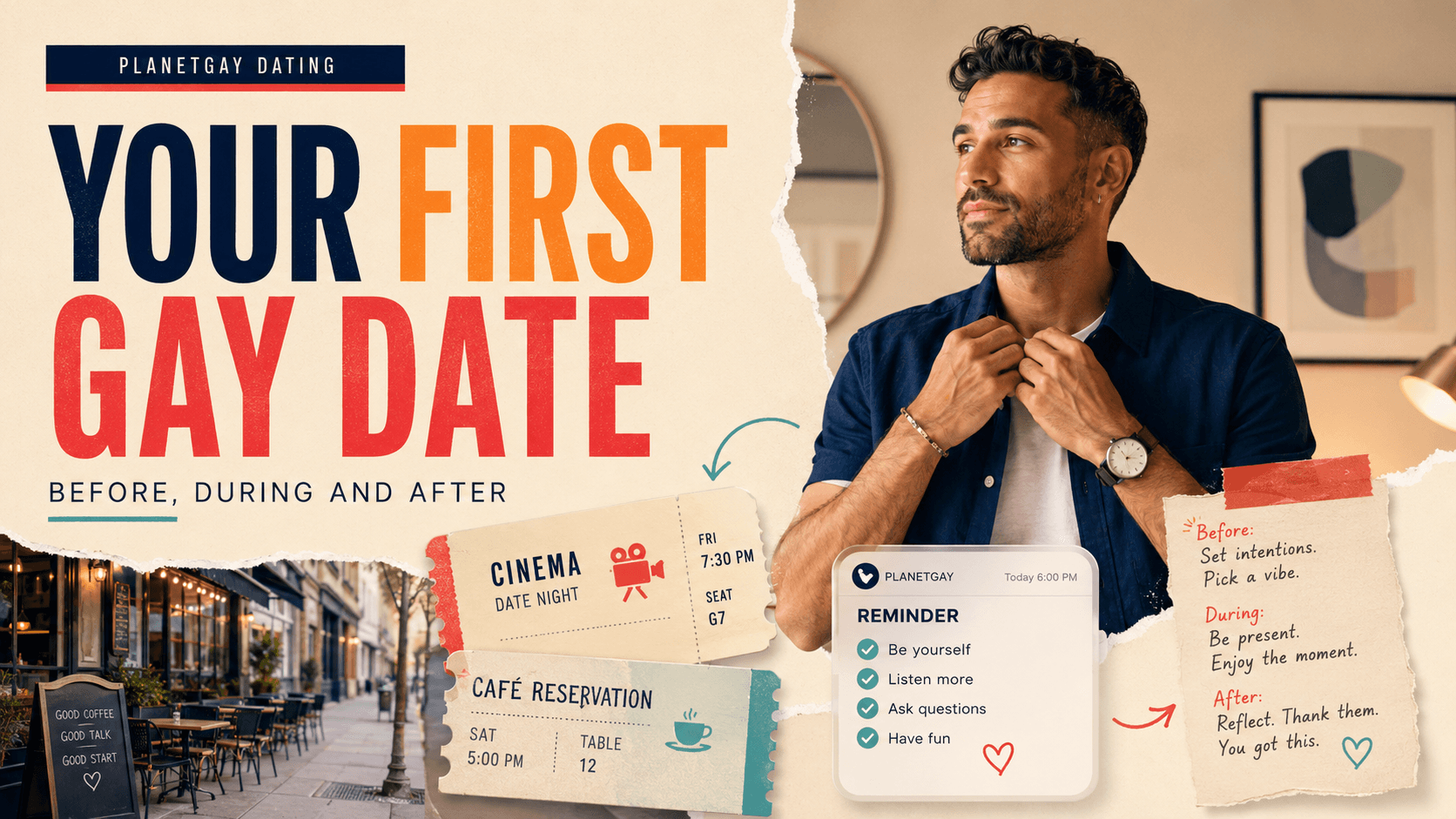
A first date is a conversation with a stranger. That is all it needs to be. The purpose is to find out whether you enjoy being around this person enough to want to continue. It is not a commitment to anything, not a declaration of identity, and not a test of your attractiveness or worthiness.
Keep the plan simple: coffee, a walk, lunch, a casual drink. Something that has a natural duration and a clear exit point. Avoid elaborate or expensive first dates — they raise stakes that do not need to be raised. If the conversation goes well, you can stay longer. If it does not, you both have a reasonable way to leave.
You do not have to share everything about yourself. Some people ask personal questions early; you are allowed to answer briefly and redirect. How out you are, what your family knows, what your romantic history looks like — none of that is owed to a first date.
Nervousness is not a problem to solve
First dates are often nervewracking, and first gay dates can carry additional weight. Some men arrive carrying years of unexpressed longing, a lot of built-up expectation, or worry about what they might discover about themselves. That is a lot to carry into a coffee shop.
Nervousness is normal and, in most cases, the other person is feeling some version of it too. It is not a sign that you are not ready or that this is the wrong situation. What helps more than trying to eliminate nerves is having a concrete plan: you know where you are going, you know roughly how long it might last, and you have thought about one or two things you could talk about.
If the nervousness is strong enough that it is affecting your ability to engage at all — if you find yourself dissociating, shutting down or feeling overwhelmed — that is worth paying attention to. It may be a sign that you need more time, or that talking to someone supportive first would help.
Safety before a first meeting
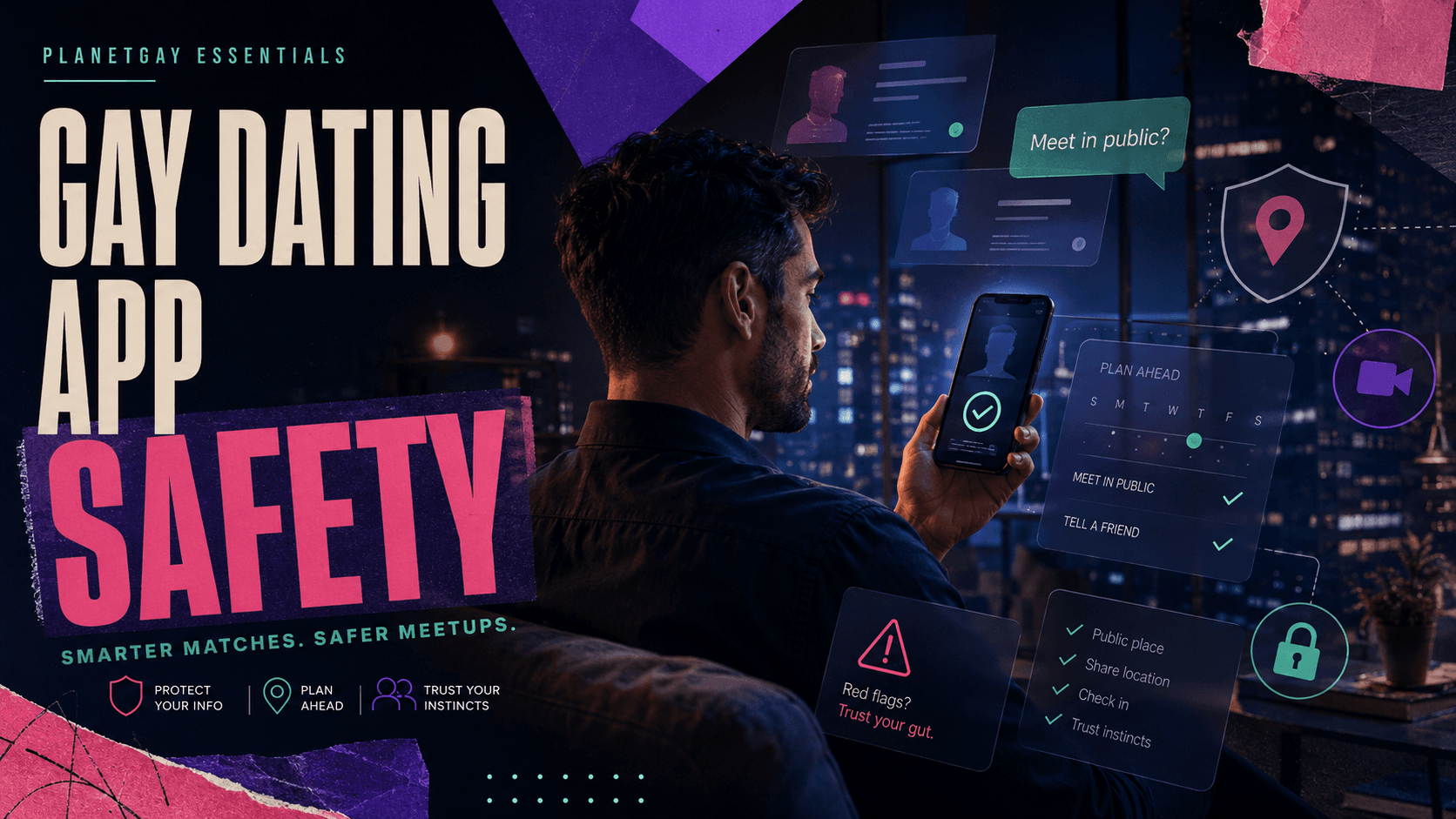
Meeting someone from an app or online for the first time is a first meeting with a stranger, and it makes sense to approach it as such. This is not about distrusting gay men specifically — it is standard practice for any first meeting with someone you have not met through a shared context.
Meet in public. Tell a trusted person where you are going and roughly when you expect to be back, if that is safe for you to do. Check in during or after. Keep your own transport options open rather than relying on the other person to drive you home. You can decline any suggestion that feels uncomfortable without owing an explanation.
If you are not fully out, or if being seen with another man in your area could create problems at home or work, factor that into your choice of location. You are allowed to choose somewhere outside your immediate neighbourhood, or to meet at a time when you are less likely to see people you know.
If there is no chemistry
A date that does not lead to a second date is not a failure. Attraction is not obligatory between two people who seem compatible on paper, and the absence of it does not say anything about your worth or desirability. It just means this particular pairing did not work.
You are not obligated to explain why you do not want to continue. A clear, polite message — 'I enjoyed meeting you but I don't think we're a match' — is enough. You do not owe a detailed reason, and a detailed reason often makes things harder, not easier. Equally, if someone tells you this, try to take it at face value rather than searching for a correctable mistake. Sometimes it is just not a match.
One date that went nowhere is not data about your future. Dating involves meeting a lot of people who are not right for you. That is not a sign that something is wrong — it is how the process works for almost everyone.
What to do if something difficult comes up
Dating can bring up things you were not expecting. You might feel more excited than you anticipated, which can be unsettling if you have been uncertain about your sexuality. You might feel disappointed, sad, or unexpectedly anxious. You might find that the experience makes you want to talk to someone — a friend, a counsellor, or an LGBTQ+ support resource.
All of those reactions are normal. Dating is often emotionally activating, and for men who are new to it or who have kept this part of their life private, the feelings can be intense. Having a plan for after a date — someone to debrief with, or just some time to yourself — is worth building in.
If dating is consistently making you feel worse about yourself rather than better, or if it is stirring up shame that feels unmanageable, consider speaking to a therapist or counsellor, ideally one who is experienced with LGBTQ+ clients. Dating does not have to be a vehicle for working through the most difficult parts of your identity on your own.