Safety starts before the first message
Your profile is public-facing, and it can reveal more than you intend. Before setting one up, think about what you are comfortable with strangers seeing: your face, your neighbourhood, your workplace, your full name. Many men share all of these without thinking — and for many, the risk is low. But if you are not out in your city, at work, or to your family, or if you live somewhere where being identifiably gay carries social or legal risk, the default privacy settings of most apps may not suit your situation.
Keep your employer, exact address and identifiable landmarks out of your profile until you know someone. Use a first name or a partial name if that feels more appropriate. Review which location-permission the app has on your phone — some apps show approximate distance, some show a map pin, and the difference matters.
None of this is about being deceptive. It is about keeping control of your own information at the stage when you are speaking to strangers.
Evaluating a profile before you talk
Dating app profiles vary hugely in how much real information they contain. There is no foolproof method of telling whether a profile is genuine, but there are signals worth noting. Profiles with no face photo (which is a personal choice and can be legitimate, particularly for privacy reasons) are harder to verify. Profiles where the photographs look unusually polished or like stock images, or where the details seem inconsistent, are worth approaching with more care.
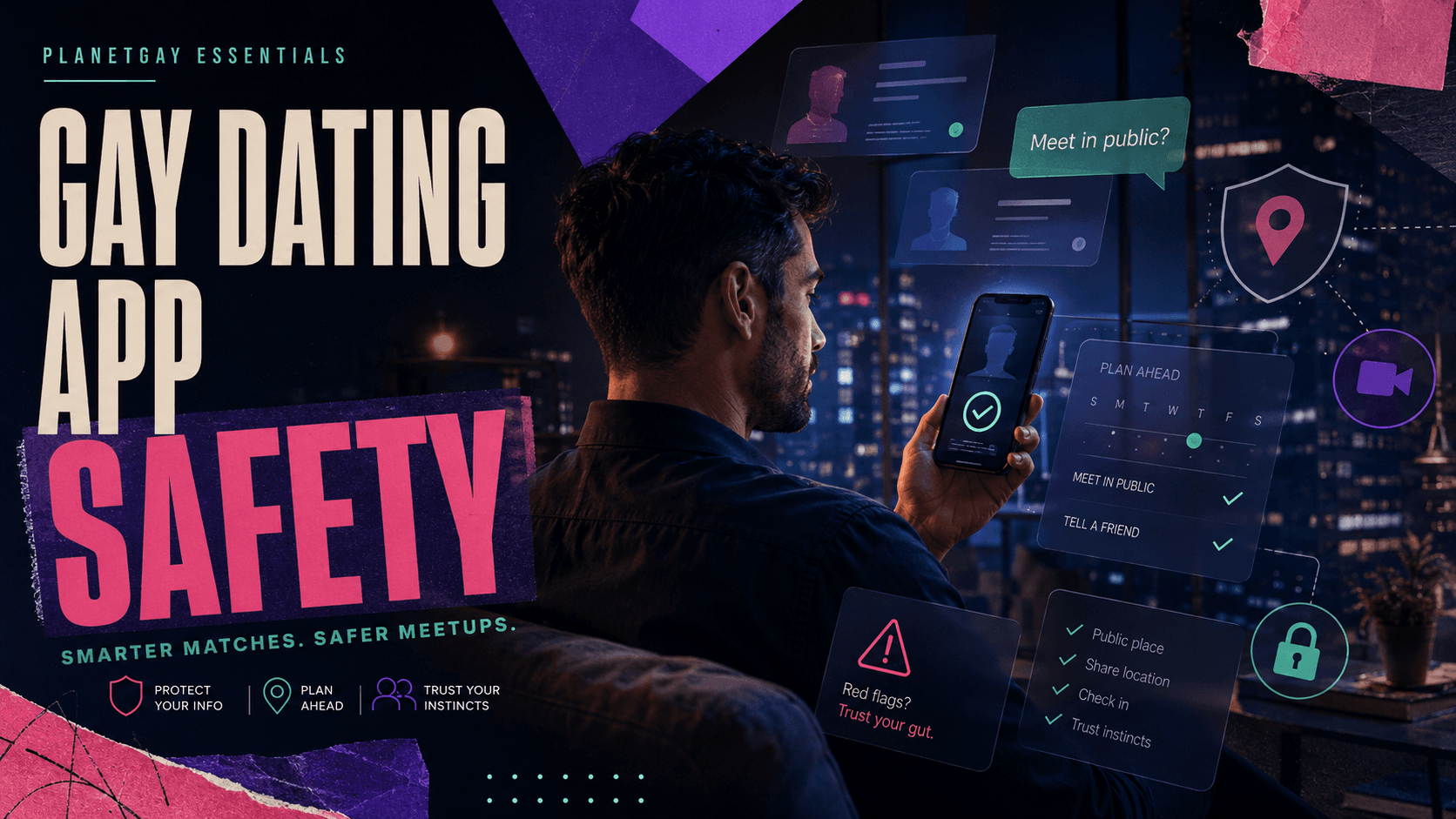
A video call before a first meeting is a low-effort way to confirm that someone is roughly who they say they are. Most genuine people are fine with this; resistance to it — particularly combined with other pressure — is worth taking seriously. You do not need to explain or justify why you want to verify before meeting.
Being cautious is not an insult to the person you're talking to. It is standard practice for anyone meeting people online.
Moving conversations to other platforms
Many dating apps allow reporting and blocking tools that disappear once you move to a messaging platform. When you move a conversation to WhatsApp or iMessage, you lose those protections and share your phone number.
This is not a reason to never exchange numbers, but it is worth being thoughtful about timing. Moving to a different platform during the first few messages — before any in-person meeting or before you have a reasonable sense of who you are talking to — gives up privacy faster than necessary. A first phone call or video call can happen within an app's voice feature, or you can share numbers when you are ready to arrange a meeting.
If someone pushes strongly to move to another platform very early, especially before they've answered basic questions about themselves, that is worth noticing.
First meetings: the practical approach
Meet in public for a first meeting. This applies universally — not specifically to gay dating. A public place with other people around, accessible by your own transport, and where you can leave easily is the right setting.
Tell a trusted person where you are going, who you are meeting (even just a name and app), and roughly when you will be back — if it is safe for you to do so. Some men cannot do this because they are not out to anyone, or because disclosure would create risk. If that is your situation, try to at least share your location via a phone feature with someone who can be trusted, or make arrangements to check in at a set time.
Do not accept drinks you have not seen poured. Do not leave your drink unattended. If at any point the situation feels wrong — the venue has changed from what was agreed, the person's behaviour is significantly different from how they presented online, or you feel pressure you cannot account for — you are allowed to leave. You do not owe an explanation.
Scams and financial pressure
Romance scams are a real and well-documented risk on all dating platforms. Common patterns include: a person whose profile and photographs seem unusually appealing, who builds rapport quickly, who avoids in-person or video contact, and who eventually introduces a financial crisis that requires money from you.
Other patterns include: requests for intimate photographs that may later be used as leverage; pressure to move to private platforms; requests to open financial accounts or accept transfers; and increasingly sophisticated AI-generated or synthetic profiles.
The rule is simple: no money, no account access, no intimate images to someone you have not met in person and do not know well. If someone is applying pressure in any of these directions — especially with a sense of urgency — stop, take a day, and tell someone you trust what is happening.
Legal and government resources on reporting scams include Action Fraud in the UK (www.actionfraud.police.uk) and the Canadian Anti-Fraud Centre (www.antifraudcentre-centreantifraude.ca).
If you are not fully out
Not being out creates specific privacy considerations when using dating apps. Some of the most basic safety information — tell a friend, meet somewhere public — is harder to act on if telling a friend would out you or if being seen in a gay-coded venue could cause problems.
Practical adjustments: turn off the distance display or location features if the app allows it. Meet somewhere that is not associated exclusively with LGBTQ+ culture if that suits your situation. Use a name or initial that gives you some distance from immediate identification. Check in with yourself at the end of a plan — either yourself or a trusted person you can contact once you are safe.
If your privacy constraints are such that safe dating feels almost impossible, it may be worth speaking with an LGBTQ+ support organisation about what options exist in your context before putting yourself in situations where you cannot manage the risk.
Red flags in conversation
A few patterns that are worth taking seriously: someone who presses you to move faster than you are comfortable with — in the relationship, in disclosure, in meeting, in physical contact; someone who becomes angry, guilt-tripping or manipulative when you decline something; someone whose story changes or who avoids direct questions; someone who presents an urgent situation that requires you to act quickly without thinking.
None of these guarantee bad intent. But any of them is a signal to slow down, ask questions, and trust your own judgement. You are allowed to step back from a situation that feels uncomfortable, even if you cannot articulate exactly why.
If you experience harassment, threatening behaviour, blackmail or assault connected to a dating app encounter, report it to the app and to local police. If you are in a country where being gay is illegal, this calculation becomes more complicated, and LGBTQ+ legal support organisations may be a safer first contact.