Legal disclaimer
This article is for general informational purposes only. It is not legal advice. Laws, enforcement practices and social attitudes change; any information in this article may become outdated. Before travelling, check official government travel advisories from your own country's foreign ministry and verify current conditions through authoritative sources. This guide does not claim that any destination is safe for LGBTQ+ travellers. It helps readers ask the right questions and check the right sources.
What LGBTQ+ travel risk actually involves
Travel risk for LGBTQ+ people is not a single variable. It involves at least four distinct dimensions that can point in different directions: the legal framework (whether same-sex relationships are legal, whether there are anti-discrimination protections); the enforcement reality (whether laws are actively enforced and whether that enforcement extends to tourists); public and social attitudes (how visible LGBTQ+ life is and how ordinary people in public spaces respond to it); and personal visibility factors (whether the way you travel, the places you go and the behaviour you engage in increases or reduces your exposure to risk).
A country can have legal protections but high social hostility. A country can have legal prohibition but low practical enforcement against foreign visitors in tourist areas. These distinctions matter for planning, and both simplistic 'safe/unsafe' ratings and naive assumptions that legal equality means social safety can mislead.
Starting with official travel advisories
The most important starting point for LGBTQ+ travel safety research is your own country's official travel advisory for the destination, supplemented by LGBTQ+-specific information where it exists.
The UK Foreign, Commonwealth and Development Office provides country-by-country travel advice that includes sections on LGBTQ+ travel. The US State Department's Country Information pages include LGBTQ+ travel notes for many destinations. The Government of Canada's travel advice includes LGBTQ+ considerations for many countries.
ILGA World's State-Sponsored Homophobia report provides a country-by-country legal overview of laws affecting same-sex relationships globally. The ILGA World database (database.ilga.org) is updated regularly and is the standard reference for legal status.
These sources should be checked directly before travel, not relied on from a cached page in a travel guide — legal situations change, and the PlanetGay content may not reflect the most current position.
Going beyond the law: enforcement and attitudes
Legal status tells you something important but not everything. In some countries where same-sex relationships are legal, entrapment operations, unofficial harassment or blackmail involving police or authorities have been reported. In countries where same-sex activity is technically illegal, enforcement may vary dramatically by city, context, and whether you are a foreign tourist or a local resident.
For current enforcement and social attitudes, community sources are often more useful than legal databases: LGBTQ+ travel forums, recent reports from LGBTQ+ travel organisations, community organisations based in the destination country, and recent reportage from LGBTQ+ media outlets. These sources are more variable in quality than official advisories but more responsive to current conditions.
Where legal status is unclear or enforcement is reported as active, conservative travel behaviour — not being publicly affectionate, not using dating apps in certain locations, not disclosing your sexual orientation to hotel staff or officials — is a practical risk-reduction approach, not a judgment on local culture.
Digital safety while travelling
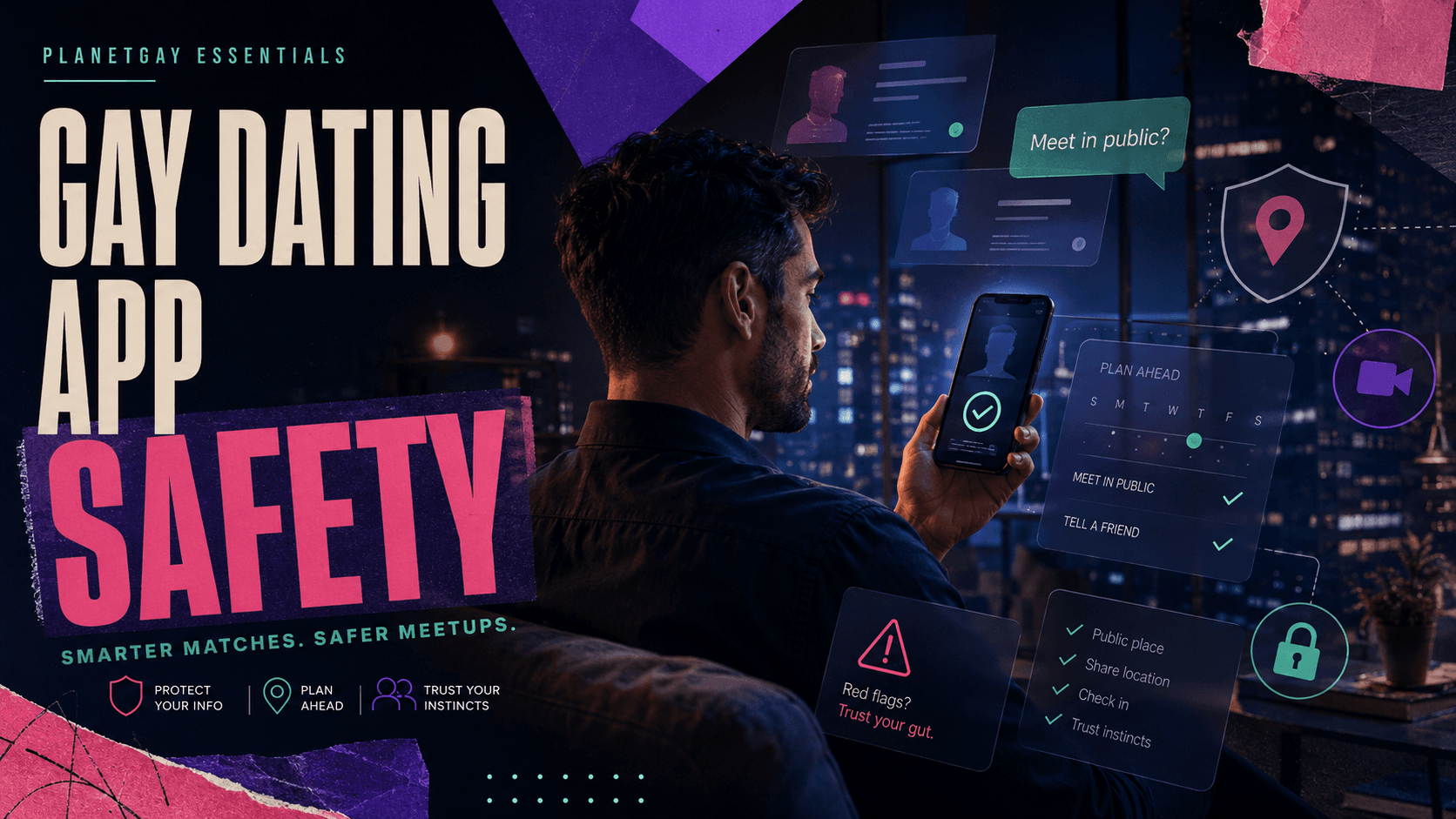
Your digital presence while travelling can create visibility you may not intend. Dating apps with location features are visible in many countries, and in places where same-sex relationships are criminalised or socially dangerous, being identifiable on those apps carries real risk. Entrapment using dating apps has been reported in several countries.
Practical precautions: review which apps you have installed before you travel. Consider using a VPN if you are accessing apps or content from a country with restrictive internet monitoring. Turn off precise location sharing on apps where possible. Be careful about what you share in messages with people you have not met, particularly in locations where you are uncertain of the legal or social context.
If you have photos, conversations or documents on your device that identify your sexuality and that could create risk if your device were inspected at a border, consider what you want to have on the device before you enter.
Accommodation and visibility
Accommodation choices affect your safety and privacy. LGBTQ+-friendly or IGLTA-affiliated (iglta.org) hotels have agreed to a standard of non-discrimination and are more likely to be safe environments for openly LGBTQ+ guests. In countries with complex safety situations, choosing accommodation that has LGBTQ+ references in its own marketing reduces the likelihood of encountering hostile staff or management.
In countries where your safety could be affected by hotel staff knowing you are gay, discretion about your room arrangements — and not displaying partner photographs or other visible LGBTQ+ markers in your room — is a practical risk management choice that is separate from any judgment about whether you should have to make it.
For emergency contacts while travelling, the IGLTA traveller safety resources and your own country's consular services are useful first contacts.
Planning before you go
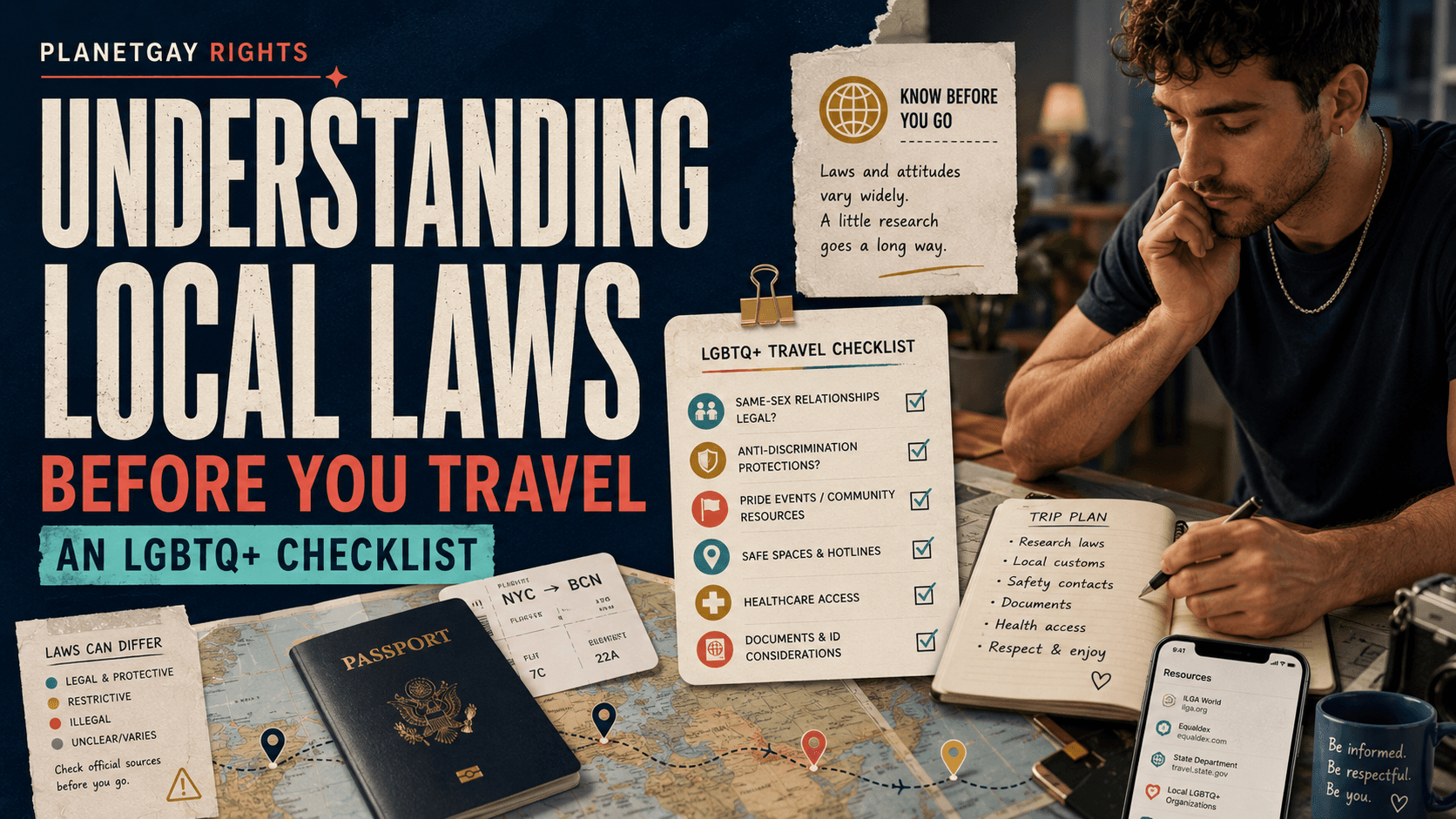
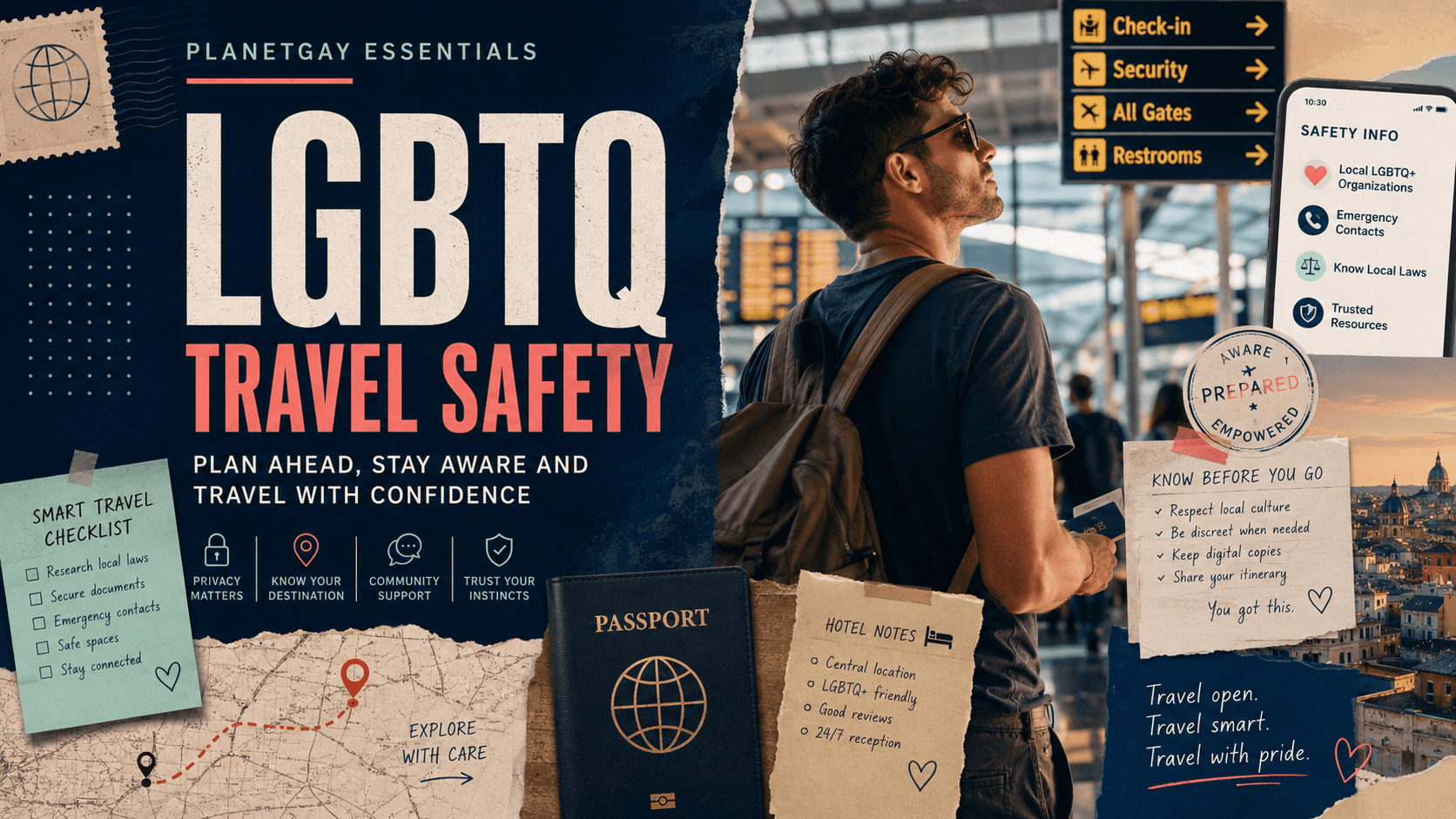
Practical planning before travelling to any destination where LGBTQ+ considerations are relevant: check the official travel advisory and ILGA World legal summary. Research current conditions through LGBTQ+ community sources. Identify the location and contact details of your country's nearest consulate or embassy. Check whether your health insurance covers care in that country. Know the local emergency number and the nearest hospital. If you use dating apps, review their location settings.
For countries with active legal risk, contact LGBTQ+ organisations that work in that region for current conditions before travel — they will have more current information than any published guide.