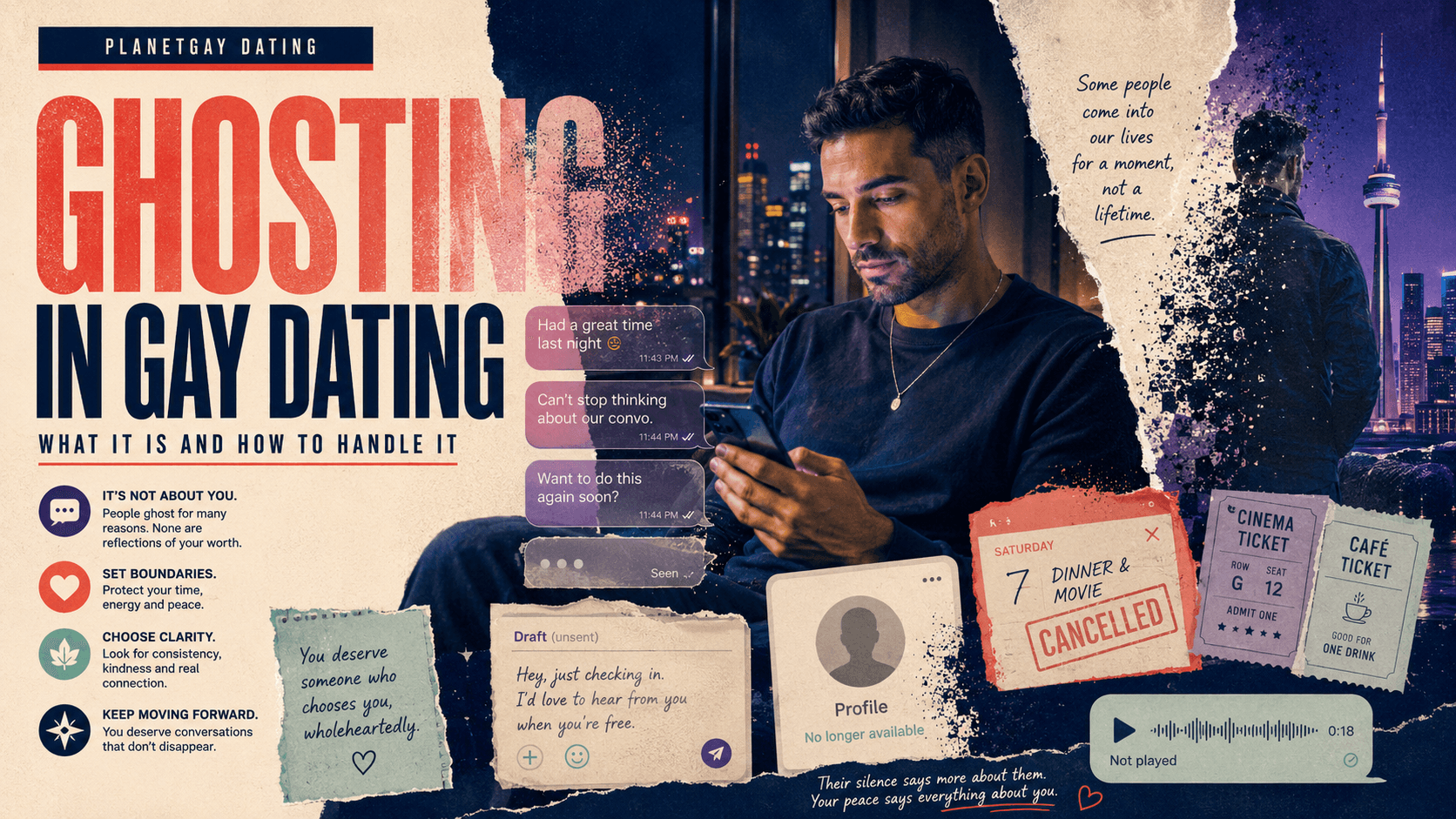
What ghosting is and what it isn't
Ghosting is ending contact without explanation — stopping replies, disappearing from a conversation, or blocking someone without a message. It is common in dating contexts, particularly in app-based dating, and it can happen at any stage: after a few messages, after a date, or after weeks of regular contact.
Ghosting is often described as cruel, but the reality is more complicated. People ghost for a wide range of reasons: conflict avoidance, anxiety about how to end things, a belief that disappearing is kinder than a message the other person might find painful, a life event that genuinely overtook the situation, or simply not knowing what to say. Intent ranges from careless to anxious to defensive, and only occasionally to deliberately hurtful.
The effect on the person being ghosted is real — it creates uncertainty and can amplify rejection. But reading ghosting as a specific commentary on your worth usually imports more meaning than the act contains.
After one or two messages
Being ghosted after one or two brief messages on an app is the most common version and the lowest-stakes one, even if it doesn't feel that way. At the early message stage, there has been no real contact or shared experience — just the beginning of a conversation that didn't develop.
The most useful response is none. You can send one follow-up if you want to, but beyond that, the silence is the answer. Resending, asking what happened, or seeking an explanation from someone who has not replied to a first message is rarely constructive, and may produce a response that is less kind than the silence.
At this stage, the ghost almost certainly reflects the other person's state — their mood, their interest level, competing conversations, or their own anxiety — rather than anything substantive about you.
After a date or sustained contact
Being ghosted after a date or after a few weeks of regular contact is harder. There has been real interaction, possibly real warmth, and the disappearance is more ambiguous. It is natural to want to understand what happened.
One clear follow-up message is reasonable: 'I haven't heard from you in a while — is everything okay?' That gives the other person a low-pressure opening to re-engage or to respond with a brief explanation. If there is still no reply after that, the conversation is over.
Why people ghost at this stage is often the same set of reasons: they do not know how to end things kindly, they are conflict-averse, something in their life shifted, or they started seeing someone else and handled the transition badly. It is very rarely a considered judgement about you.
When you are the one who ghosted
Ghosting someone after a single message is not a serious harm. Ghosting someone after multiple meetings or a sustained emotional connection is harder to justify, and most people who have done it know that it was not the approach they are proud of.
If you have ghosted someone and feel uncomfortable about it, a belated short message — 'I should have said this sooner, but I don't think this is going to work. I'm sorry for disappearing' — is almost always received better than continued silence. It may feel awkward to send, but it closes the loop for the other person.
If you find yourself consistently ghosting rather than having brief, direct conversations about not wanting to continue, that pattern is worth examining. The avoidance that makes ghosting feel easier in the moment tends to cost more in the medium term.
The gay-specific dynamics
Gay and bisexual men who date within relatively small community circles may encounter the person they ghosted again — at a bar, through mutual friends, at a community event. This adds a social dimension that does not exist in the same way in wider heterosexual dating culture.
Small community dynamics are one reason that brief, polite closure messages tend to be worth the awkwardness — the alternative is navigating the same person in a shared space indefinitely. 'I had a nice time but I don't think we're a match' is more comfortable at a future party than a history of silence.
If you have been ghosted by someone in your social circle, the most manageable approach is to treat it with neutrality when you encounter them — a normal greeting, no performance of either warmth or hurt. The situation is already closed; you don't need to reopen it.
When ghosting is the right call
There are situations where ending contact without explanation is genuinely the right choice: when someone has behaved in a threatening, harassing, or pressuring way; when responding would put you at safety risk; when you are being contacted by someone who has already been told you are not interested.
Ghosting as a safety measure is not the same as ghosting as avoidance. If continuing contact feels unsafe or likely to escalate, stopping without explanation is appropriate. Block and report functions within apps exist for exactly this purpose.