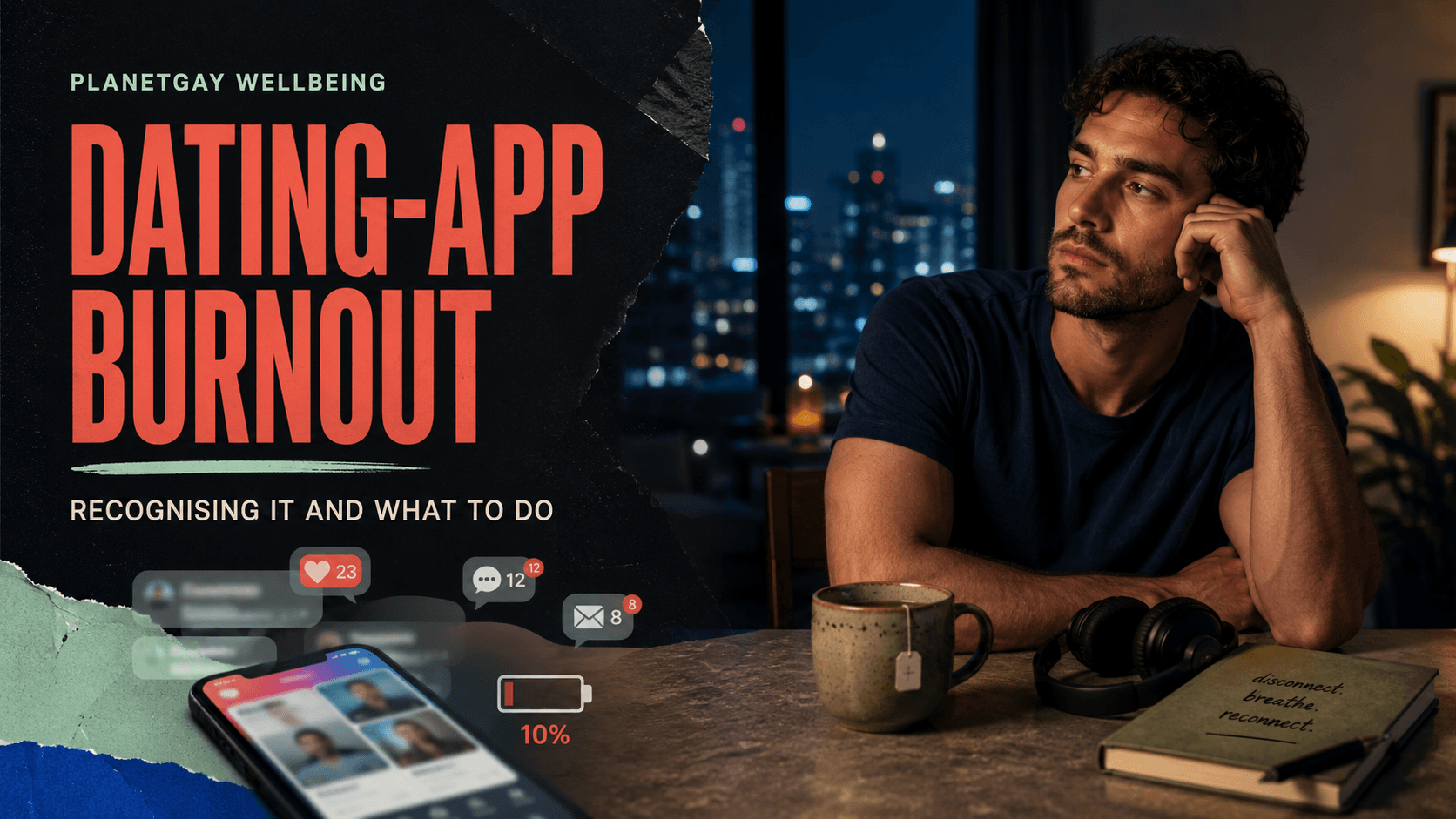
What dating-app burnout actually is
Dating-app burnout is not the same as being tired after a disappointing week. It is a sustained state where the experience of using dating apps has become predominantly negative — draining rather than hopeful, compulsive rather than enjoyable, and oriented more around checking and comparing than genuine engagement.
For many gay and bisexual men, dating apps are the primary context for meeting potential partners, which means that when apps become aversive, so does the whole prospect of dating. That conflation — where apps and dating feel like the same thing — is part of what makes burnout difficult to address. The natural response is to feel stuck: too exhausted to engage with apps, but feeling like quitting means giving up on dating entirely.
The specific dynamics of apps that produce burnout
Dating apps are designed to sustain engagement, not to produce satisfying outcomes. The variable reward model — occasional matches and messages among long periods of nothing — keeps users returning in the same way as other engagement-optimised platforms. This is not unique to gay dating apps; it is the structure of most social-engagement software.
For gay men, additional dynamics can amplify this: body-based filtering that can feel like constant physical evaluation; visible metrics of popularity; comparison with a large pool of users simultaneously; and, in smaller cities or specialist apps, the experience of exhausting a visible local pool fairly quickly. The result can be a state that feels simultaneously compulsive and unrewarding — hard to stop because stopping feels like conceding, hard to continue because continuing produces little satisfaction.
Signs of burnout
Some markers of dating-app burnout: opening the app multiple times a day without intention; feeling worse about yourself after most app sessions; having conversations that don't go anywhere and not caring enough to redirect them; a persistent low-level cynicism about whether anyone on the app is genuine; comparing yourself negatively to other users; feeling like a failure for not converting app activity into dates; or feeling anxious when you haven't checked the app for a while.
None of these on their own necessarily indicate burnout. A cluster of them, sustained over time, suggests that the current relationship with apps is not working.
A break is not giving up
Deleting apps, or pausing them, for a defined period is a legitimate and often useful response to burnout. This is not the same as giving up on dating. It is recognising that a particular tool is currently costing more than it is producing, and taking it offline while the situation changes.
A break is more useful if it is intentional rather than defeated — if you set a rough duration (two weeks, a month), and use the time to reinvest in something: a social activity, a project, a friendship, or simply a period of not trying. Coming back to apps after a deliberate break feels different from coming back after a spiral of frustration. It may produce different behaviour because your relationship to the tool has had space to reset.
Changing how you use apps
If a complete break does not feel like the right option, adjusting the patterns of use may reduce the burnout without removing the tool. Some adjustments that help: limiting app time to once a day at a specific time, rather than checking throughout the day; focusing on depth rather than volume — having a few genuine conversations rather than many shallow ones; turning off notifications so the app doesn't pull you in passively; and being more direct about what you are looking for, which filters the conversations before they start.
Reducing the amount of time a day you spend on any single app from a fluid background habit to a bounded, intentional practice usually changes the experience significantly — even without changing anything about the app itself.
If burnout points to something bigger
For some men, dating-app burnout is the surface expression of something with more weight underneath: sustained loneliness that apps are not meeting, significant anxiety about relationships, shame about gay identity that makes dating feel fraught, or a pattern of using apps for company or validation without that being a satisfying substitute for what is actually needed.
If any of those feel familiar, addressing them directly — through therapy, through community, through honest reflection about what you are actually looking for and why — is likely to be more productive than adjusting your notification settings. Apps are tools. If the problem is not with the tool but with what the tool is being asked to do, the answer is not a better tool.