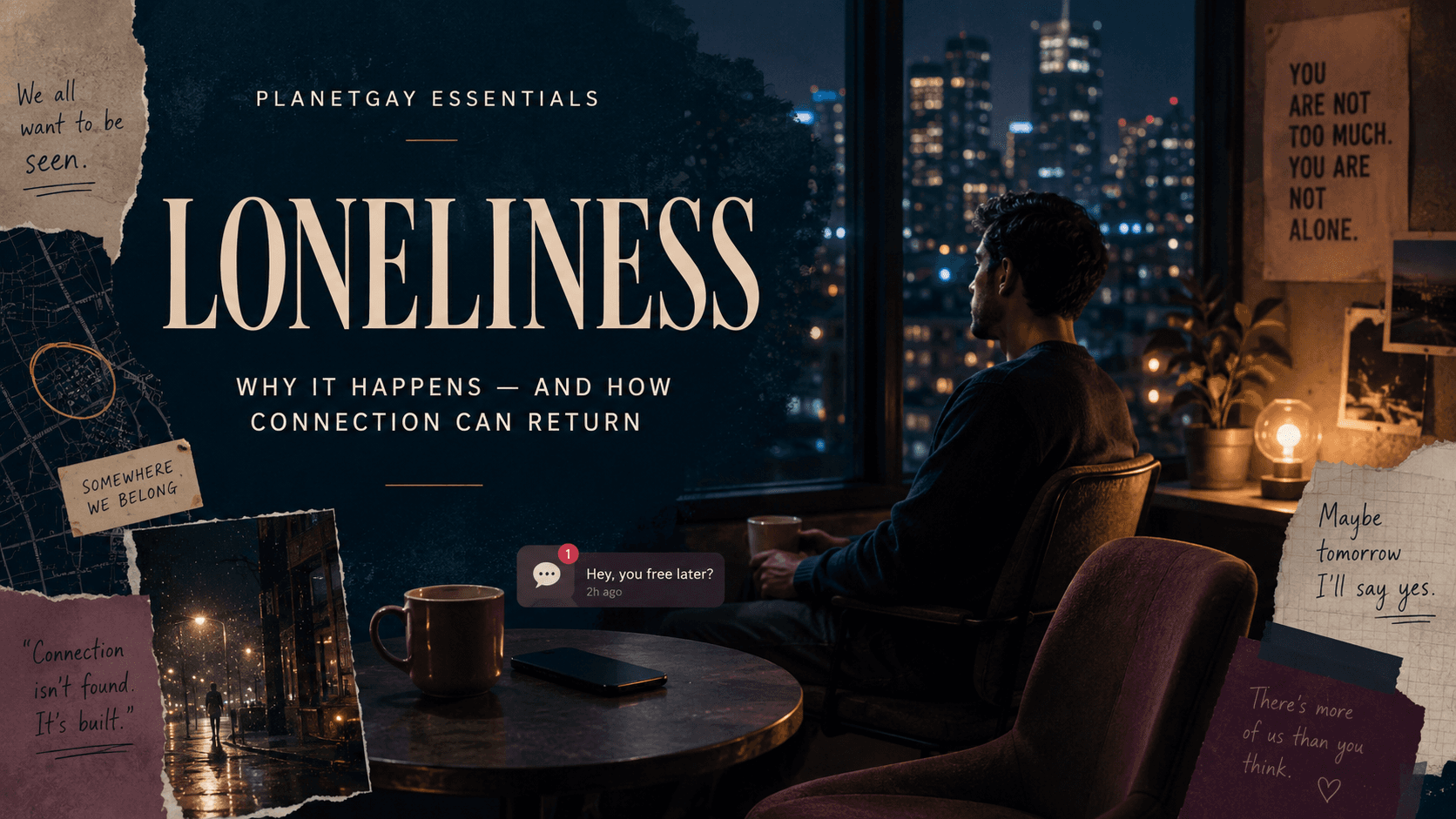
Loneliness in the LGBTQ+ context
Loneliness affects many people across all demographics, but research consistently finds higher rates among LGBTQ+ people than in the general population. Mind, the UK mental health charity, identifies loneliness as a significant factor affecting LGBTQ+ mental health outcomes, and notes that experiences of discrimination, rejection and difference from family and peers contribute to this.
For gay and bisexual men specifically, loneliness often has particular features that are worth naming: the experience of being different from family members or peers in a way that could not be shared openly; years spent without visible models of a life that reflected their own; social and dating patterns that may differ from the mainstream and can feel harder to navigate; and, for some men, the additional isolation of coming out later in life or coming out in contexts where community support was minimal.
Why being around people doesn't always help
Loneliness is not the same as being alone. Many gay and bisexual men experience loneliness while surrounded by people — at family gatherings, in workplaces, in social situations where they cannot fully be themselves. That form of loneliness — the loneliness of being present but masked — is often worse than ordinary solitude because it involves sustained effort to be other than what you are.
This is relevant because standard advice about combating loneliness through social connection may miss the point. If the social connections available to you require you to conceal a significant part of your identity, spending more time in those connections may make the loneliness worse rather than better. What matters is the quality of connection — whether there is someone who knows you, including the parts you cannot show everywhere else.
Loneliness and dating culture
Gay dating culture — particularly in app-based form — can paradoxically increase loneliness. The format of rapid evaluation, shallow first contact, and frequent rejection is not well designed for the kind of genuine connection that alleviates loneliness. Some men find that intensive app use makes them feel simultaneously more visible and more isolated — surrounded by potential but not actually connecting with anyone.
If dating apps are making your sense of isolation worse, reducing or pausing their use is a reasonable response. The goal of alleviating loneliness is better served by a few genuine friendships than by a large volume of shallow app interactions. Identifying and investing in the relationships you already have — friendships, community acquaintances, family members who are supportive — is usually more effective than trying to fill loneliness through new romantic contacts.
When loneliness becomes a mental health concern
Sustained loneliness has real effects on mental and physical health. Mind describes it as a risk factor for depression and anxiety. For gay and bisexual men, loneliness and internalized shame can form a self-reinforcing pattern — shame makes connection feel dangerous, isolation reinforces shame, and the resulting loneliness becomes increasingly difficult to address alone.
If loneliness has become pervasive and sustained — if it is affecting your ability to function, if it is connected to depression or thoughts of self-harm — professional support is worth seeking. A therapist or counsellor experienced with LGBTQ+ clients can work with the specific causes of isolation in this context, rather than with loneliness as a generic problem.
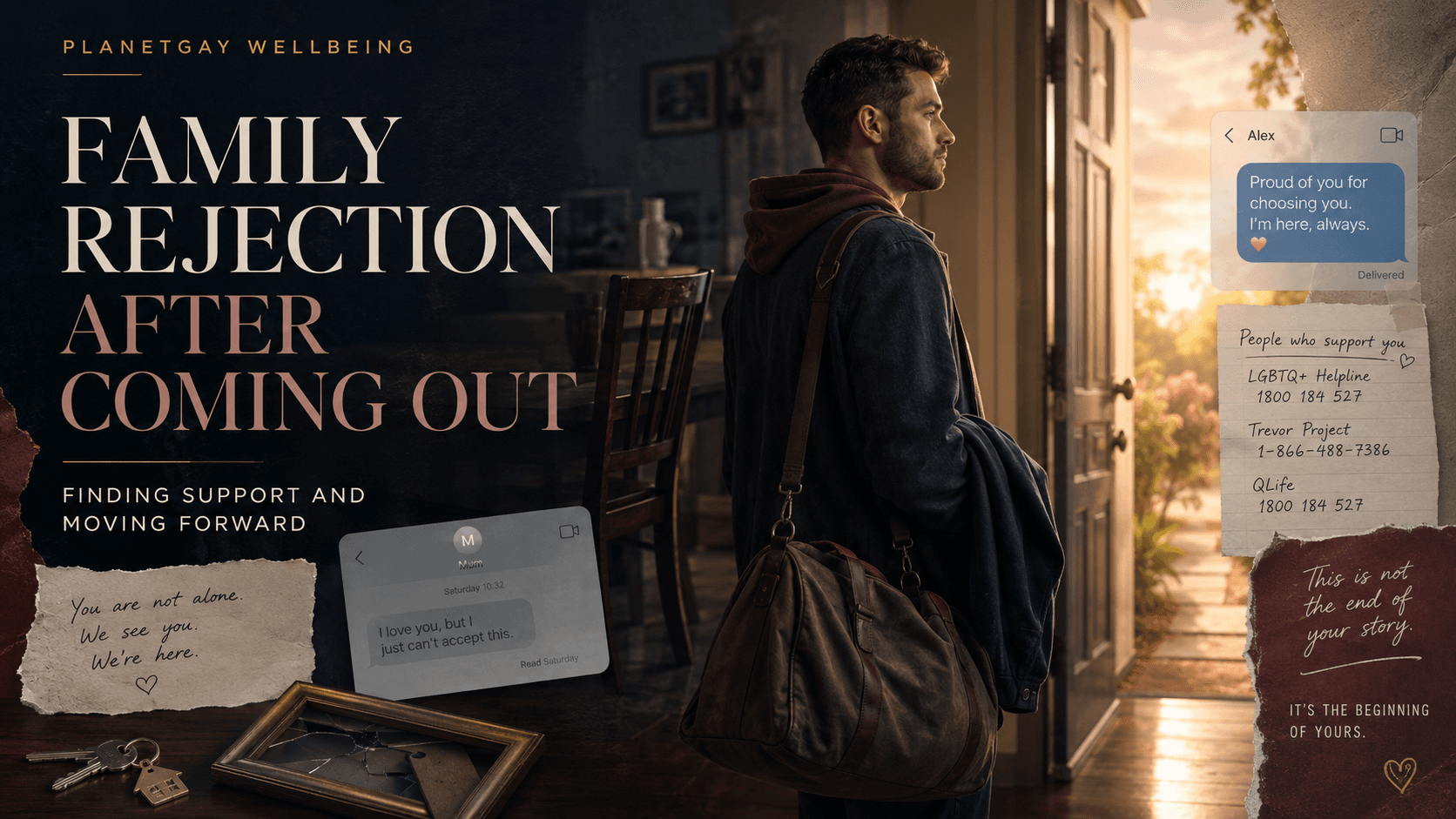
In the UK, the Samaritans operate a free confidential helpline (116 123) for anyone in distress. The Trevor Project in the US provides crisis support for LGBTQ+ young people. If you are in crisis, contact a helpline or emergency service.
What actually helps
The most reliably effective approaches to LGBTQ+ loneliness tend to involve finding at least one or two settings where you can be genuinely known: LGBTQ+ community groups, sports leagues, volunteering, support groups, peer networks, or simply friendships where your full identity is present rather than managed.
The specifics matter less than the authenticity. A book club where you happen to be the only gay person and it is entirely unremarkable is as good as a specifically LGBTQ+ group. A long-standing friendship where you can be honest is more valuable than a lot of social contact where you cannot be.
Building that kind of connection takes time and some deliberate effort. It tends not to happen accidentally. If you are in a situation of significant isolation, identifying one setting where that kind of connection might be possible — and consistently showing up there — is the most practical starting point.

Social isolation and smaller communities
For men in smaller towns, rural areas, or countries where LGBTQ+ community life is less visible, the challenge of finding connection can be structural rather than personal. The community and dating infrastructure that exists in larger cities — community centres, social groups, visible community spaces — simply does not exist everywhere.
In those contexts, online community can provide a genuine alternative: online support groups, community forums, regular video contact with LGBTQ+ friends who live elsewhere. This is not second-best — sustained online relationships can be genuinely supportive and meaningful. For some men in isolated situations, online connection is the most realistic available form of LGBTQ+-specific community.
Over time, where it is financially and practically feasible, some men find that moving to a location with more visible community infrastructure significantly changes their experience of isolation. That is not a requirement, but it is worth naming as a real option.