Why rejection can land harder
Rejection is a normal part of dating for everyone. But for gay and bisexual men, it can sometimes land with more force than the situation warrants. Many men arrive at gay dating having spent years managing secrecy, comparison or limited experience. When that level of investment meets an ordinary no — a silence on an app, a first date that doesn't lead anywhere, a direct message that the feeling isn't mutual — it can feel like confirmation of something older and more painful than the present moment actually contains.
Understanding that this dynamic exists is the first step to working with it. Rejection from one person, in one situation, is not a verdict on your desirability, identity or future. It is specific feedback from a specific interaction, and most of the time it says very little beyond 'this didn't work here, now'.
The difference between the fact and the story
When rejection happens, two things are usually running at the same time: the actual facts of the situation, and the story you are telling yourself about what those facts mean. Separating them is a useful discipline.
The fact might be: this person didn't message back after a date. The story might be: no one will ever be interested in me, or I'm not attractive enough, or something is fundamentally wrong with me. Those are different things. The fact is neutral and specific; the story is a generalisation that connects the present to old fears.
The story is not always wrong — sometimes it contains a fragment of something real. But it is usually disproportionate. Most people who don't reply after a date are busy, uncertain about their own feelings, seeing someone else, or simply not the right match. Very rarely is silence a considered verdict on someone's worth.
App silence and what it usually means
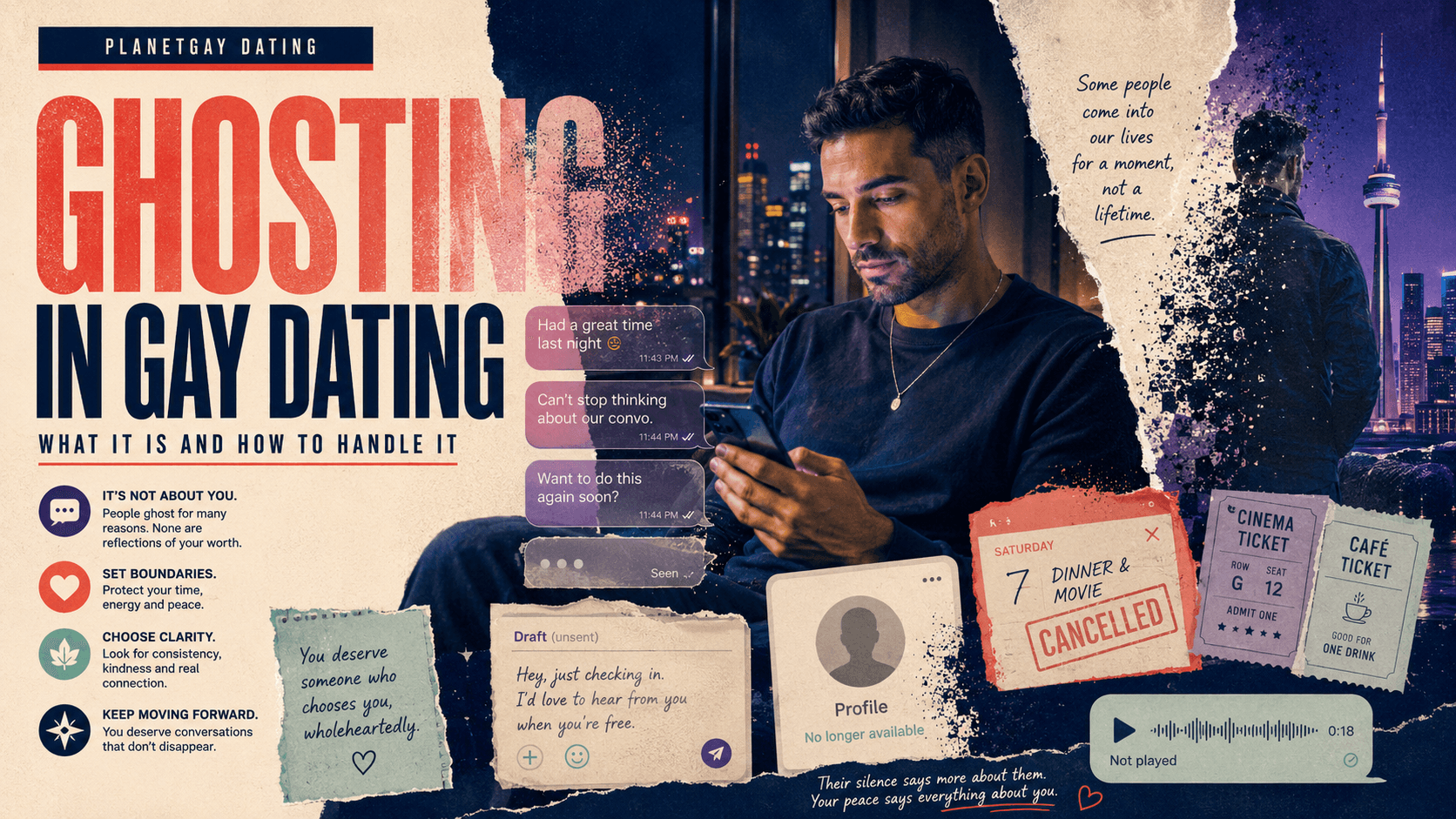
Being unmatched, having messages go unanswered, or noticing that someone has stopped responding is a particularly common form of rejection in app-based dating. It is easy to spend a lot of time trying to decode it. In practice, silence on dating apps has a wide range of causes that have nothing to do with the person being ignored: the other person was already in a conversation that developed faster, they use the app sporadically, they were not ready to meet anyone, they opened your message at a bad moment and forgot to respond, or they liked the profile but not the first conversation.
None of this requires a response from you. Sending a follow-up message is fine once; beyond that, the silence is the answer. Reanalyzing the conversation repeatedly is almost always less useful than closing the conversation and moving on.
When someone tells you directly
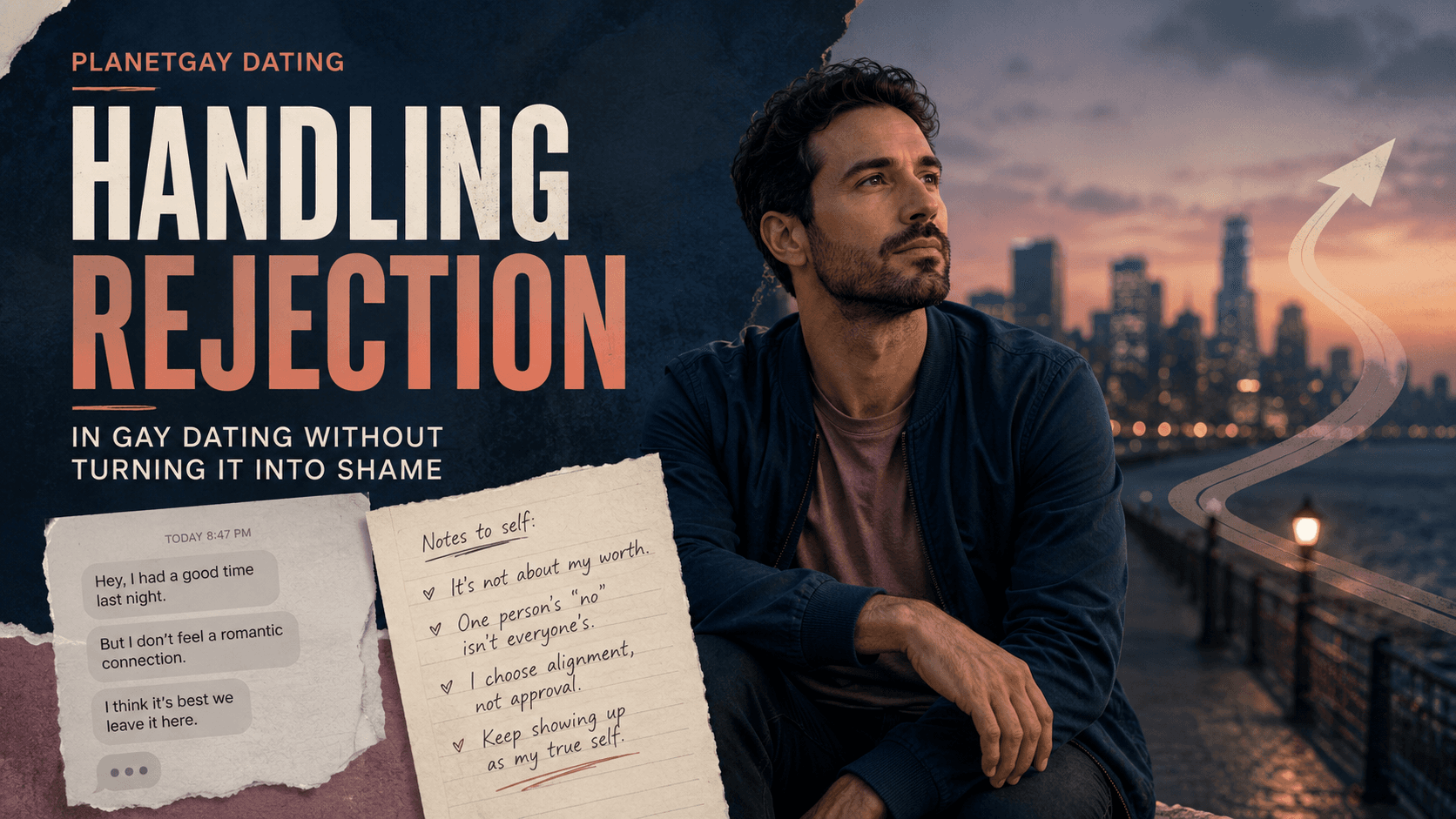
A direct message saying the other person isn't interested — 'I had a nice time but I don't think we're a match', 'I'm not feeling it', 'I've been seeing someone else' — is actually a kindness. It is cleaner than silence and gives you something to work with.
The useful response is a short, polite acknowledgement: 'Thanks for letting me know, I appreciate it.' That closes the interaction with mutual dignity. The less useful response is asking for a detailed explanation, pushing back, or expressing disappointment in a way that makes the other person feel they need to manage your reaction.
You are allowed to feel disappointed. You don't have to perform a reaction in a message that doesn't match how you actually feel. But expressing that disappointment to the person who rejected you tends to make the experience worse for both parties, without producing anything useful.
Rejection and body image
Gay male culture has a complicated relationship with physical appearance, and app-based dating can amplify this. Rejection — particularly from an app where the initial filter is a photo — can land as a direct comment on your body in a way that feels very personal.
The reality is that attraction is idiosyncratic and multidimensional. Someone who swipes left on your profile photograph may have done so for a hundred reasons that have nothing to do with a physical assessment of you. Someone who meets you in person might feel differently than they would from a photograph. Neither of those facts is particularly helpful in the moment of rejection, but they are worth holding onto as context.
If rejection consistently triggers intense shame about your body, or if you find yourself avoiding dating because of fear of physical rejection, that is worth exploring with a therapist or counsellor — not because there is anything wrong with you, but because the pattern suggests something heavier than ordinary dating discouragement.
After rejection: what actually helps
A few things that tend to help after a rejection, in roughly the order that they are useful: stop rereading the conversation or the profile. Talk briefly to someone you trust. Move your body if you can — a walk, a run, something physical and low-stakes. Wait before sending any follow-up message you drafted in the first hour after it happened.
Longer-term, the most robust protection against rejection feeling catastrophic is not reducing how much you care — it is building a life that is not entirely oriented around dating success. When dating is one part of a full life rather than the central measure of your worth, individual rejections have less room to take over. That is not a quick fix, but it is the actual structure that makes dating more sustainable.