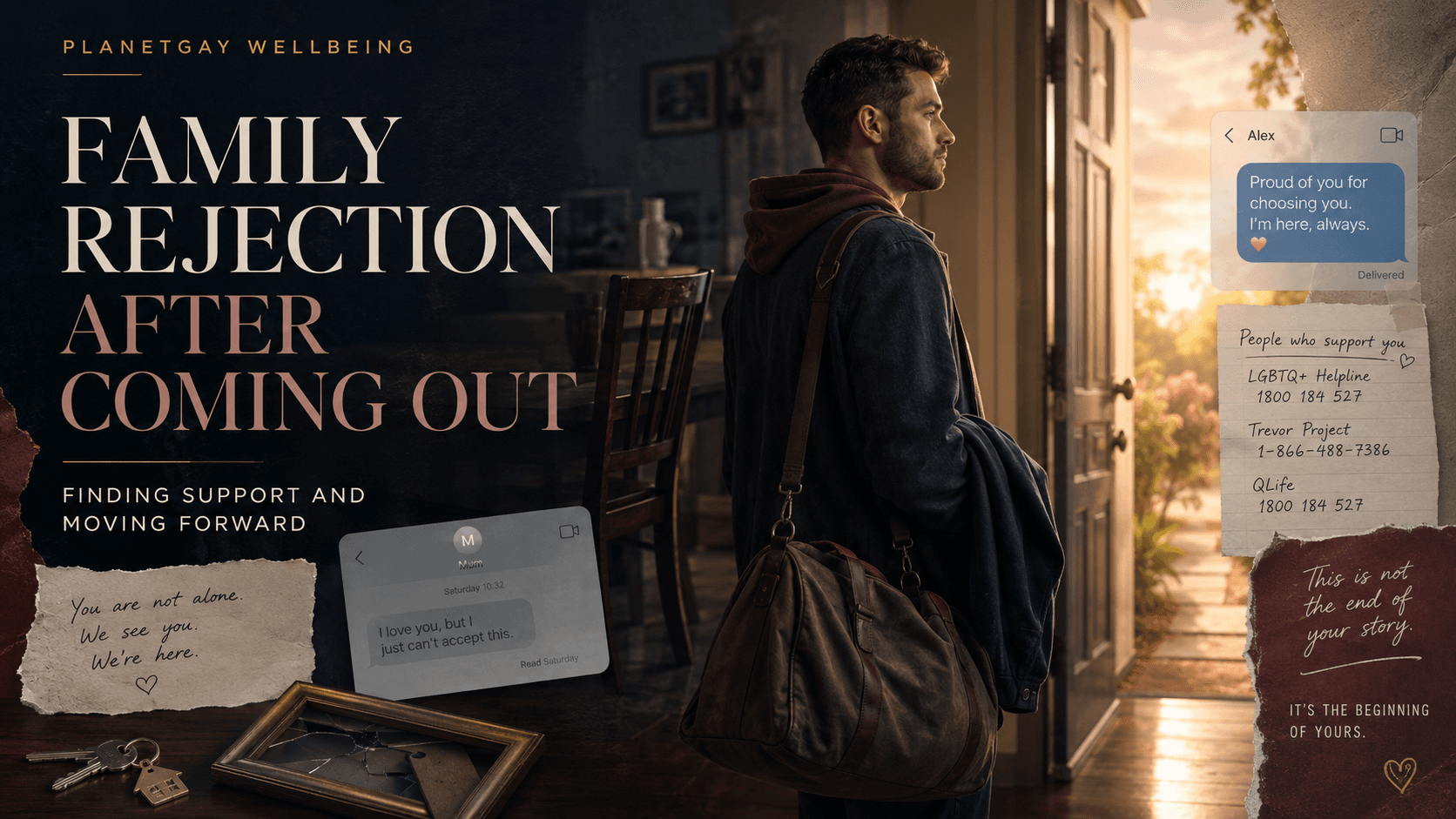
The specific complexity of going home
Visiting family as a gay man who is not fully accepted by those family members involves a particular kind of emotional labour that is different from other difficult social situations. The people you are visiting are not strangers — they are people with a long history, who love you in some sense even if their response to your identity is painful, and whose disapproval carries a different weight than that of colleagues or acquaintances.
The complexity is also that going home requires re-entering a dynamic that you may have worked hard to put distance from. The family home, the family dynamics, the roles and patterns that formed you — these can reassert themselves in ways that are disorienting. Men who feel entirely settled in their adult life outside the family context sometimes find that being home temporarily re-activates a younger, more anxious version of themselves.
Deciding whether to go
The decision to visit an unsupportive family is yours, and it does not need to be the same every year or in every circumstance. Factors worth considering: what do you actually need from the visit, and is there realistic hope of getting it? What does the visit cost you emotionally, and is that cost sustainable? Are there specific family members whose relationship you value enough to sustain through the difficult environment?
For some men, visiting family regularly — despite the difficulty — sustains relationships with siblings, grandparents or other relatives that matter, even if the core dynamic with a parent is painful. For others, regular visits are primarily a form of ongoing self-harm dressed up as family obligation.
You are not required to maintain contact with family members who cause you harm. This is not a widely offered permission in social discourse, but it is a real one. Setting distance — whether time, frequency or the nature of contact — in response to family dynamics that are genuinely damaging is a legitimate form of self-protection, not a failure of loyalty.
Preparing for the visit
Going home with some preparation reduces the chance of being caught off guard in a situation that is already emotionally loaded.
Know your limits in advance: what conversations are you willing to have, and which are you not? Having a pre-decided position on whether you will discuss your relationship, your identity, or specific subjects reduces the in-the-moment decision load. 'I'm not going to discuss that' is a complete response that doesn't require further engagement.
Have an exit available: if staying at the family home, know that you can leave for a walk, a drive, time alone. If the visit is multi-day, having some scheduled time away from the house — meeting a friend, time to yourself — provides a pressure valve. If you are travelling to the family home, knowing you can leave on a different schedule than you originally planned gives you real choice rather than a fixed commitment.
Have someone to contact during the visit: a friend, a partner, someone who knows the situation and can provide support by message or phone if needed. Not being isolated with the family dynamic in your head reduces the load.
Managing the dynamics in the room
Common dynamics in visits to unsupportive families include: the subject of your sexuality or relationship being pointedly ignored; pointed questions or comments designed to revisit the subject in a specific way; pressure toward conversion or change; your partner not being acknowledged or welcomed; or straightforward hostility.
For the pointed-ignore situation: not every visit needs to be a confrontation. Tolerating silence about your identity for a limited time period is sometimes the practical choice when other relationships in the household are worth sustaining.
For comments or questions: having a prepared response rather than improvising is useful. 'I'm not going to get into that today' or 'I think we've covered that' — said calmly and without aggression — signals that the subject is not open for negotiation without escalating the situation.
For hostility: knowing your exit in advance is more useful than trying to resolve hostility in the moment. Genuine hostility during a visit is a signal that the current form of the visit isn't working and may need to change.
After the visit
Many men find that the emotional processing of a difficult family visit happens mostly afterward — a day or two after the drive or flight home, the feelings that were held during the visit come forward. Feeling low, irritable, flat or sad after a family visit is a normal response to a stressful situation, not a sign that something is wrong.
Giving yourself time and space after the visit — not immediately back to a full schedule, some recovery time — is practical. Talking it through with someone who knows the situation and understands the context — a friend, a partner, a therapist — can help process it rather than just carrying it.
If you regularly return from family visits significantly worse than when you arrived, and that pattern does not improve with preparation, that is information about whether the current form and frequency of visits is sustainable.
When the family situation is not static
Families change over time. Family members who were hostile when you first came out sometimes shift over years — through exposure, through other life events, through the influence of other family members, through ageing. The research on this (particularly the Family Acceptance Project at San Francisco State University) suggests that even partial, gradual shifts in family acceptance significantly improve outcomes for LGBTQ+ people.
Holding some openness to change — without making your wellbeing contingent on change that may not come — is a difficult balance. What tends to help is investing in your own life outside the family dynamic so that progress or lack of progress in family relationships does not determine your overall sense of stability and wellbeing. The goal is not to be indifferent to family — that is not realistic — but to be grounded enough that the family situation is not the primary determining factor in your wellbeing.