Legal disclaimer
This article is general informational content only. It is not legal advice. While Canada has strong federal LGBTQ+ protections, specific legal situations — employment discrimination, hate crimes, provincial human rights processes — require advice from a qualified Canadian legal professional. Laws can also change; this guide reflects conditions as understood at the time of writing and may not reflect later changes.
Legal status and rights
Canada has comprehensive federal protections for LGBTQ+ people across several areas. Same-sex marriage has been legal across Canada since 2005, following the Civil Marriage Act. Sexual orientation has been a protected characteristic under the Canadian Human Rights Act since 1996; gender identity and gender expression were added in 2017. In 2022, Canada enacted legislation prohibiting conversion therapy — any practice that attempts to change or suppress a person's sexual orientation or gender identity.
Provincial human rights codes also protect against discrimination on the basis of sexual orientation in employment, housing and services across all provinces and territories.
For current authoritative information on Canadian LGBTQ+ rights, the Government of Canada's 2SLGBTQI+ resources (canada.ca/en/public-health/topics/2SLGBTQI.html) and the Canadian Human Rights Commission (chrc-ccdp.gc.ca) provide official guidance.
Major LGBTQ+ cities
Canada's largest LGBTQ+ communities are concentrated in a handful of cities:
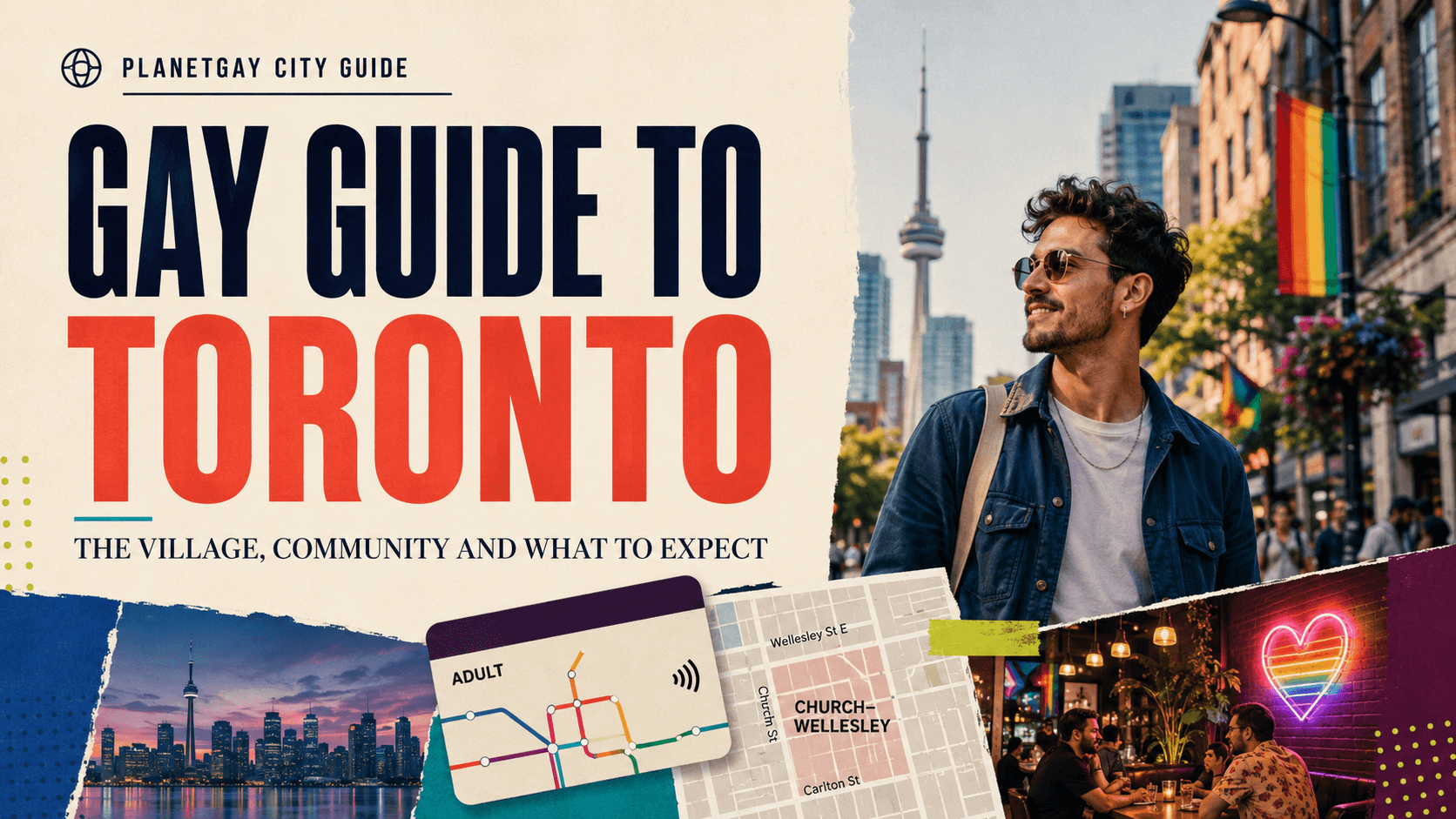
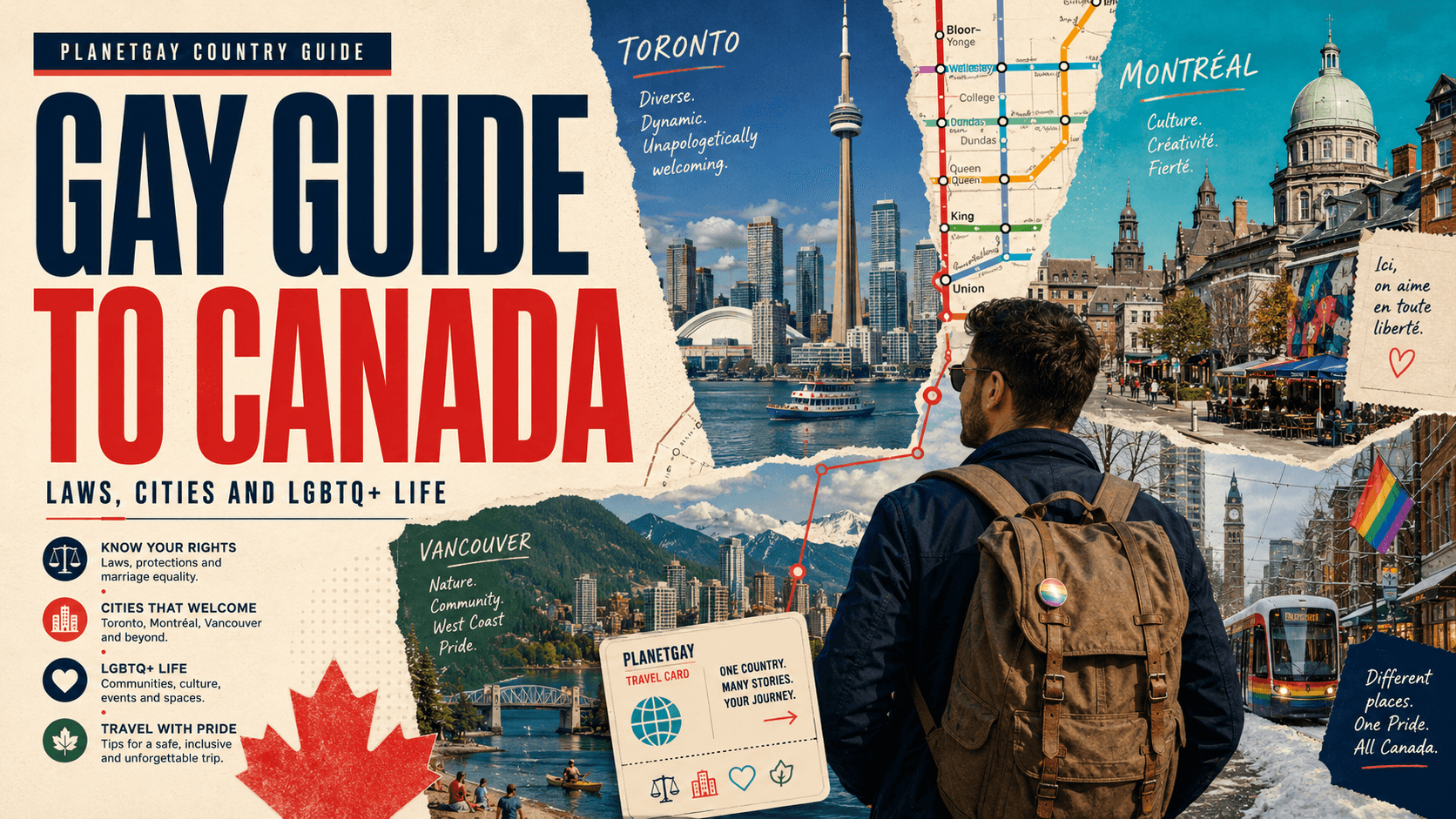
**Toronto** has one of North America's largest and most visible gay communities, centred around the Church and Wellesley neighbourhood (commonly called 'the Village'). Church Street has bars, community organisations and retail, though the area has evolved considerably over the past decade as LGBTQ+ life has dispersed across the city. Pride Toronto is one of the largest Pride events in the world. Toronto is also home to the 519 Community Centre, which provides social services and community programming for LGBTQ+ people.
**Vancouver** has a historically significant LGBTQ+ community in the Davie Street area ('Davie Village') in the West End neighbourhood. The community has also dispersed across the broader city. Vancouver Pride draws hundreds of thousands of participants.
**Montreal** has a distinct LGBTQ+ culture with a French-language community dimension. The Village (Le Village) runs along Sainte-Catherine Street East and remains one of the most active LGBTQ+ neighbourhoods in North America. Montreal Pride is a major event. The city is often noted for a social culture that is somewhat more relaxed about public displays of affection than English-Canadian cities.
**Ottawa** has a smaller but visible LGBTQ+ community in the Centretown area. As the national capital, Ottawa has LGBTQ+ federal government employee networks and community organisations. Capital Pride takes place in August.
**Calgary and Edmonton** have smaller but active LGBTQ+ communities in a more conservative provincial context. Both cities have Pride events and community organisations; LGBTQ+ life is concentrated in specific venues and community spaces rather than a defined neighbourhood.
Practical daily life
In Canada's major cities — Toronto, Vancouver, Montreal, Ottawa, Calgary, Edmonton — same-sex couples can generally expect to move through daily life without significant incident. Public displays of affection are not unusual in urban environments, and LGBTQ+ life is visible and public in the major cities.
In smaller cities, rural communities and some religious or culturally conservative communities, the practical experience may differ. Social attitudes are more varied outside the major metropolitan areas, and while legal protections apply nationwide, the degree to which LGBTQ+ life is publicly visible and normalised varies considerably by context.
Indigenous Two-Spirit identities are part of the LGBTQ+ landscape in Canada, and the term 2SLGBTQI+ (which places Two-Spirit first) is the government-preferred terminology in Canada, reflecting this specific national context.
Healthcare
Canada's publicly funded provincial health systems (with variation by province) provide access to sexual health services, HIV care, PrEP (though coverage varies by province and drug plan), and mental health services. The quality and accessibility of LGBTQ+-affirming healthcare varies significantly by city and region.
In major cities, community health centres with specific LGBTQ+ health services exist. In Toronto, the Hassle Free Clinic and the 519 Community Centre's health connections provide sexual health services oriented to LGBTQ+ clients. In Vancouver, the Community Health Centres operate LGBTQ+-focused services.
For up-to-date information on PrEP coverage by province and LGBTQ+ health services, the CATIE organisation (catie.ca) provides Canadian HIV and sexual health information aimed at both professionals and community members.
Community and organisations
Canada has a well-established network of LGBTQ+ organisations at federal, provincial and community levels. Egale Canada (egale.ca) is the national LGBTQ+ rights organisation, tracking legislation, conducting research and providing advocacy. Rainbow Health Ontario and similar provincial bodies focus on health access.
For anyone relocating to Canada or moving within Canada, major cities have LGBTQ+ newcomer services and settlement organisations — particularly Toronto, where LGBTQ+ newcomers from countries with greater legal risk may have specific support needs.
The 519 Community Centre in Toronto (the519.org) is one of the most comprehensive LGBTQ+ community institutions in North America and maintains a current directory of community resources.