The question and the honest answer
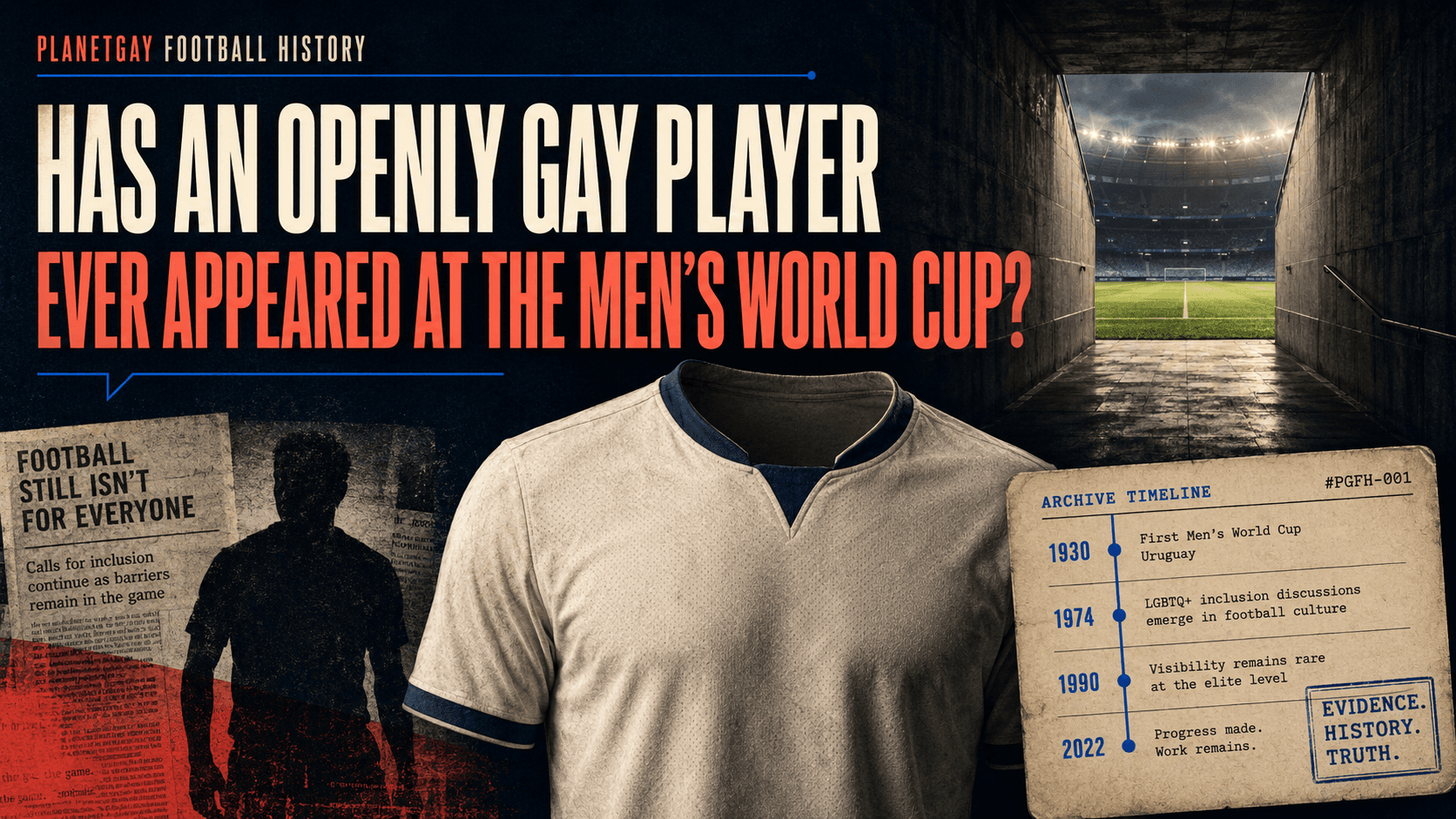
The most straightforward version of the question is this: has any player who was openly gay at the time of the tournament ever appeared in the men's FIFA World Cup?
Based on all available verified evidence, the answer is no. No player who was publicly out as gay or bisexual at the time they participated in the men's World Cup has been confirmed. This does not mean no gay or bisexual players have ever competed — the closeted players who have subsequently come out, or whose stories remain private, cannot be enumerated. What can be stated is that no openly gay player has been publicly identified as having played in the tournament at the time of their participation.
This matters because honesty about the historical record is more useful than speculation. Lists of 'rumoured' gay World Cup players, or suggestions that widely known players 'might be' gay based on private life details or social media patterns, are not editorial. They are potentially harmful to the individuals involved and misleading to readers.
How men's professional football compares to other sports
Men's professional football has a specific cultural dynamic that distinguishes it from most other sports when it comes to LGBTQ+ visibility. In professional rugby, swimming, athletics, cycling and women's football, openly LGBTQ+ athletes have competed at the highest levels of international competition — including the Olympics — for years. The contrast with men's club and international football is stark and often noted.
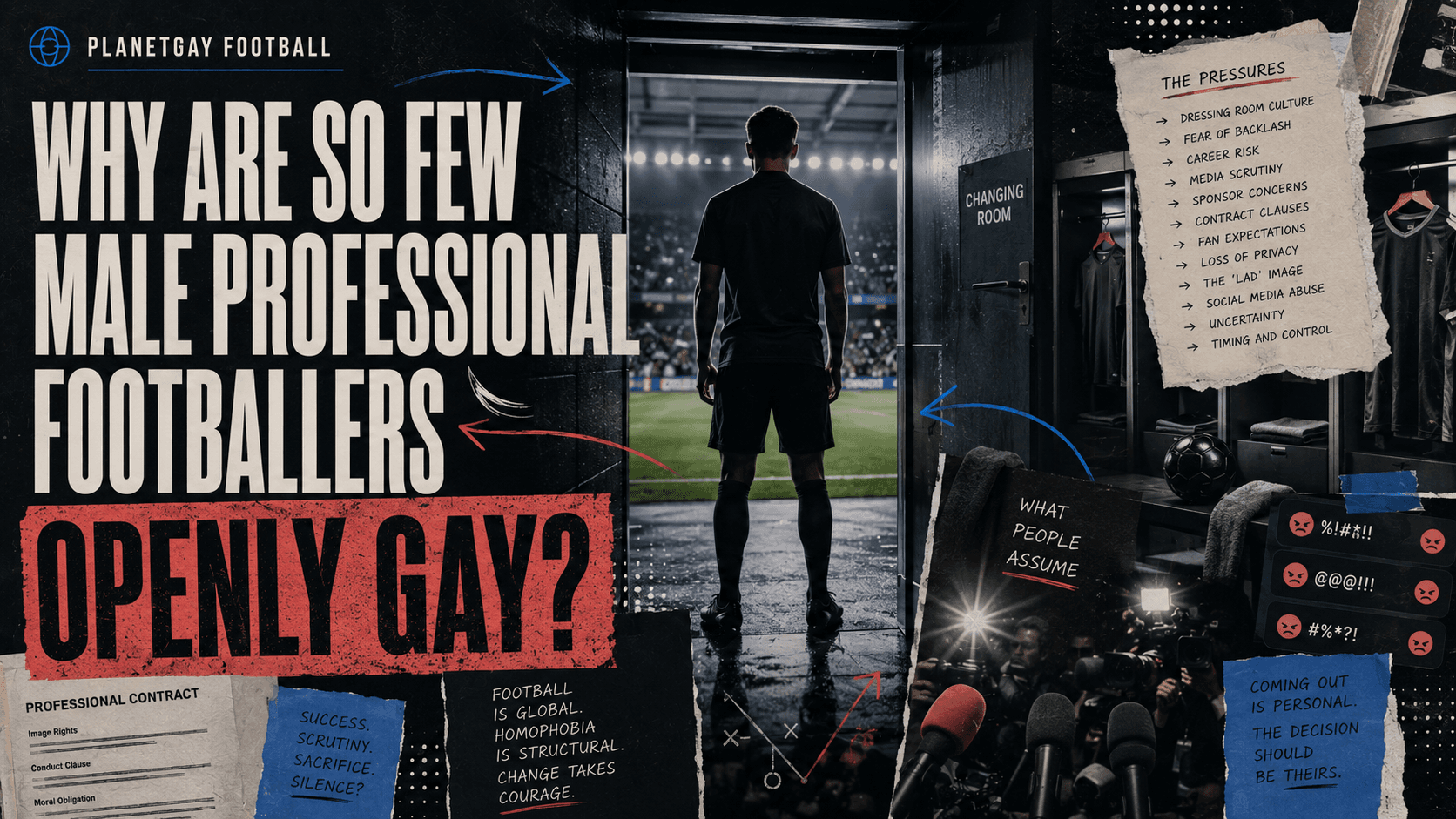
A 2022 analysis by Football v Homophobia, a UK-based campaign organisation working on LGBTQ+ inclusion in football, found that the culture of dressing rooms, fan behaviour, media treatment and financial exposure creates a specific set of barriers that are different in kind from those in many other professional sports. The organisation works directly with clubs, governing bodies and players on inclusion and has documented these barriers in detail.
In women's football, the situation is markedly different. Openly gay and bisexual women have competed at Women's World Cups, including some of the most prominent players in the sport. The contrast is sometimes used as evidence that football itself is not the barrier — rather, the specific culture of men's professional football at elite level is.
Players who came out after their careers
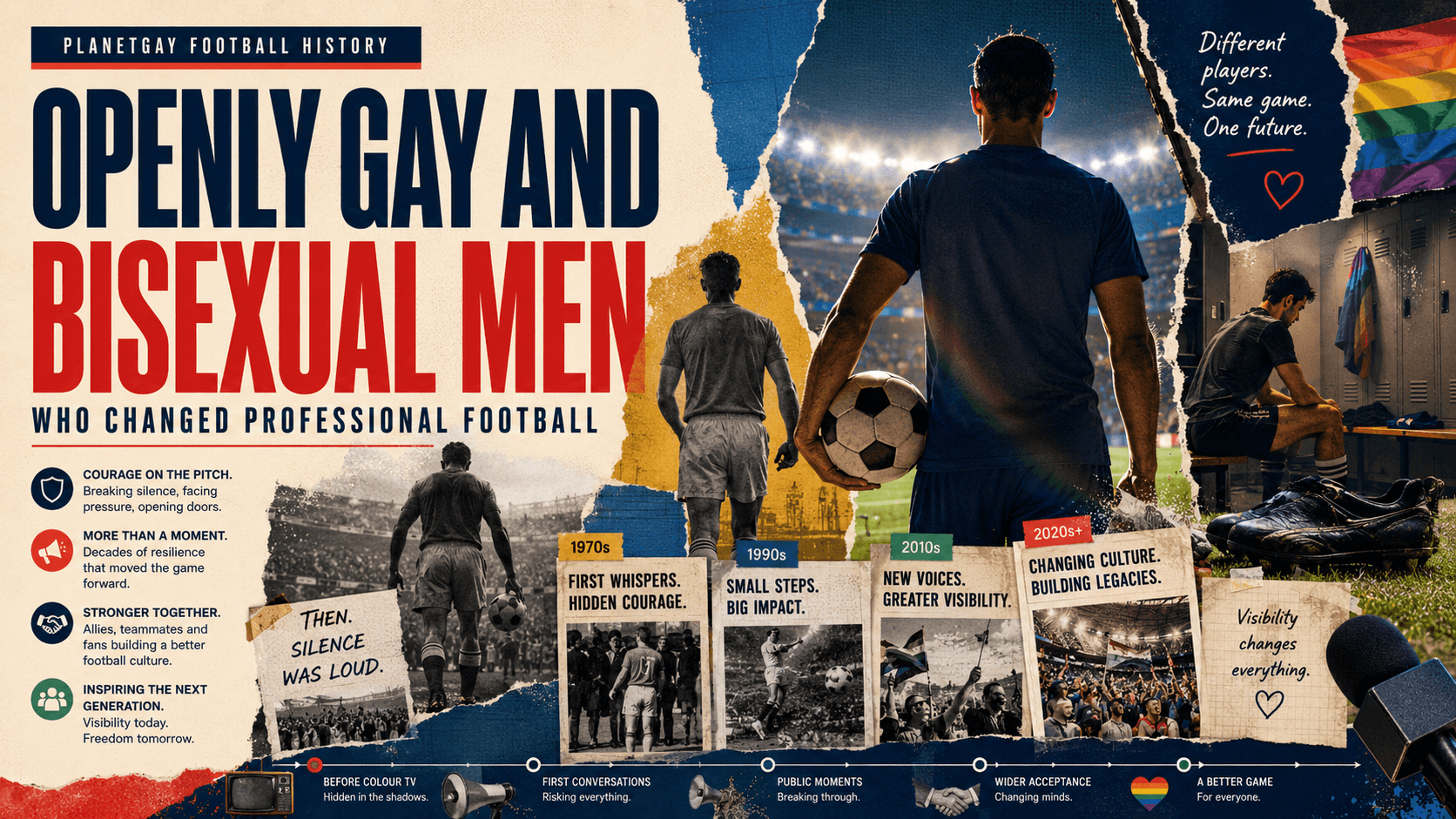
Several men who played professional football at high levels have come out publicly after their careers ended. Thomas Hitzlsperger, who played for Germany and made 52 international appearances, came out as gay in January 2014, several months after retiring from international football. He subsequently became an important public voice on LGBTQ+ inclusion in the sport.
Hitzlsperger has been direct about why he did not come out while playing: the environment in professional football at elite level made him believe disclosure would affect his career and his relationships within the sport. He has spoken in support of current players and has worked in football administration. His career included playing in Germany, England and Italy.
Justin Fashanu, who came out publicly in 1990 and was the first professional footballer in England to do so, represents an older and tragic chapter. Fashanu had been the first Black British footballer sold for £1 million; his coming out was met with widespread hostility in football and in the press, including from his brother John. Fashanu died in 1998. His story has been told in documentaries and is regularly cited in discussions of LGBTQ+ inclusion in football as an illustration of the climate that existed — and, critics argue, continues to shape decisions about disclosure.
Players currently active who are openly gay
Several active professional players have come out publicly in recent years, representing a meaningful shift from previous decades. None of them is currently in a national squad participating in the 2026 World Cup, based on verified squad information at the time of writing.
Jake Daniels came out in May 2022 while playing for Blackpool in England. He was 17 at the time and is the first active professional male footballer in England to come out since Fashanu in 1990. Daniels has spoken publicly about his reasons for coming out and has received widespread public support, though he has also spoken about the ongoing challenges of being openly gay in men's professional football. He plays at Championship level.
Josh Cavallo, an Australian professional playing in the A-League for Adelaide United, came out in October 2021. Cavallo was the first openly gay active men's professional footballer in a top-division league globally at the time. Australia did not qualify for the 2026 World Cup.
Zander Murray, a Scottish footballer, came out in 2022. He plays in Scotland's lower professional leagues.
Collin Martin, an American midfielder, came out in 2021 while playing in Major League Soccer, making him the first active MLS player to come out. He has not been included in the 2026 US World Cup squad.
Anton Hysén, son of Swedish football legend Glenn Hysén, came out in 2011. He played at a professional level in Sweden.
Why speculation is harmful
The absence of openly gay players at the men's World Cup is sometimes discussed alongside speculation about closeted players — players who might be gay based on relationship patterns, appearance, social media activity or anonymous claims. This speculation appears in tabloids, fan forums and social media.
The harm in this is straightforward: outing someone against their will is a violation regardless of their public profile. A professional footballer is a public figure in his sporting career; that does not mean his private life, including his sexuality, is public. The harm of forced or premature disclosure is well-documented: it removes the person's agency over a fundamental aspect of their identity and can affect their relationships, their mental health, their safety and their careers in contexts where being openly gay still carries real risk.
There is no 'rumoured gay World Cup player' article on this site, and there will not be one. The question this article answers is a legitimate historical one, and the honest answer serves readers better than speculation does.
Institutional progress and ongoing limits
FIFA has taken steps on inclusion that would have seemed unlikely twenty years ago. FIFA's diversity and inclusion policy includes sexual orientation; the 2026 World Cup is the first hosted across three countries (United States, Canada, Mexico), all of which have nationwide legal protection for same-sex relationships. The tournament's governing documentation references anti-discrimination principles.
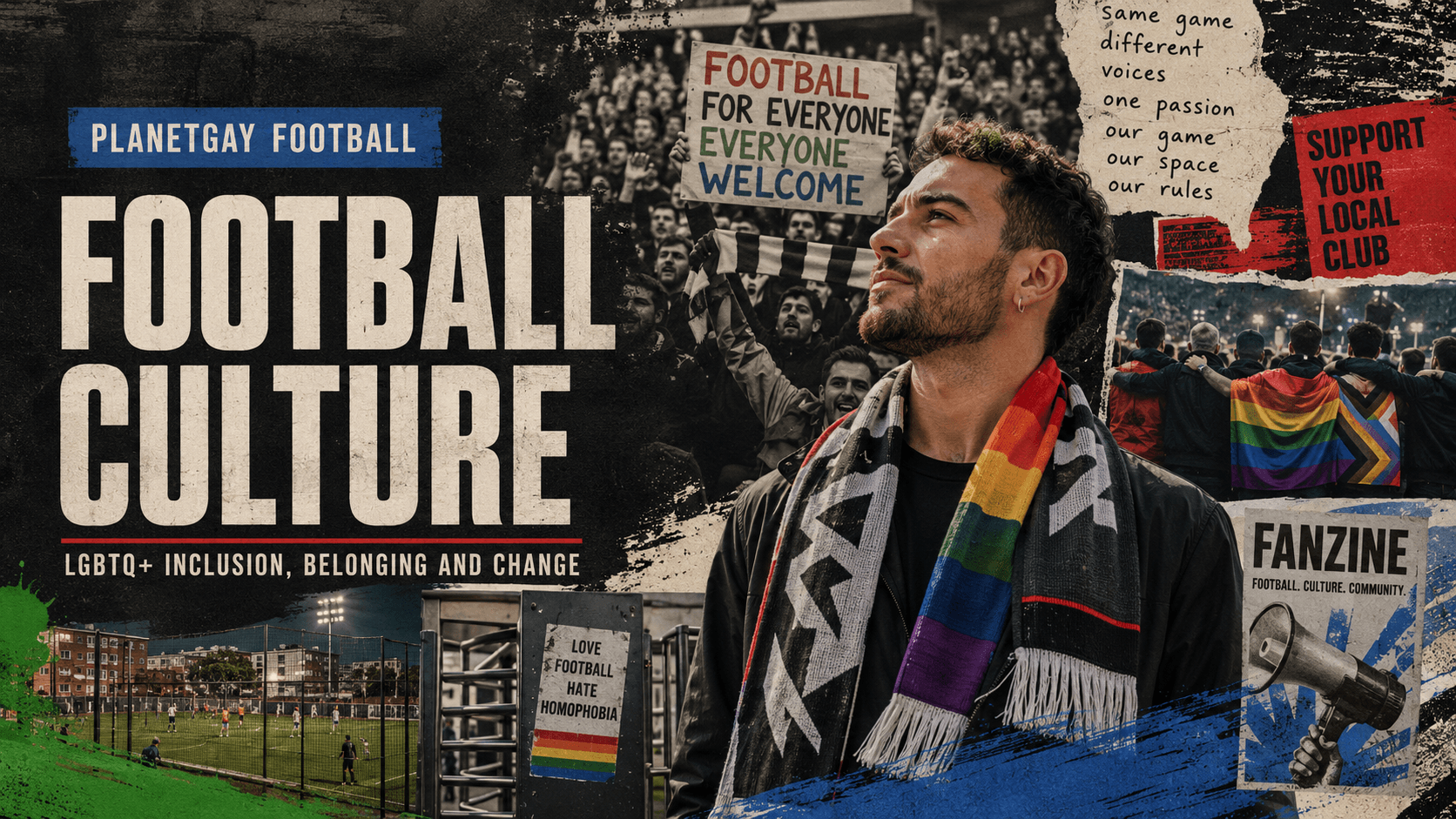
Kick It Out, Football v Homophobia and other campaign organisations have increased visibility of LGBTQ+ inclusion in the English football calendar, particularly through the Rainbow Laces campaign in November each year. Some national associations have formal inclusion policies.
At the same time, the gap between formal policy and cultural reality in men's professional football dressing rooms remains significant, according to organisations working directly in this space. The existence of policy does not itself create a safe environment for disclosure. The small number of active players who have come out — and the career levels at which they play — reflects both progress and the limits of that progress.
For further reading on current institutional work: Football v Homophobia (footballvhomophobia.com) and Kick It Out (kickitout.org) both maintain current information on inclusion work in UK football.