Starting with what we know
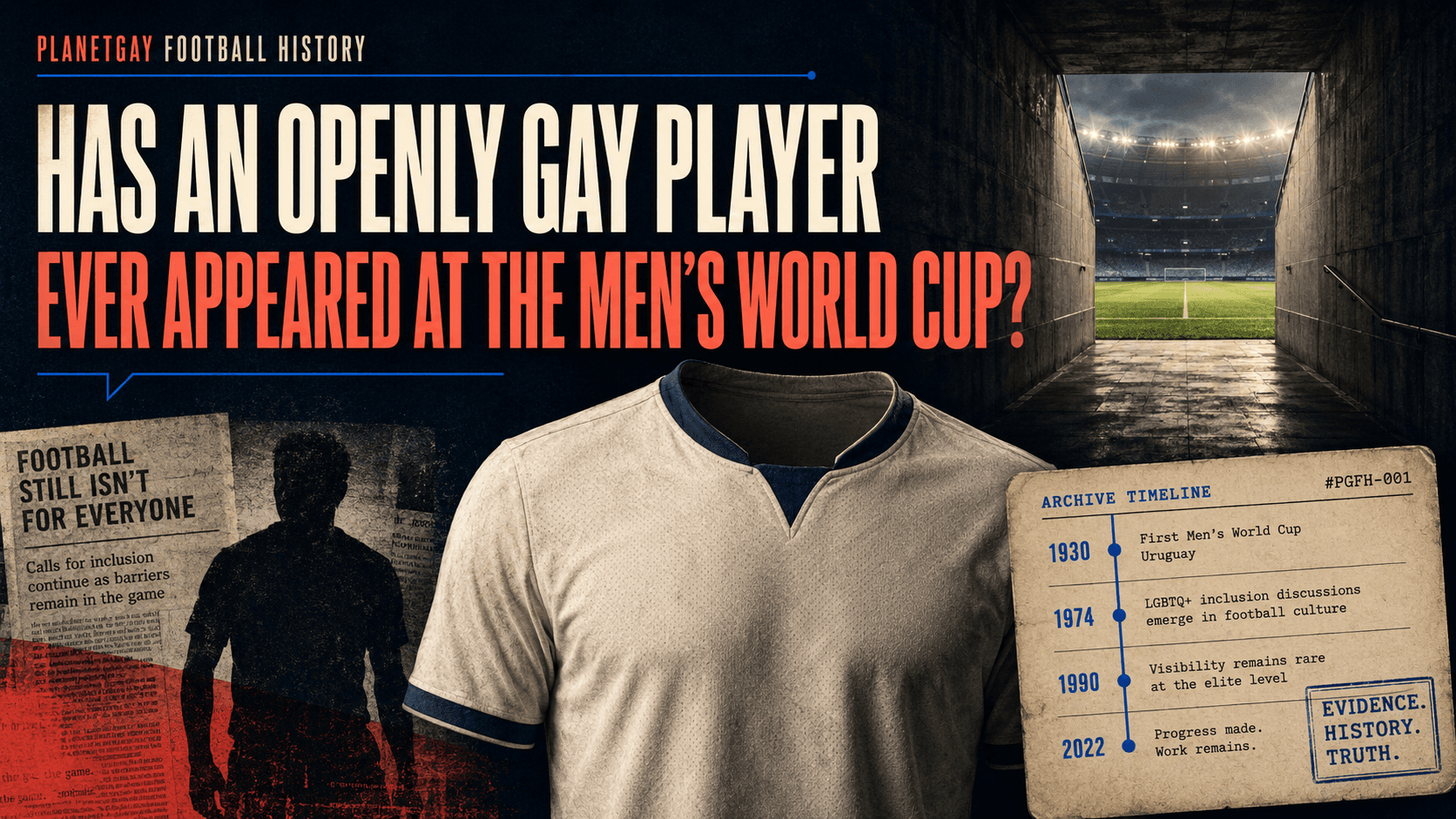
The statistical likelihood that no gay or bisexual men have ever played professional football is essentially zero. Gay and bisexual men make up a significant portion of every population, and there is no scientific basis for believing professional footballers are an exception. The question is not whether gay men play professional football, but why so few have come out publicly while playing — particularly at the elite level.
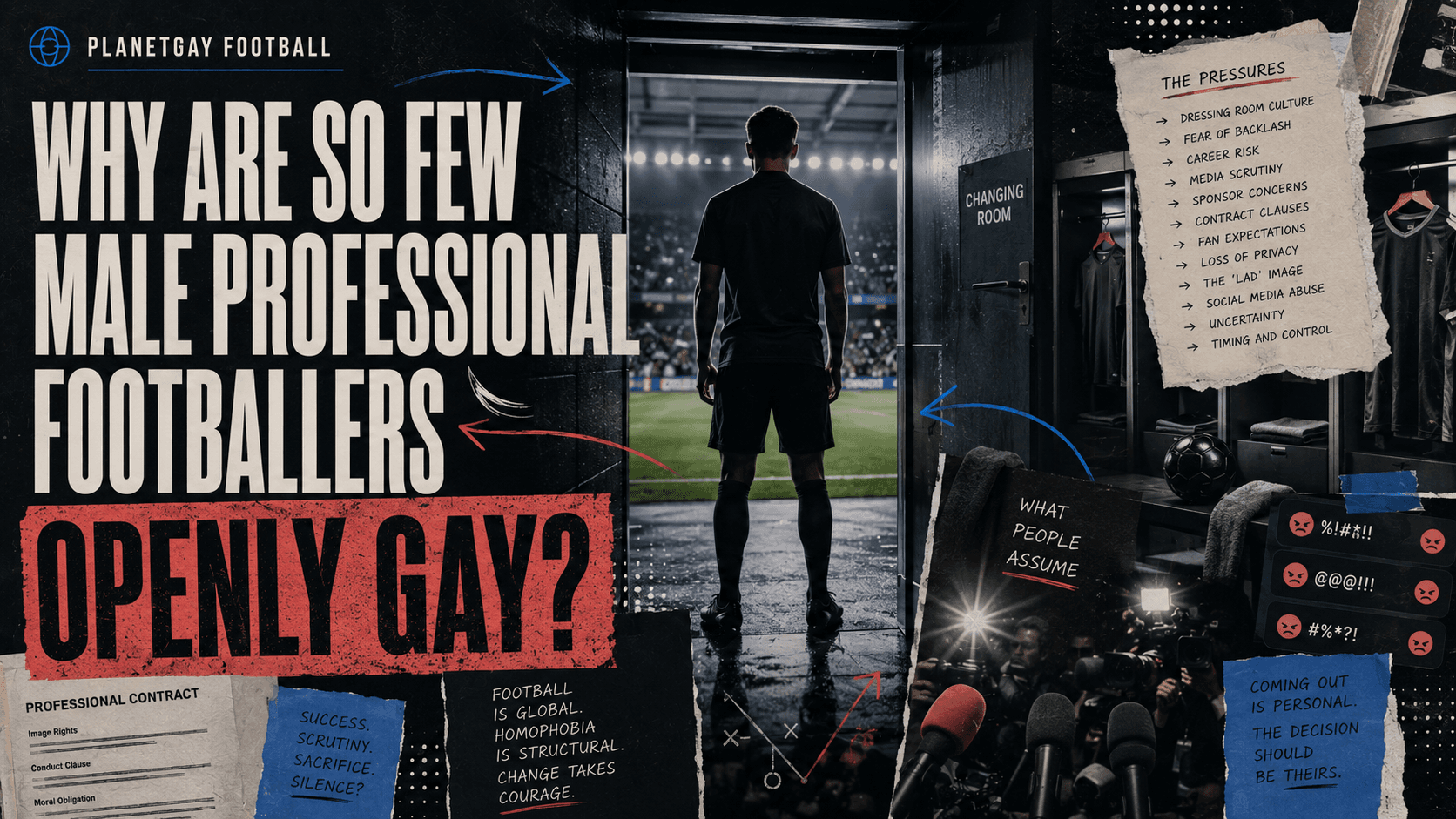
The honest answer involves several overlapping factors that can be separated and examined. Some of these are specific to professional sport; some are specific to men's football within that; some are general patterns about disclosure in any high-visibility professional context. Research on this question exists — from academic work on sport and sexuality, from organisations like Football v Homophobia that work directly with players and clubs, and from the accounts of players who have come out.
Dressing-room culture
Research consistently identifies dressing-room culture as one of the most significant factors. A 2021 report from the European Gay & Lesbian Sport Federation (EGLSF) on LGBTQ+ inclusion in sport found that men's team sports had significantly lower rates of disclosure than individual sports or women's team sports, and identified dressing-room environments — characterised by close daily proximity, shared physical spaces, and heavily male-dominated group dynamics — as contexts where disclosure felt particularly risky to athletes.
Players who have come out, and managers and coaches who have spoken about the topic, consistently describe the dressing room as a specific challenge. Thomas Hitzlsperger has described feeling that he 'did not want to be the gay footballer in the dressing room' — that it would reframe every interaction, every look, every conversation. This is not abstract: the concern is that disclosure would permanently alter relationships with teammates in ways that would affect performance, cohesion and daily working relationships.
This dynamic is not unique to football, but it is particularly intense in a sport where teams of men train together daily, share physical spaces and form close-knit professional units over months or years. It is also specific to men's professional football — in women's football, openly gay players have competed at the highest levels without comparable difficulty.
Fan behaviour and media treatment
Professional footballers are among the most publicly visible people in many countries. A Premier League player, a Bundesliga regular, a La Liga star is a public figure whose private life is documented by tabloids, discussed on social media, and followed by millions of people. The prospect of coming out in that environment involves a calculation about how the disclosure will be treated.
Historically, the treatment of gay identity in football media has been hostile. Justin Fashanu's coming out in 1990 was followed by sustained tabloid hostility. This specific history is known to players; it shaped a generation of footballers' understanding of what disclosure meant.
More recently, treatment has improved significantly. Jake Daniels's coming out in 2022 was largely reported respectfully and supportively. Josh Cavallo's coming out in Australia was met with widespread positive response. But 'media treatment has improved' does not fully resolve the concern: social media means that even a mostly positive public response comes with a sustained minority of hostile comments, and at elite level the volume of that hostility can be significant.
Fan behaviour at grounds — chants, comments from stands — is a related issue. Homophobic chanting at football matches has been documented extensively by organisations including Kick It Out and Football v Homophobia. While enforcement of anti-discrimination rules has improved, the prospect of being a specifically targeted player changes the calculation.
Career concerns and structural incentives
Elite professional football is a commercial as well as a sporting career. A player's value is partly determined by sponsorship, by image rights, by commercial partnerships. The concern that coming out might affect these commercial relationships has been raised by players and commentators. This has been less of a factor in more recent cases — the commercial response to Daniels's coming out, for example, was not negative — but the perception that it might be remains part of the calculus.
At international level, there is an additional factor: some international careers involve representing countries in locations where LGBTQ+ status carries legal risk. Players who are gay may be concerned about the implications for squad travel, for disclosure within national setups, and for their safety and privacy in specific tournament contexts. The 2022 World Cup in Qatar is the sharpest recent example of how host-country context can create specific concerns for LGBTQ+ players.
For younger players, academy and development context also matters. The culture established in academies and development environments shapes players' understanding of what is acceptable to disclose throughout their career.
What has changed
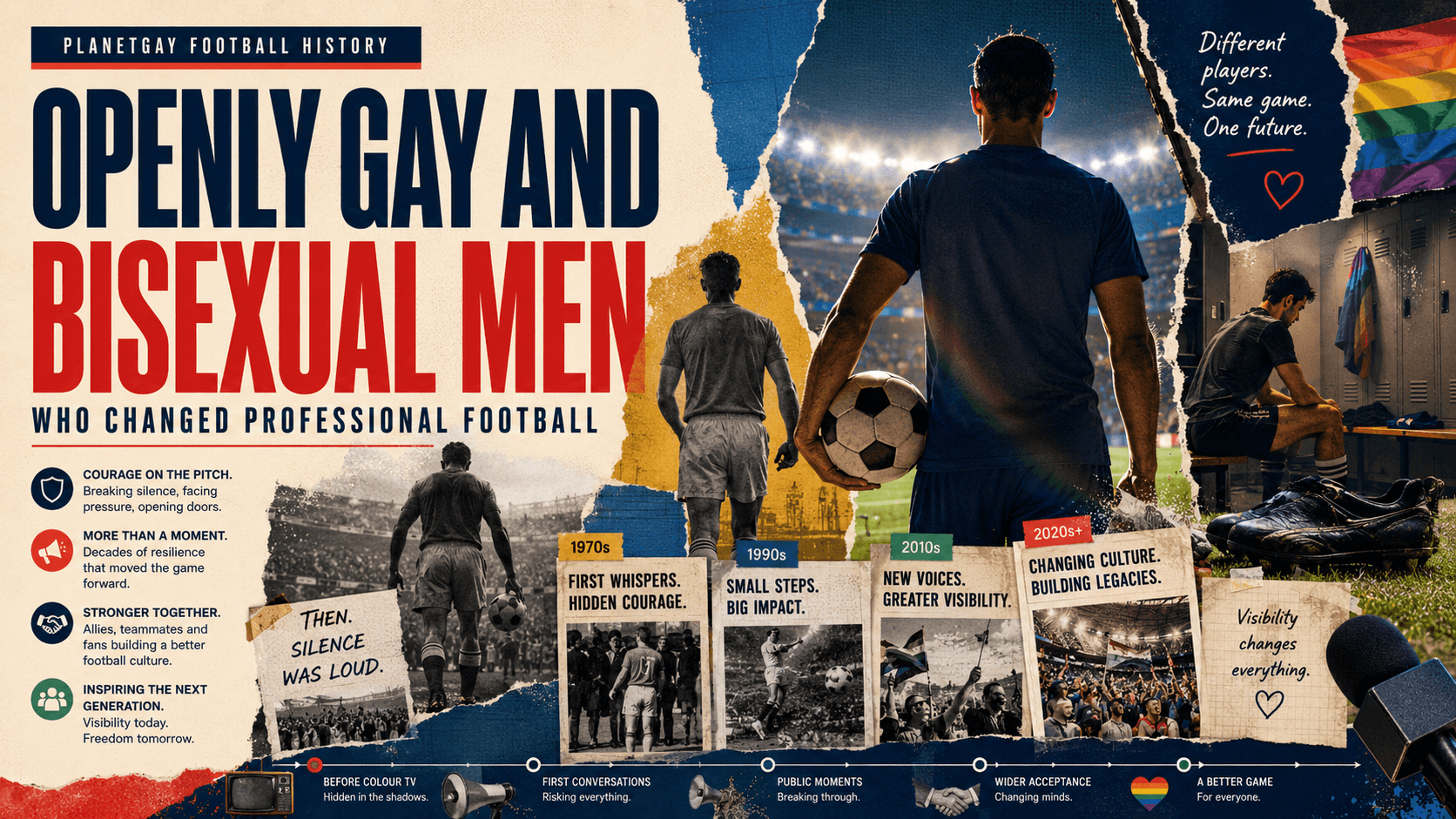
The change since 2021 is meaningful. Multiple active players have come out across England, Australia, Scotland and the United States. Each came out with some degree of support from their club. Each received a broadly positive public response. None has reported that their career was ended by their disclosure — Daniels continues to play professionally.
Organisational change has also accelerated. More clubs have formal LGBTQ+ inclusion policies. More national associations have inclusion commitments. The number of participating clubs in Football v Homophobia's Month of Action has grown steadily. The Rainbow Laces campaign in England involves players at all professional levels annually.
At the same time, the pattern of who has come out — players at Championship level and below in England, A-League in Australia, lower leagues in Scotland and Sweden, MLS in the United States — is not accidental. The absence of any openly gay Premier League player, any openly gay Bundesliga regular, any openly gay player at the 2026 World Cup is a signal about where the barriers are most intense. Progress at lower levels of the professional game is significant and real, but it does not straightforwardly predict what will happen at elite international level.
Why speculation doesn't help
In the absence of openly gay players at the highest levels, there is persistent discussion about who might be closeted — on forums, in tabloid spaces, occasionally in sports media. This speculation does not help. It does not help the players involved, whose sexuality is their own information to share or not on their own terms. It does not help fans, who are given inaccurate or unfounded information. And it does not help the broader effort to create an environment where disclosure feels possible — because a culture of speculation tells players that coming out means moving from private speculation to public scrutiny, which increases rather than reduces the perceived cost.
The things that actually move the environment in a better direction are the work of campaign organisations, supportive club cultures, respectful media treatment and positive public responses when players do come out. The history of the last five years suggests these factors are working — slowly, incompletely, but in a documentable direction.