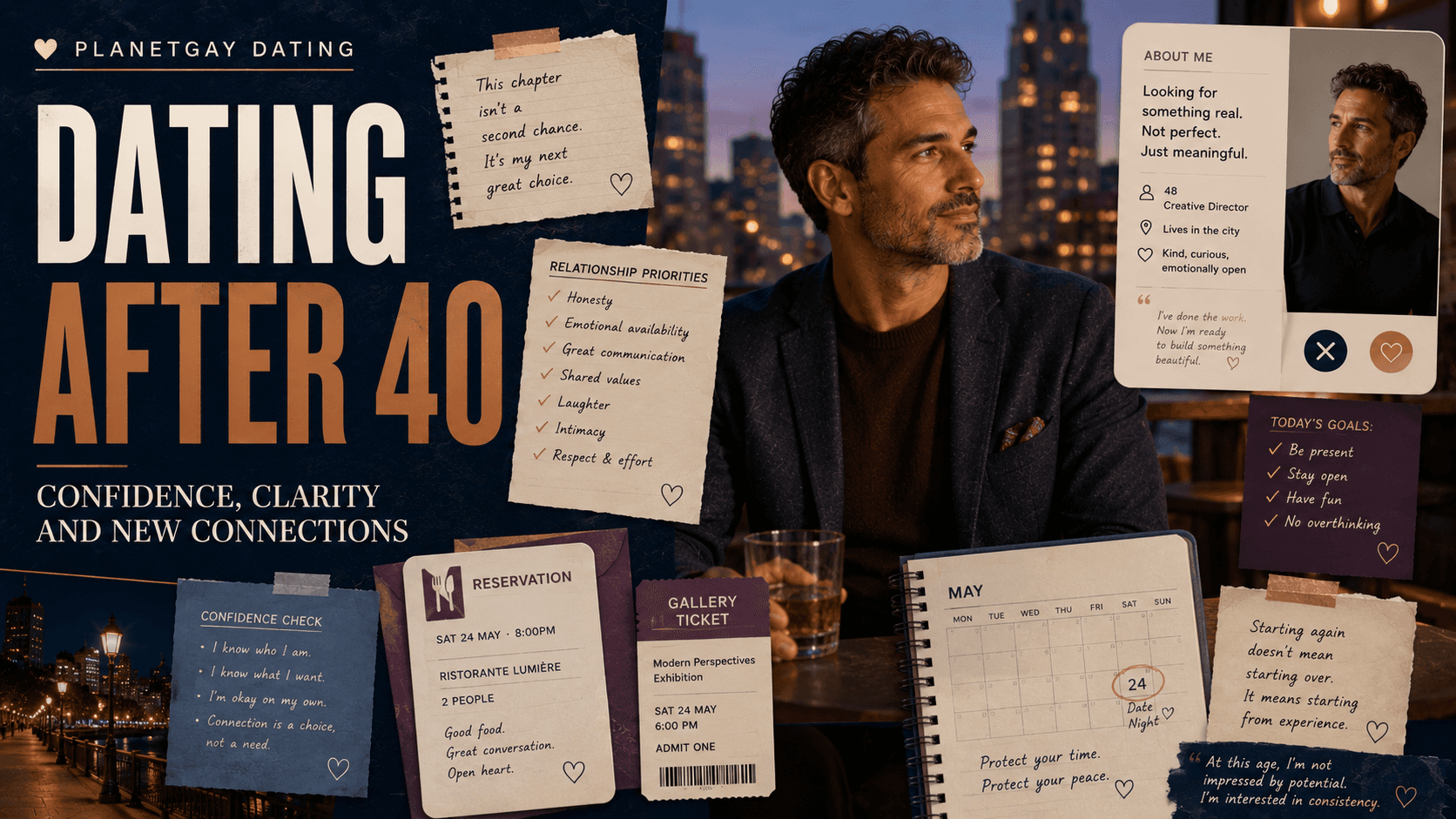
What actually changes after 40
Gay dating after 40 is different in several concrete ways:
**The pool is smaller.** Single gay men over 40 are a smaller population than single gay men under 30. This is simply true, and the dating experience reflects it — matches come less frequently, not necessarily because you are less attractive, but because the pool is genuinely smaller.
**Most men have significant history.** Dating after 40 means dating men who typically have previous long-term relationships, marriages (in some cases heterosexual), children, established careers, and established lives. This creates more complexity than dating in early adulthood but also often more substance.
**People are generally clearer about what they want.** Many men over 40 have learned, through experience, what they are and aren't looking for. This can make compatibility conversations more direct and less ambiguous.
**The relevance of shared life stage.** Whether someone wants children, how they relate to career, how they manage finances and their time — these questions that are more abstract in early dating become more concrete and more important for compatibility when both people are in mid-life.
**Physical changes are real.** Both you and the men you meet have bodies that are in their 40s, 50s or older. Approaching this with realism rather than anxiety — in yourself and in partners — is part of the adjustment.
What doesn't change
Some fundamentals of dating don't change with age:
Attraction is still individual and real. The idea that older gay men are essentially invisible to the gay dating world is a social narrative that is partly exaggerated. Gay men in their 40s and 50s date successfully — it often just happens at a different pace and in different settings.
Compatibility still matters more than initial attraction. A good match is still a good match at 40 as it was at 25. The early-dating process of discovering whether someone is a good match doesn't become less important because you're older.
Being honest is still the most efficient approach. Men who date with transparency about who they are, what they want and what they're available for tend to have better experiences than those who manage impressions carefully.
Meeting people outside apps
For men who find the app experience frustrating at this stage, in-person social contexts remain genuinely productive — and tend to be more naturally age-mixed than apps.
LGBTQ+ community events, social groups, sports and fitness clubs with gay membership, professional networks, and mutual introductions through existing social connections all produce meetings with men in the same life stage without the particular dynamic of app-based dating.
Men who have recently come out in midlife often find that rebuilding a social world is prerequisite to dating meaningfully — the social connections come first, and romantic connections develop from them.
Approaching it realistically
Some adjustments in expectation that help:
**The pace is typically slower.** Men with established lives have less availability than men in early adulthood — they have jobs, children, commitments. First dates may take longer to schedule; relationships may develop at a slower pace. This is not rejection or lack of interest, it is life.
**Do not compare to 25.** If your point of reference for what gay dating should be like is how it worked (or how you imagined it worked) when you were 25, you are measuring a reality against a benchmark that no longer applies. The experience is different; the question is whether it is good, not whether it matches a previous version.
**Bring who you actually are.** Gay dating after 40 works best when you bring the actual person you are — including the history, the complexity and the clarity that comes with it — rather than a performance of a younger or different version of yourself.