Thirty is not a deadline
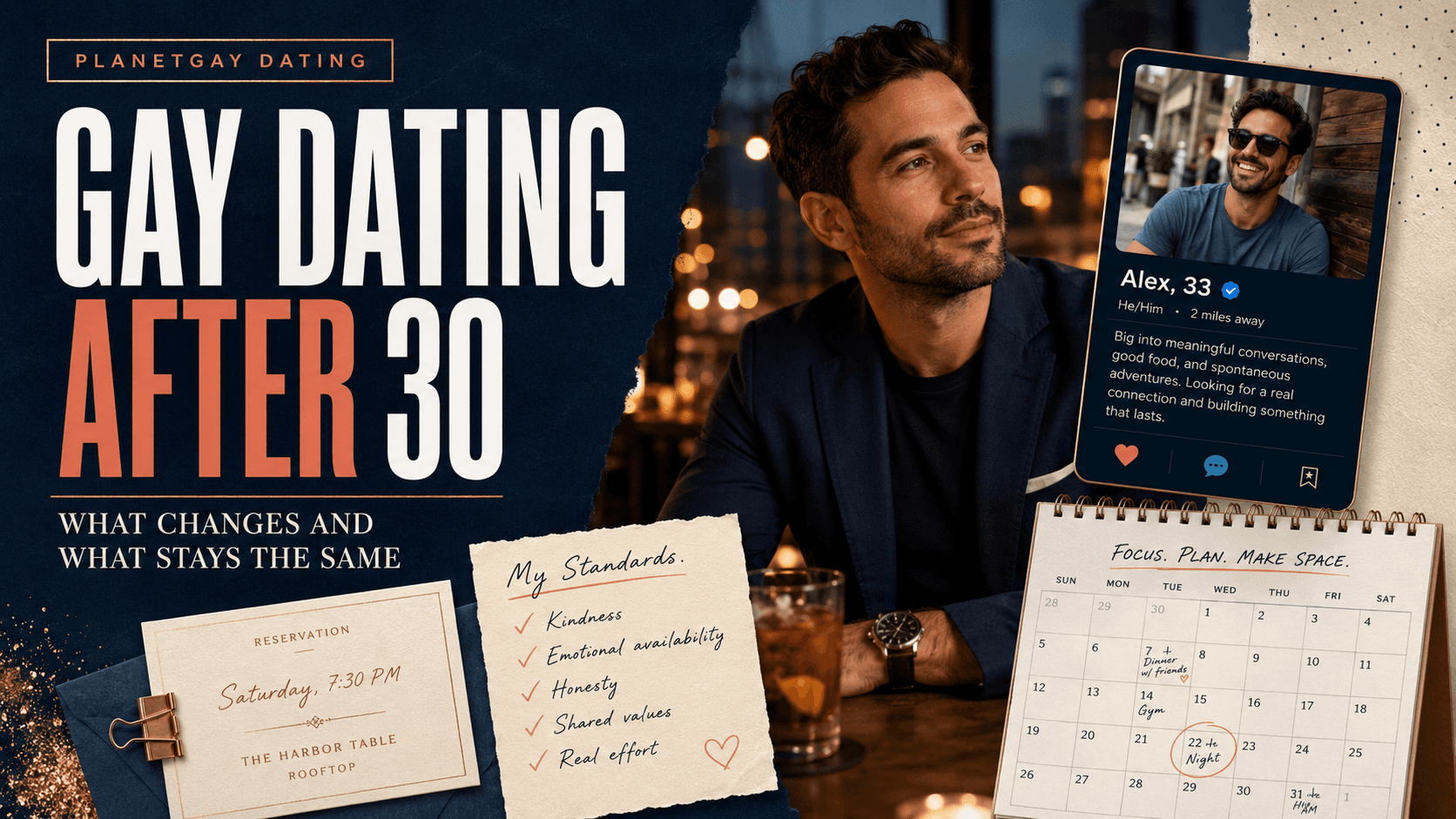
The idea that your dating life peaks in your twenties and declines from there is not specific to gay men, but it can feel amplified within a culture that sometimes over-emphasises youth. The reality is less dramatic. Men who are dating after 30 often bring clarity, self-knowledge and a stronger sense of what they actually want — all of which makes dating more productive, even if it is also more selective.
For many gay and bisexual men, dating after 30 is not an afterthought but a first chapter. Coming out later, spending earlier years in relationships that were not fully named, or simply prioritising other things until now are all common paths. Starting in your thirties or forties does not mean you have missed some essential window. It means you are beginning from a more developed sense of yourself.
How priorities tend to shift
By 30, most people have a clearer picture of what they are and are not willing to compromise on in a relationship. This is an advantage, not a problem. Knowing your boundaries around work schedules, living arrangements, money, family contact and sexual health makes for more honest early conversations — and wastes less time for both people.
The flip side is that clarity can tip into rigidity. A list of requirements that screens out almost everyone is not wisdom; it is a different kind of avoidance. Most long-term partnerships involve some negotiation of things that were initially listed as non-negotiable. The goal is to know your actual priorities — the things that are genuinely important — and to hold those while staying curious about people who do not fit a mental template.
Dating apps after 30: what to expect
Dating apps do not become less useful as you get older, but the dynamics can feel different. Some apps skew younger in their user base; others have a broader age spread. Some men in their thirties find apps effective; others find them draining in a way they didn't in their twenties.
If app fatigue is an issue, there are a few adjustments worth trying before abandoning apps entirely: limiting daily use to a fixed time, being more selective about who you message (depth over volume), and taking breaks of a week or two when the experience starts feeling compulsive or dispiriting.
The more significant shift after 30 is often the role that offline connection plays. Repeated contact through shared activities, friendship networks, professional contexts and community involvement tends to become more important as a source of dating prospects. Not because apps stop working, but because other channels open up that didn't exist in the same way in your twenties.
Meeting people outside of apps
LGBTQ+ community organisations, sports groups, alumni networks, professional associations, volunteering and shared hobby spaces all become more accessible as an adult with an established life. In your thirties, you often have more autonomy over your time, more ability to choose the social contexts you enter, and a wider network of people who might know people you'd enjoy meeting.
Friendship-first connection — where you meet someone through a shared context, build some familiarity, and then develop interest — can produce more robust attraction than the snap-judgment mode of apps. It also takes longer and requires you to be engaged in community life rather than optimising for dating efficiency.
If you are in a smaller city or an area where LGBTQ+ community is less visible, online connection may still be the most accessible starting point. The advice to meet offline assumes you have offline options worth accessing.
Dating as a late or second-time out person
Some men dating after 30 are doing so because they came out later in life. Others are re-entering dating after a long relationship ended — sometimes a relationship that was with a woman and may not have been publicly identified as part of a gay or bisexual story. Both of these starting points carry their own emotional texture.
If you are newly out at 35 or 45 or later, you may find yourself alongside men who are much younger and who have been out for years. That can feel strange. It is worth knowing that this is common and that most people in LGBTQ+ community spaces are not paying as much attention to this as it can feel like they are. Your experience is your own, and it does not require a particular label or timeline.
If you are re-entering dating after a relationship, giving yourself adequate time to process the end of that relationship — whatever form it took — before investing heavily in a new one tends to produce better outcomes for everyone involved.
The specific pressure of relationship timelines
After 30, some men feel external or internal pressure around relationship milestones — partnership, cohabitation, family decisions — in ways that can make casual dating feel less acceptable or meaningful. This pressure often comes from comparison with peers who started partnering earlier, or from family, or from a sense that biological clocks or social windows are closing.
It is worth naming this pressure clearly when you notice it, because it can distort the dating process. Someone who is dating primarily to meet a timeline rather than to find a person they want to be with tends to project qualities onto people that aren't there, or to escalate relationships faster than their actual connection justifies. Neither of those outcomes is better than taking longer and getting it right.