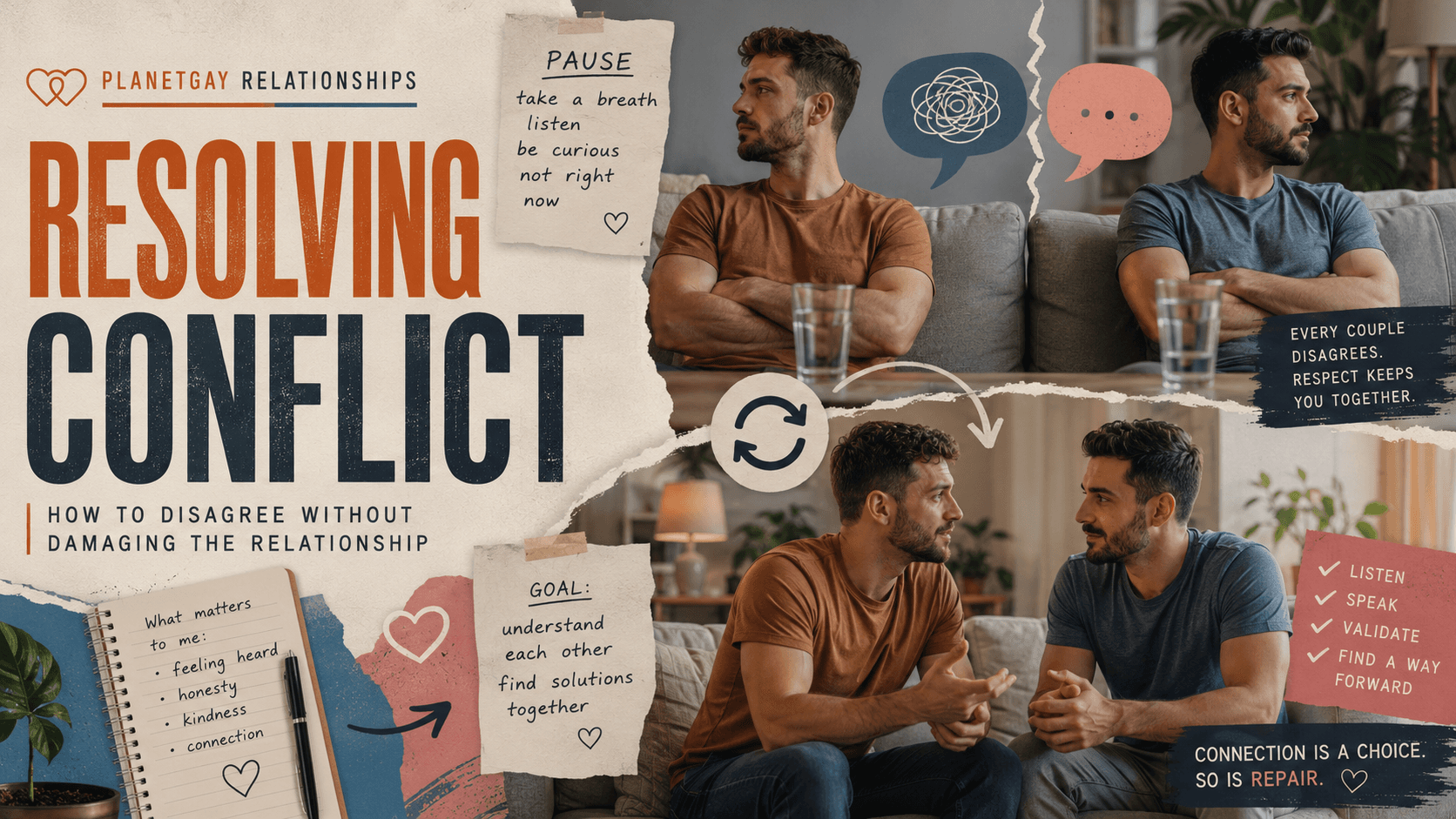
Communication in daily life, not just in conflict
Most writing about couple communication focuses on conflict. But communication quality in a relationship is built primarily in ordinary daily interactions — how you check in with each other, how you share information about your day, how you signal interest and attention, how you handle small frictions before they accumulate.
Partners who communicate well in difficult moments have usually built that capacity through good patterns in easy moments. This guide treats everyday communication as the foundation, and conflict communication as the harder test.
Expressing needs directly
The most consistent communication failure in relationships is not dishonesty — it is imprecision. People say what they expect their partner to understand rather than what they actually mean, and then experience genuine disappointment when the partner does not respond to the unstated version.
Direct communication means: 'I need some time to myself this evening' rather than 'you don't need to worry about me.' It means 'I'd really like you to come' rather than 'it's fine if you don't.' It means 'this is bothering me and I'd like to talk about it' rather than signals of distance that invite guessing.
This is harder than it sounds for people who grew up in environments where directness was risky, where asking for things attracted criticism, or where other people's discomfort was treated as your responsibility to manage. For many gay men who spent years managing how they presented themselves to others, this pattern has deep roots. Noticing it is the first step toward changing it.
Listening in a way that actually works
Listening is often treated as passive — you wait for your partner to finish so you can speak. Effective listening is active: you are attending to what your partner is actually saying (rather than preparing your response), you check whether you have understood correctly before responding, and you notice when what they are saying does not match what they are expressing emotionally.
The most useful listening habit is reflection: restating what you heard your partner say before responding to it. 'So what I'm hearing is that you felt left out — is that right?' gives your partner a chance to confirm or correct before you respond to something they might not have said. It slows the conversation down in a way that makes it more productive, not less.
Listening also means tolerating discomfort without immediately trying to fix it. If your partner is expressing something difficult, the first response does not have to be a solution. 'That sounds really hard' is sometimes more useful than a list of what could be done differently.
Handling difficult conversations
Difficult conversations — about recurring problems, about things that are not working, about significant decisions — require some specific preparation to go well.
**Timing matters.** Starting a significant conversation when either partner is tired, hungry, drunk, or in a rush is setting it up to fail. Ask for a time rather than launching: 'I'd like to talk about this when we're both free — can we do that tomorrow evening?'
**One thing at a time.** The 'while we're at it' approach — raising multiple grievances in a single conversation — produces defensiveness and overwhelm rather than useful engagement. One specific issue, one conversation.
**Concrete and specific.** 'You always do this' is a poor framing for anything. 'Last week, when you cancelled our plans at short notice, I felt like I wasn't a priority' is specific, observable, and about your experience rather than a global indictment. Specific is easier to respond to and less likely to produce defensive escalation.
**Know what you want from the conversation.** Are you looking for a change? For acknowledgement? For problem-solving? Knowing what would constitute a useful outcome helps you recognise when you have arrived.
After conflict: repair
The ability to repair after conflict — to apologise effectively, de-escalate, and return to connection — is a more important predictor of relationship health than the absence of conflict.
An effective apology has three components: acknowledgement of what happened, recognition of the impact, and a clear statement of what you will do differently. 'I'm sorry you felt bad' is not an apology — it locates the problem in your partner's feelings rather than in your action. 'I'm sorry I cancelled without enough notice — I know that put you in a difficult position and I'll make sure to give you more warning in future' is an apology.
Repair also means knowing when to pause. If a conversation has become heated to the point where neither partner can hear the other, stepping away for a defined period — 'I need 20 minutes, then I'd like to come back to this' — is more productive than continuing in a state of escalation.