Trust: how it is built and how it is damaged
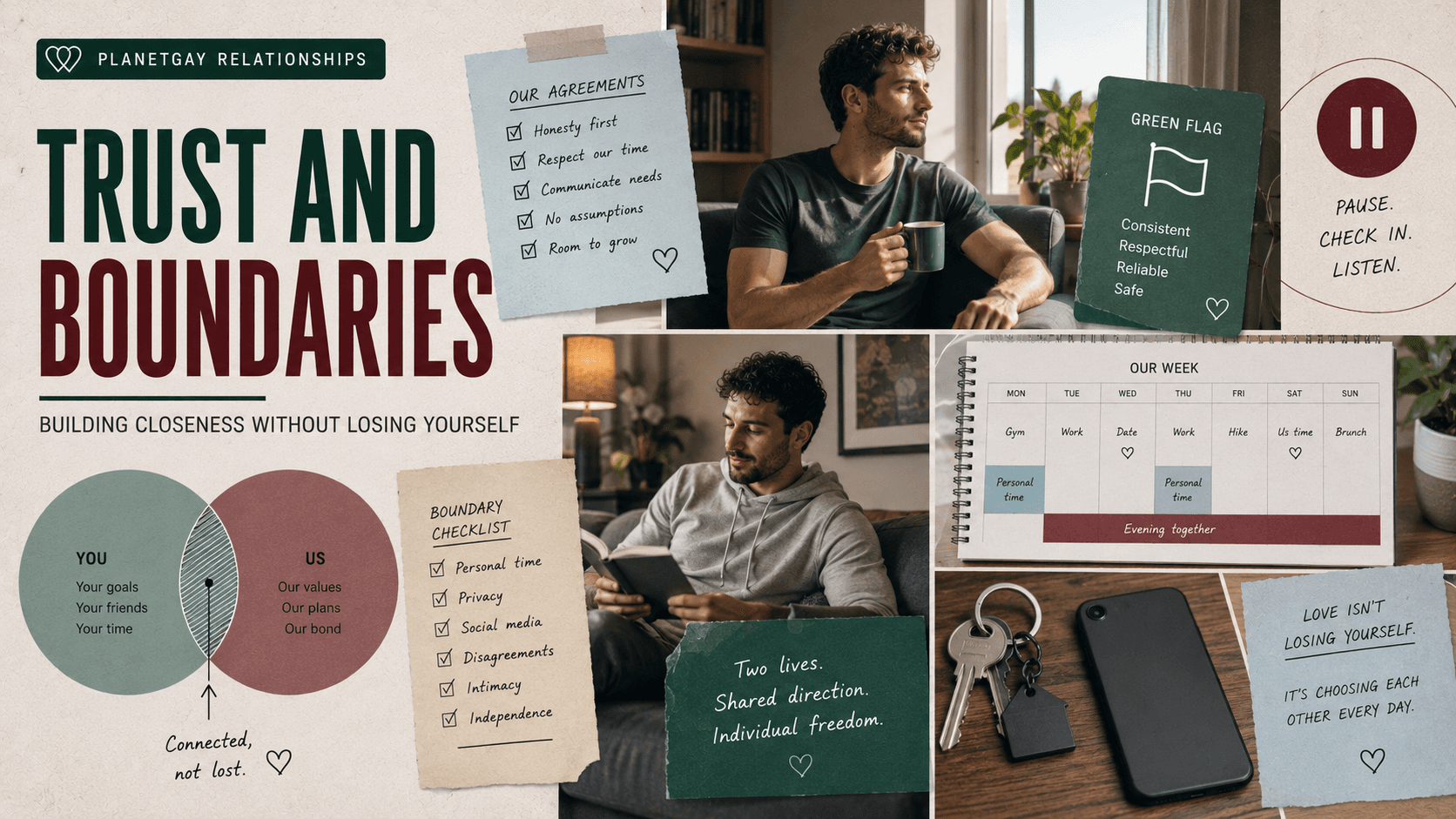
Trust in a relationship is not a single thing — it is built through repeated small experiences of reliability, honesty and consistency over time. You trust someone because they do what they say, tell you the truth even when it's uncomfortable, follow through on commitments, and respond to your needs with genuine attention rather than management.
Trust is damaged through the reverse: inconsistency, concealment, broken commitments and responses that prioritise managing their own comfort over honest engagement with you.
For gay couples, trust sometimes has an additional dimension: the handling of disclosure between partners — who is out where, whether information about the relationship is shared with family, and how each partner manages their identity in contexts outside the relationship. Alignment (or honest misalignment) on these questions builds or erodes trust depending on how they are handled.
Communication as a skill, not a natural gift
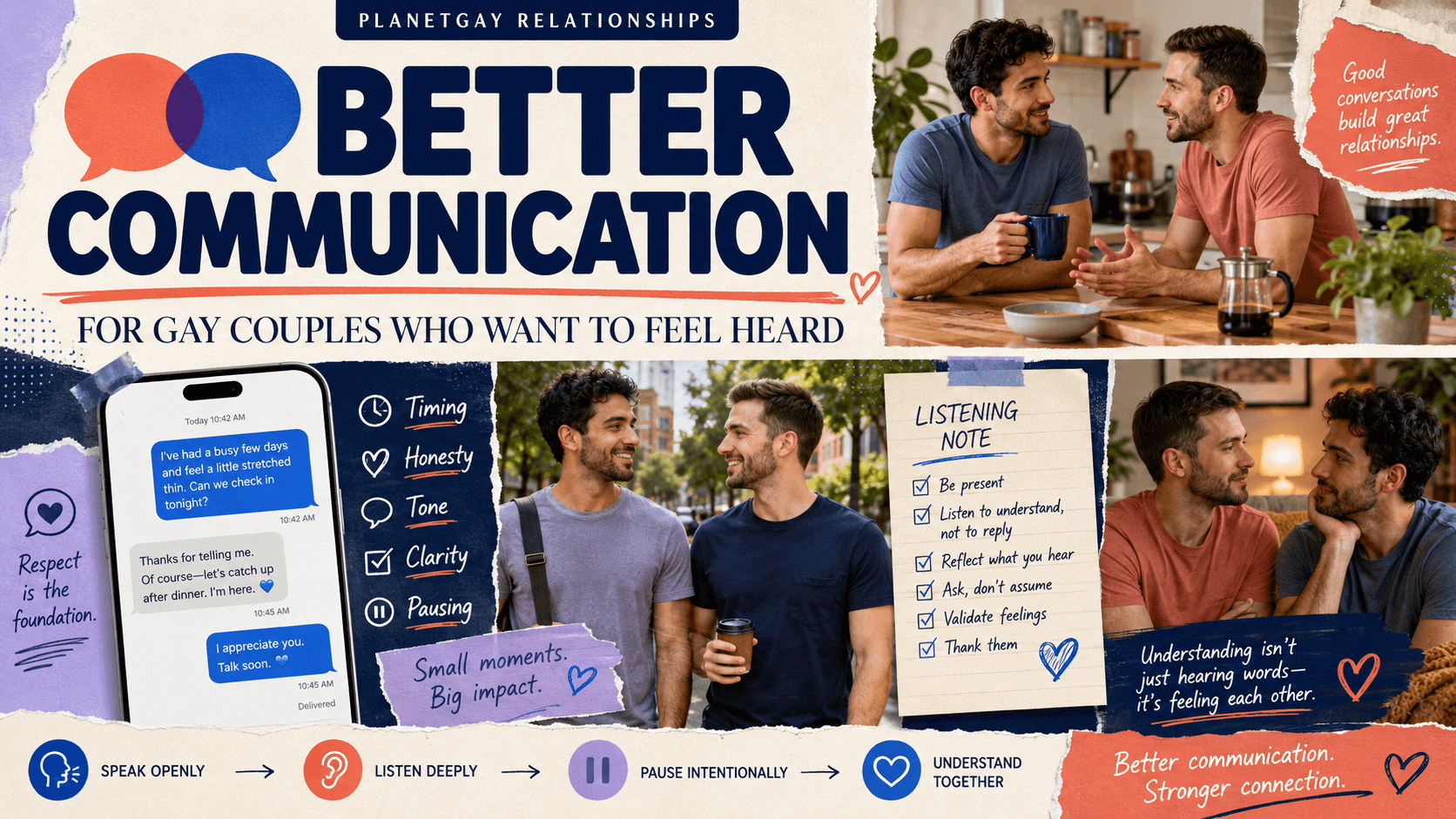
Good communication in a relationship is a practised skill, not something that comes naturally to people who are compatible. Most people communicate better in some areas and worse in others, and the areas they are worst in tend to be the ones that matter most.
Three communication practices that have consistent evidence behind them:
**State what you need directly.** Not 'it would be nice if' or 'some people might' but 'I need' or 'I want.' Indirect communication creates ambiguity and resentment. Your partner can't reliably give you what you need if you haven't clearly said what it is.
**Separate observation from interpretation.** 'You were quiet all evening' is an observation. 'You were quiet all evening because you're angry at me' is an interpretation. Stating observations and asking about them — 'You seemed quiet tonight, is everything okay?' — produces much better responses than leading with the interpretation.
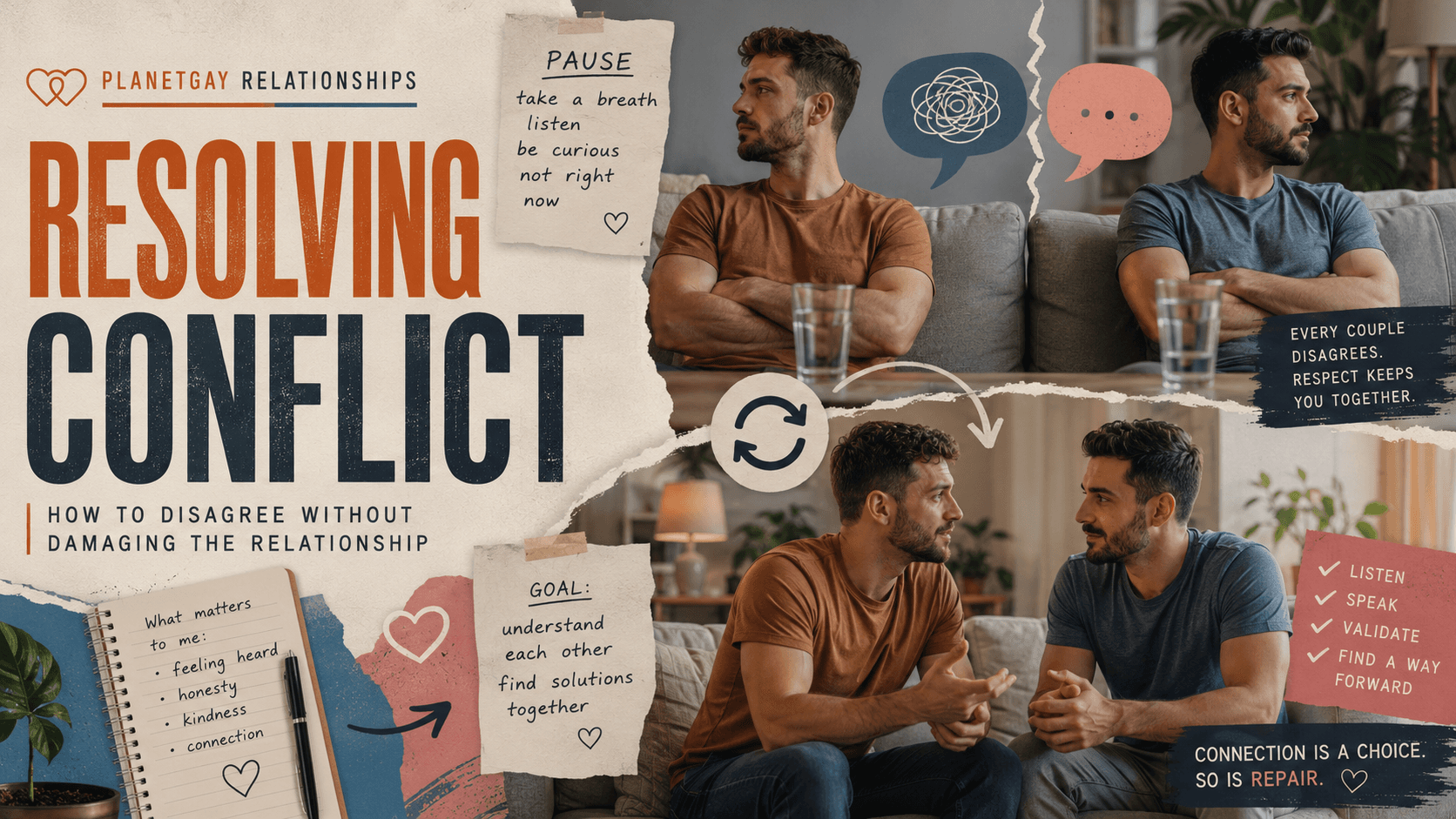
**Repair attempts matter more than never escalating.** In any real relationship, arguments happen and communications fail. The ability to de-escalate, apologise effectively and return to connection is more important than a record of never losing your temper.
Maintaining individuality
One of the more common patterns that damages long-term relationships is the gradual collapse of individual identity into the relationship. Partners who stop having their own friendships, interests, goals and perspectives become dependent on the relationship in ways that put enormous pressure on it — and become less interesting to each other over time.
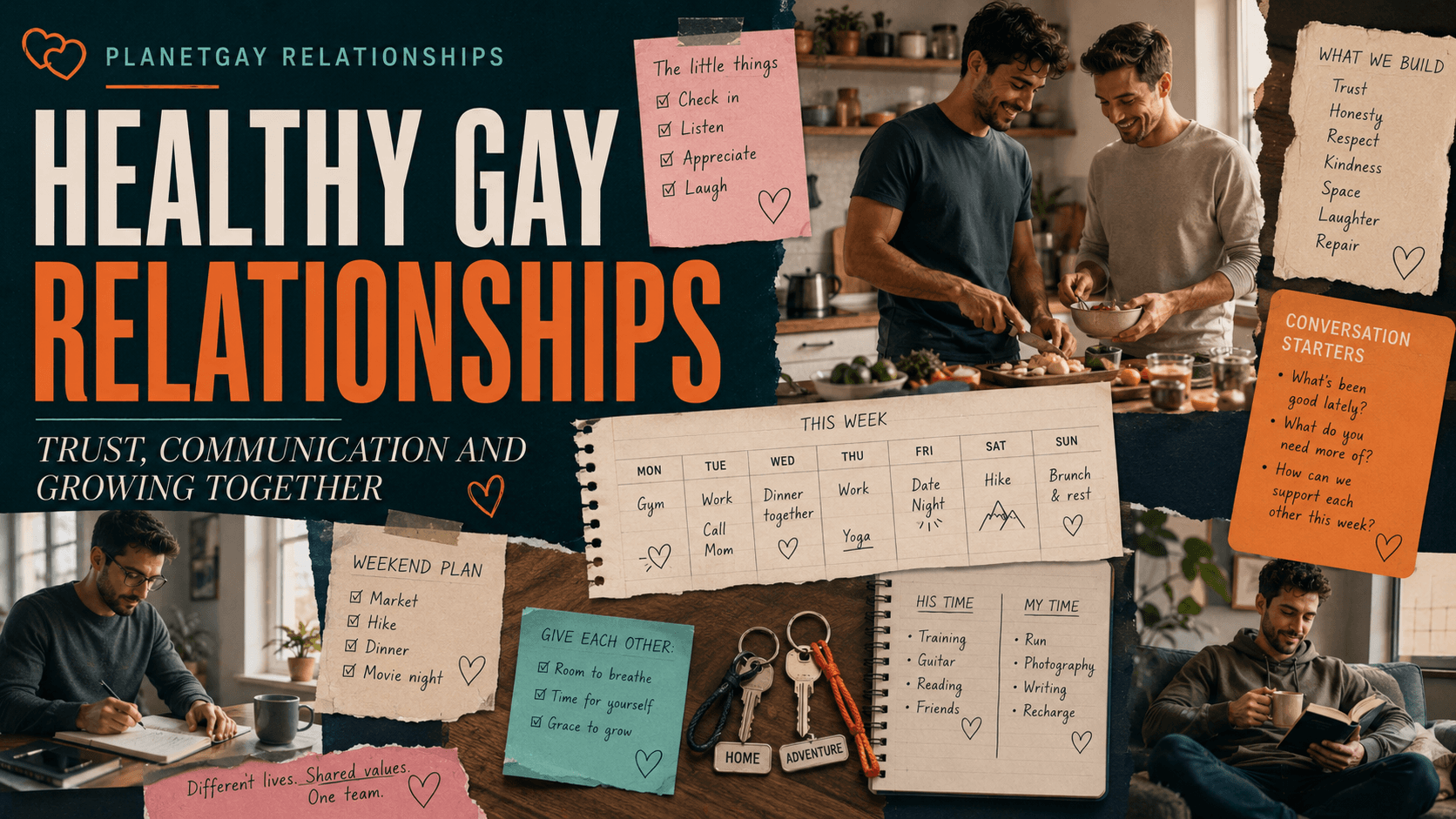
Maintaining individuality is not a threat to closeness — it is what makes closeness sustainable. This means having friends and activities that are yours, taking time alone when you need it, having opinions that differ from your partner's, and not treating relationship preferences as the default answer to every lifestyle question.
For gay couples who may have found in each other their primary source of community and affirmation, this is worth paying specific attention to. The relationship cannot and should not be everything.
Explicit agreements, not assumed defaults
Gay relationships often involve questions that straight relationships can leave implicit — about monogamy versus non-monogamy, about how to handle differences in outness, about whether marriage or formal partnership is a goal, about how finances work, about family relationship expectations.
The conventional wisdom that 'not talking about it' is more romantic is not accurate. Assumed defaults on significant questions produce significant surprises. Making explicit agreements — not as confrontational negotiations but as honest conversations between people who care about each other — is one of the most reliable things you can do for a relationship's long-term stability.
These conversations can happen at natural transition points rather than as formal exercises: when the relationship becomes more serious, when someone's circumstances change, when a specific question becomes relevant. The point is to have them at all, rather than discovering misalignment when it has already become a problem.
When to seek help
Couples counselling is not a last resort. Many couples use it proactively — to navigate a transition, to develop communication skills, to address patterns they notice before they become entrenched. Seeking help when things are difficult rather than when they have become unsalvageable produces better outcomes.
Look for a therapist who is LGBTQ+-affirming and ideally has experience with gay couples specifically. General couples counselling applies some of the same skills, but a therapist unfamiliar with the specific context of gay relationships — the minority stress dimension, the lack of relationship modelling, the potentially different approaches to structure and family — may miss important material.
If a relationship involves coercion, control, or emotional or physical harm, a couples counsellor is not the right first resource. Individual support and safety planning take priority.