What cross-cultural means in this context
Cross-cultural relationships between gay men can mean very different things. Two men from different countries who both grew up in relatively accepting Western urban contexts face different challenges than two men where one is from a country where being gay was criminalised or heavily stigmatised within living memory. Two men from the same country but from different racial, ethnic or religious backgrounds bring specific cultural difference even without the national dimension. The range of situations this article addresses is wide, and not every section will apply equally to every couple.
What most cross-cultural gay relationships share is the compound complexity of navigating two LGBTQ+ histories: each partner's relationship to his own identity has been shaped by the specific cultural context he grew up in. The pace, manner and meaning of coming out; what 'being gay' means publicly versus privately; how gay relationships interact with family and community — these all differ significantly across cultures and individual histories.
Different relationships with being out
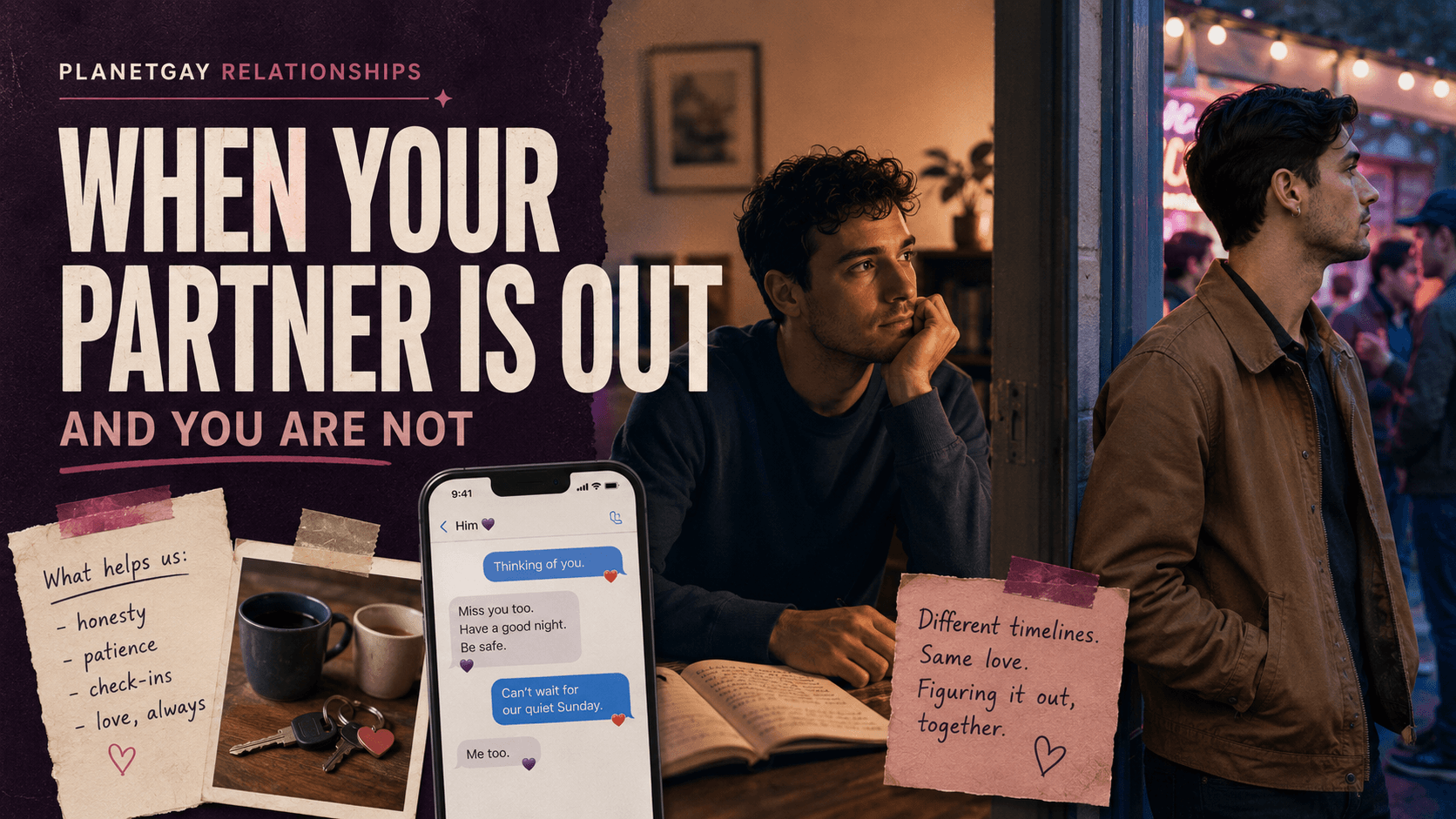
One of the most practically significant cross-cultural differences is the different position each partner may have toward being out. A man who grew up in a Western city with a visible gay community and supportive family may be comprehensively out and publicly identified as gay; a partner who grew up in a country or community where being gay was dangerous or shameful may have a very different relationship with disclosure — or may not have fully integrated that the relationship is one he can be open about at all.
This is not only a matter of personal preference. It is shaped by experience, by community context, by what each person has understood to be possible and safe. A partner who seems reluctant to be out in contexts that his partner considers normal may be navigating a set of cultural associations with disclosure that his partner does not share and may not fully understand.
This requires patience and explicit conversation — not pressure toward the more open partner's position, but curiosity about what disclosure means to each person and what has shaped that meaning.
Family and community expectations
In many cultural contexts, family obligations and community expectations around relationships are stronger and more specific than in individualistic Western contexts. A partner who faces strong pressure from his family to marry a woman, to provide financially for extended family, to represent the family in his community — is facing real constraints that his partner may not experience and may not fully understand.
This can create tension when one partner's family expects things from the relationship that the other partner doesn't recognise as obligations. It can also create tension around how the relationship is acknowledged (or not) to each partner's family, around visits home, around money.
The most useful approach is understanding each other's family and community contexts as facts to be worked with rather than problems to be solved or positions to be overridden. A partner who cannot publicly acknowledge the relationship to his family is not necessarily hiding something he should reveal — he may be managing real constraints that require time and care to navigate.
Language, communication and interpretation
Cross-cultural relationships where partners have different first languages carry specific communication challenges beyond the general ones. Emotional conversations are harder in a second language; nuance is easier to lose; what sounds direct in one language can read as harsh in another. The partner who is communicating in his second language may consistently have less precision in expressing complex emotional content — not because he is less articulate, but because the language genuinely limits him.
Being aware of this and accounting for it — assuming goodwill when something sounds harsh, asking clarifying questions rather than reacting to the surface of a statement — reduces the number of misunderstandings that become conflicts.
Cultural communication styles also differ in ways that are independent of language: directness versus indirectness in expressing disagreement; how conflict is supposed to be handled; what it means to be 'fine'; how much emotional expressiveness is expected. These differences can create situations where one person feels the other is being avoidant or cold when the other person believes they are behaving normally.
Immigration and legal complexity
Cross-cultural relationships frequently involve one partner living in a country that is not his country of origin, or partners who live in different countries. Immigration law adds a specific layer: whether a same-sex couple can use their relationship as the basis for a partner visa depends on the immigration laws of the relevant country, which vary widely.
In countries with marriage equality, married or civilly partnered same-sex couples often have the same immigration rights as married heterosexual couples. In countries where same-sex relationships are not legally recognised, immigration based on a gay relationship is not possible. The gap between these contexts — one partner from a country with strong legal recognition, one from a country without — can create genuine constraints on the couple's ability to live together.
For couples where this is relevant, immigration legal advice from a lawyer with specific experience in LGBTQ+ immigration cases is important. This is a complex area that has changed significantly in recent years across many jurisdictions; current advice from a qualified professional is more reliable than general information.
What helps
Cross-cultural relationships that work tend to share a set of qualities: genuine curiosity about each other's context rather than just tolerance of difference; explicit conversation about what each person needs and what their constraints are; the willingness to acknowledge when something is a genuine cultural difference rather than a personal failing; and some investment in understanding each other's backgrounds — family history, cultural context, what it meant to grow up gay in that specific place.
Professional support — couples therapy, ideally with a therapist who has experience with intercultural relationships and LGBTQ+ context — can provide a structured space for the conversations that are difficult to have without facilitation. Mind in the UK and the APA's therapist directory include therapists with relevant experience; the LGBTQ+-affirming therapist guide on this site covers how to find appropriate support.