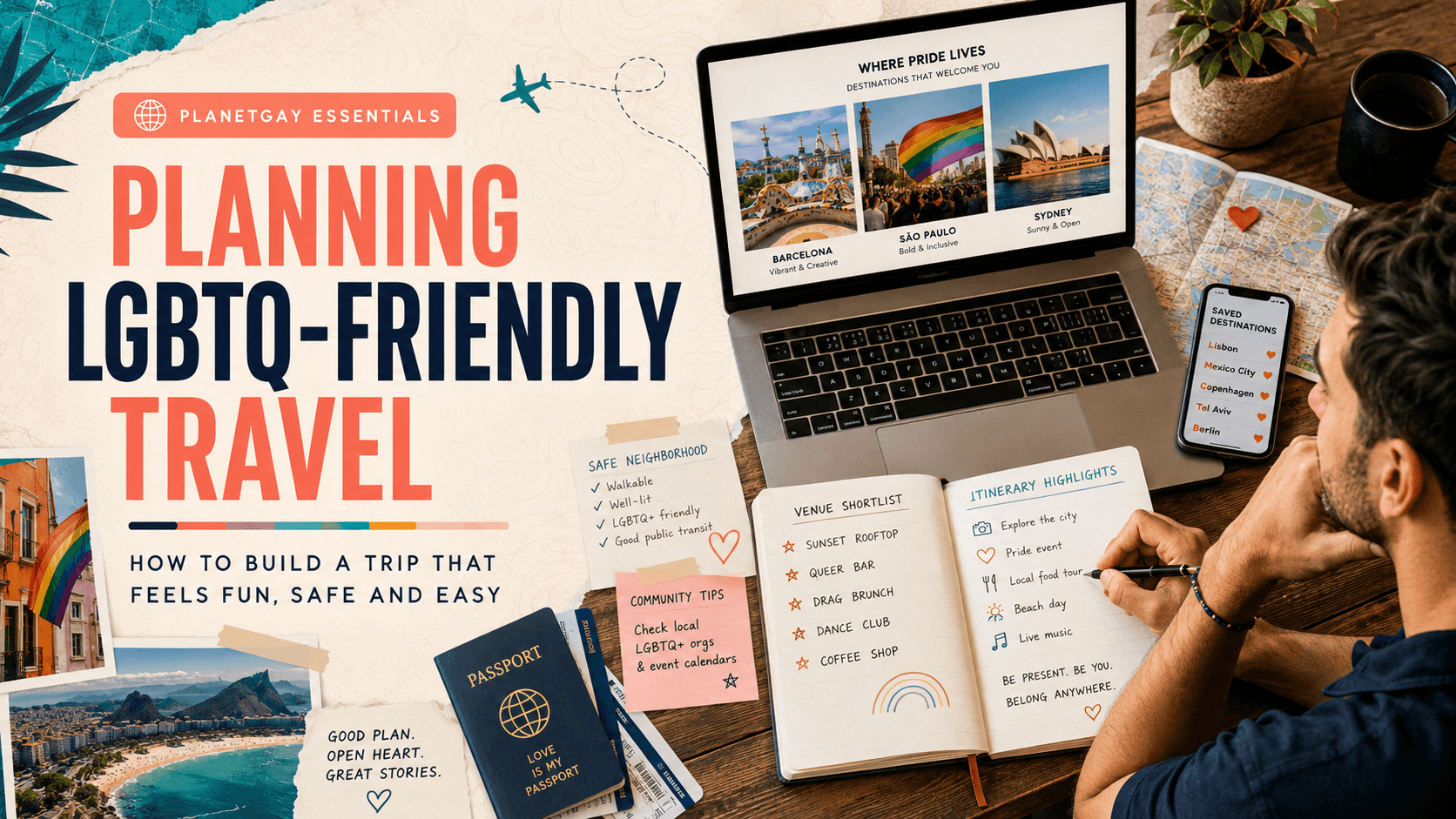
What 'LGBTQ+-friendly' actually means
Travel marketing uses 'LGBTQ+-friendly' as a positive descriptor without much precision. A destination with this label might mean: that same-sex relationships are legally recognised; that gay venues and pride events exist; that discrimination based on sexual orientation is illegal; or simply that the tourism board is targeting LGBTQ+ travellers as a market.
None of these individually tells you what it will actually feel like to be visibly gay in that destination — whether holding your partner's hand in public will attract hostility or not, whether harassment is common despite legal protections, whether legal protections exist but enforcement is minimal.
Making a genuinely informed choice about a destination requires looking past the marketing and asking more specific questions.
What legal status actually indicates
Legal protections for same-sex relationships are an important indicator but not a complete picture:
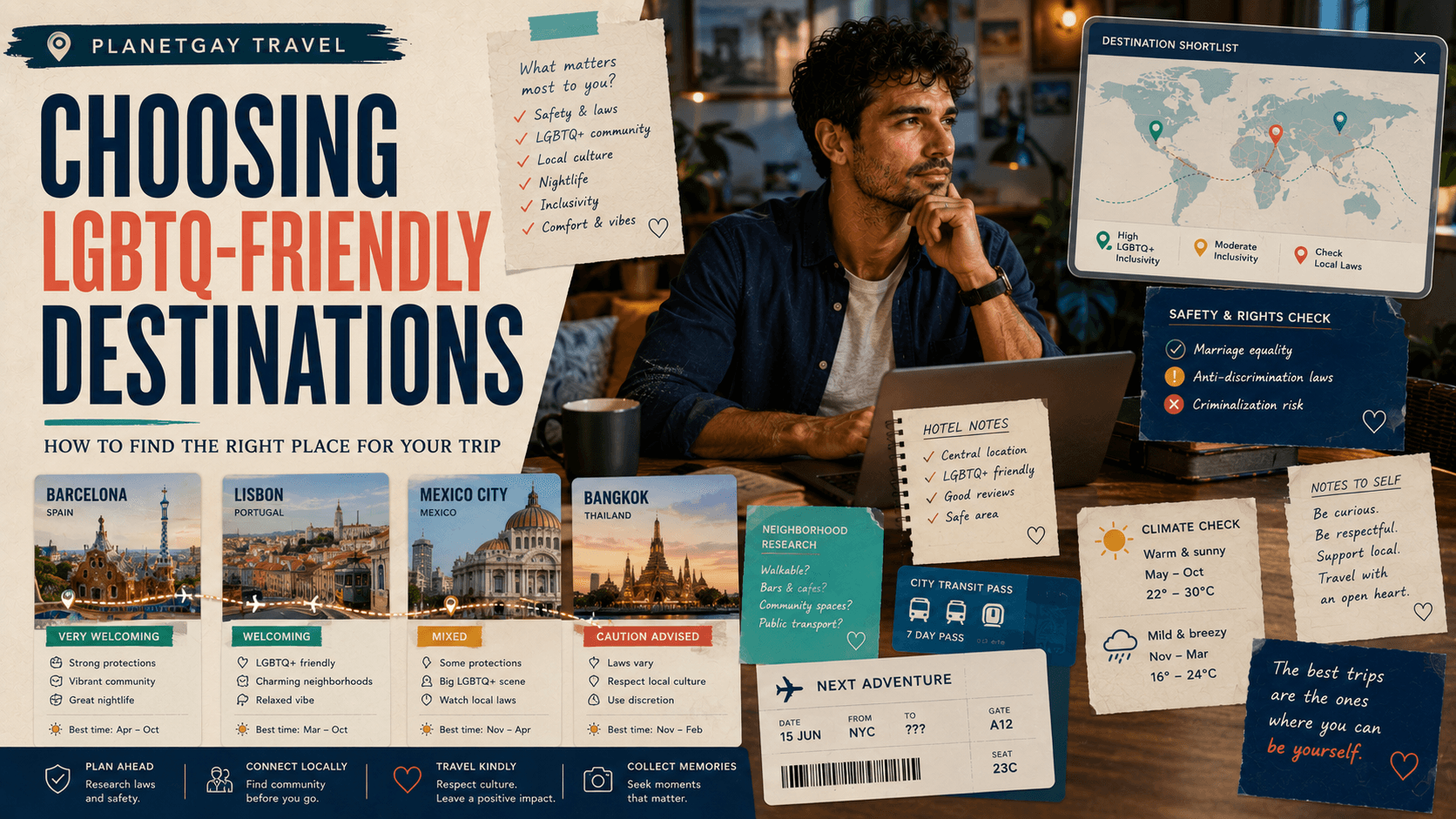
**Criminalisation.** In countries where same-sex relations are criminalised, the risk of arrest — though actual arrests of tourists are uncommon — is real, and the cultural environment almost always reflects that legal position through hostility and visibility risk. These destinations are generally high-risk regardless of any tourism marketing.
**Legal recognition without criminalisation.** Many countries are neither welcoming nor actively hostile. Same-sex relationships are not illegal, but there is no legal recognition and no discrimination protection. The experience depends significantly on where within the country you are and the specific social context.
**Legal protections for same-sex relationships.** Countries with marriage equality or civil partnership and anti-discrimination law provide a stronger legal foundation. This does not guarantee that attitudes on the ground match the legal position — particularly outside major cities — but it generally correlates with safer and more comfortable experiences.
The ILGA World map of sexual orientation laws (ilga.org) is the most reliable reference for current legal status by country.
What to research beyond the legal status
Legal status is the starting point; the following are also important:
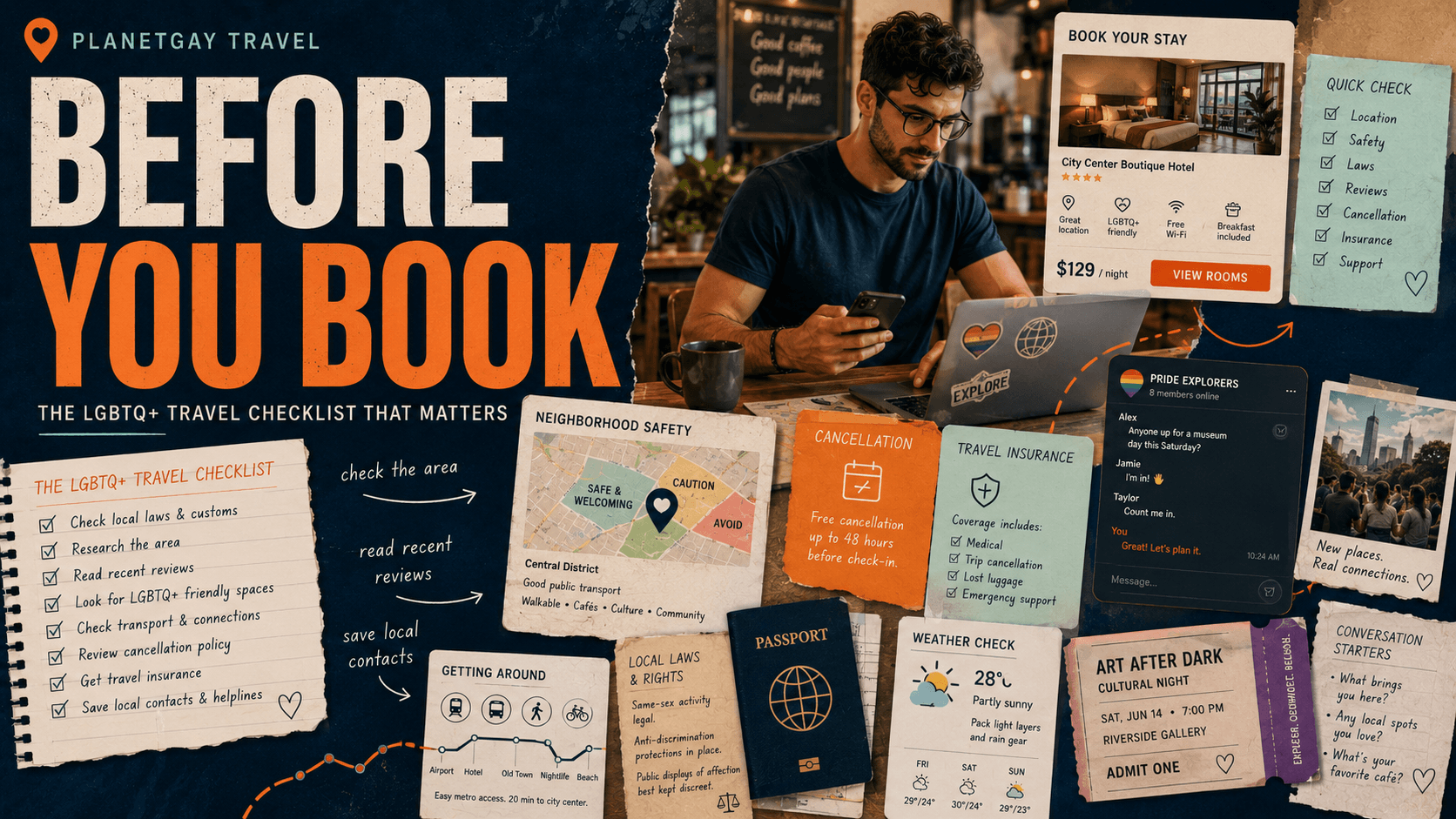
**Recent firsthand accounts.** Travel forums, LGBTQ+ travel blogs and community discussions provide real accounts of current experiences — particularly useful for countries where the legal status has recently changed or where legal protections exist but enforcement is inconsistent.
**Urban versus rural divide.** In many countries, major cities — particularly capital cities and tourist destinations — are significantly more LGBTQ+-welcoming than regional and rural areas. Knowing whether your trip is primarily urban or extends to areas where the experience may be very different is important.
**Current political climate.** Countries where LGBTQ+ rights are politically contested can experience rapid changes in the practical environment for LGBTQ+ travellers, regardless of existing legal protections. Following current news, particularly in countries with contested political situations, matters.
**Current FCO / State Department advice.** Government travel advisories often include LGBTQ+-specific safety information. The UK FCDO (gov.uk/foreign-travel-advice) and US State Department (travel.state.gov) both provide country-specific LGBTQ+ travel notes.
What 'safe' actually means in different contexts
Safety as an LGBTQ+ traveller has multiple dimensions that are worth distinguishing:
**Legal safety:** the risk of arrest or legal sanction.
**Social safety:** the risk of harassment, violence or hostile responses in public settings.
**Practical safety:** being able to book accommodation as a same-sex couple, access medical care without discrimination, navigate emergencies with the support of local authorities.
**Visibility safety:** whether you can be visibly out — holding hands, wearing rainbow imagery, discussing your relationship openly — without significant risk or discomfort.
A destination can be safe on the legal dimension while involving real risk or discomfort on the visibility dimension. Understanding which dimensions matter most for your specific trip — a beach holiday where you want to be visibly a couple is different from a solo cultural trip where your sexuality is not on display — helps you make a more relevant assessment.
Top destinations by region: a starting point
Rather than a definitive ranking, some general orientations:
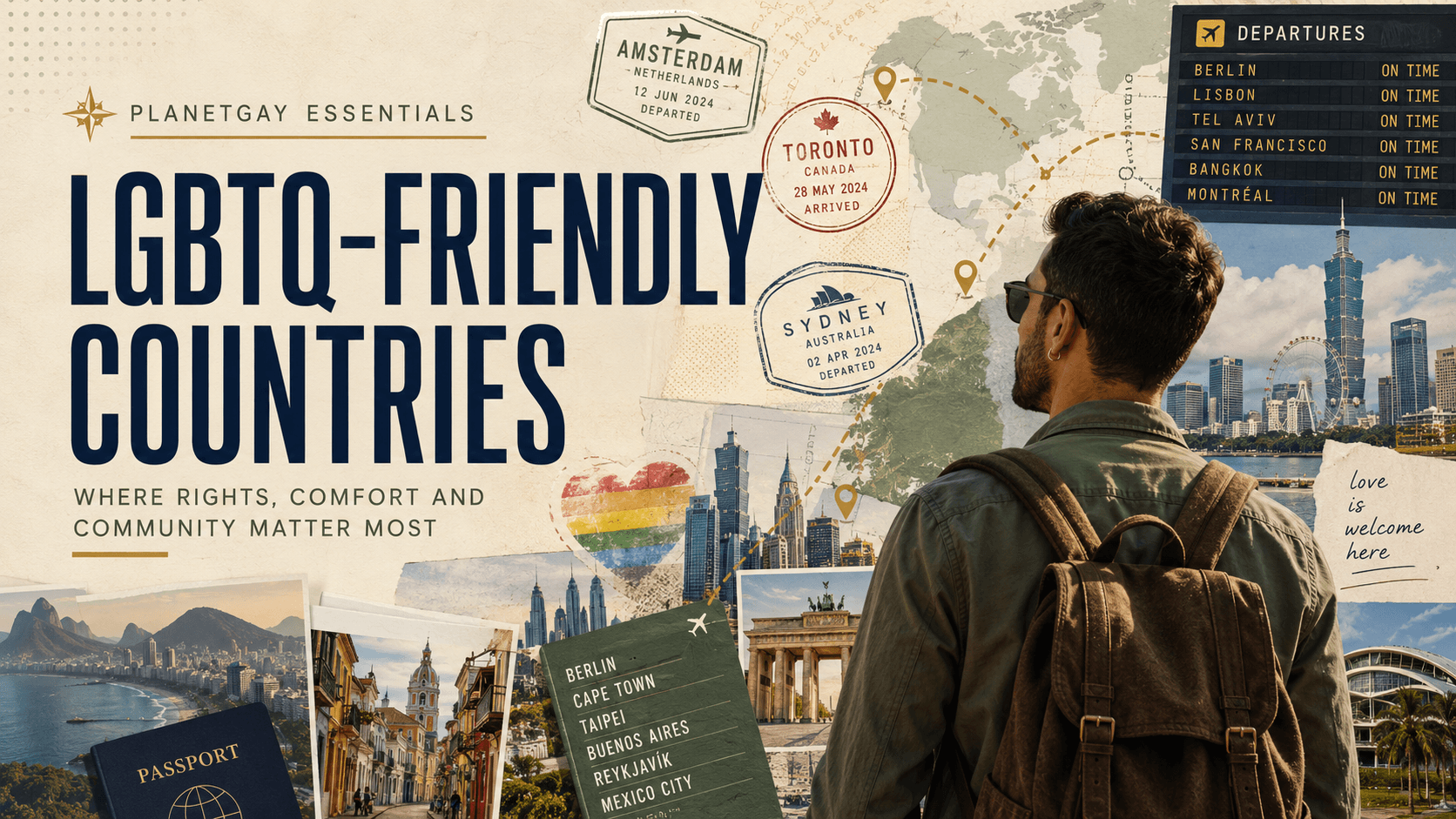
**Western Europe** generally offers the strongest legal protections and social acceptance. The Netherlands, Spain, Germany, France, Portugal and Scandinavia are among the most welcoming globally. The UK is similar in legal terms, with variation between urban and rural environments.
**North America:** Canada and most US states provide strong legal protections and generally safe environments, with significant urban/rural variation in the US.
**Latin America:** Argentina, Brazil (particularly major cities) and Chile have strong legal frameworks. Mexico is mixed — major tourist cities are generally welcoming; other areas vary considerably.
**Southeast Asia:** Thailand has historically been welcoming despite lacking formal legal protections (Thailand passed marriage equality legislation in 2024, effective 2025). Bali, Indonesia is a specific exception within an otherwise restrictive country. Singapore, Japan and South Korea are generally safe but without full equality.
**Middle East:** Generally high risk due to criminalisation and cultural hostility, with the notable exception of Israel.
Always verify current conditions through the sources listed above rather than relying on generalised regional descriptions, which can become outdated as conditions change.