Why simple rankings do not tell the full story
Lists ranking the 'most LGBTQ+-friendly countries' appear regularly and are consistently popular. They are also consistently incomplete. A ranking based solely on legal rights does not capture enforcement. A ranking based on legal and social attitudes does not capture whether those attitudes apply equally across the country or only in capital cities. A ranking that reflects conditions for citizens may not reflect the experience of visitors, who face different levels of exposure and legal liability.
Conditions also change. A country that ranked highly five years ago may have moved in either direction. Political changes, new legislation, shifts in enforcement, public opinion changes and specific incidents all affect the reality on the ground faster than most published rankings update.
This does not mean comparison is impossible — it means comparison should use multiple dimensions and current sources, and should be read with some humility about what a score or ranking can represent. This article explains those dimensions. For specific countries, check current primary sources.
What legal rights actually tell you
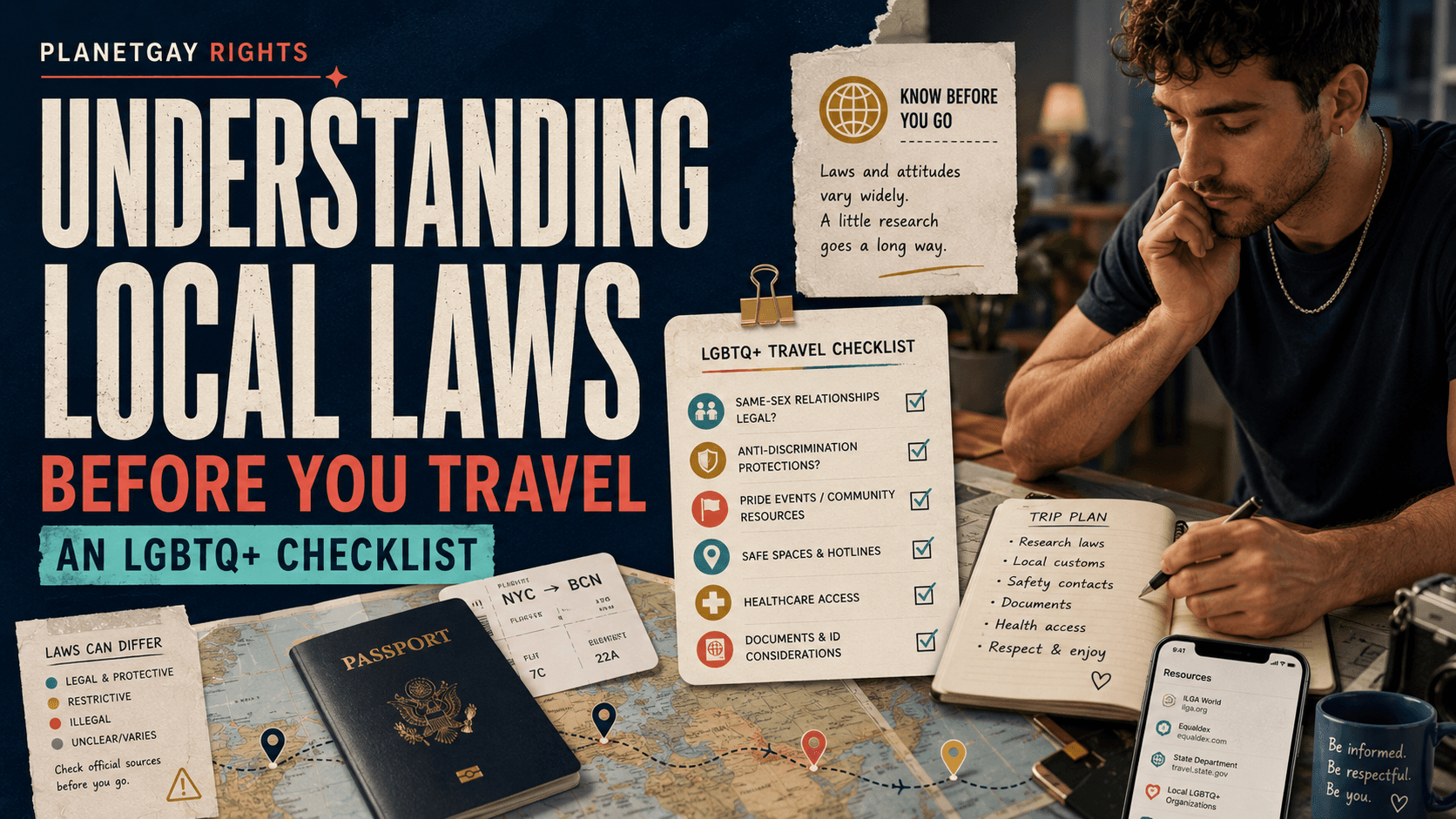
Legal rights are the most systematically documented dimension of LGBTQ+ conditions across countries. The ILGA World database (database.ilga.org), updated regularly, tracks:
- Whether same-sex relationships are legal or criminalised
- Whether same-sex partnerships or marriages are legally recognised
- Whether adoption by same-sex couples is permitted
- Whether anti-discrimination protections exist in employment, housing and services
- Whether hate crime laws cover sexual orientation and gender identity
As of the source check date for this article (June 2026), same-sex relationships are legal in most of Western Europe, North America, much of Latin America, Australia, New Zealand and parts of Asia. They remain criminalised in a significant number of countries, particularly in sub-Saharan Africa, the Middle East and some parts of Asia.
But legal rights are a floor, not a ceiling — they tell you the minimum legal framework, not the full lived experience.
Traveller experience versus resident experience
Visiting a country as a tourist and living there as a resident produce very different LGBTQ+ experiences, for practical reasons.
A tourist typically moves through public spaces — hotels, restaurants, cultural sites, transport — rather than navigating employment law, family context, healthcare access, housing or long-term relationship rights. Some countries with restrictive laws for citizens still have relatively safe tourist environments, particularly in major international destinations, because harassment of foreign tourists carries diplomatic and economic costs.
Resident experience is different: it involves employment law, housing law, healthcare access, relationship recognition (for couples), school environments (for families), and the cumulative effect of social attitudes over time.
For travellers: the traveller experience is the more relevant dimension. For anyone considering moving to or settling in a country: legal protections for residents and social attitudes over the long term matter significantly more.
Countries often cited as LGBTQ+-friendly
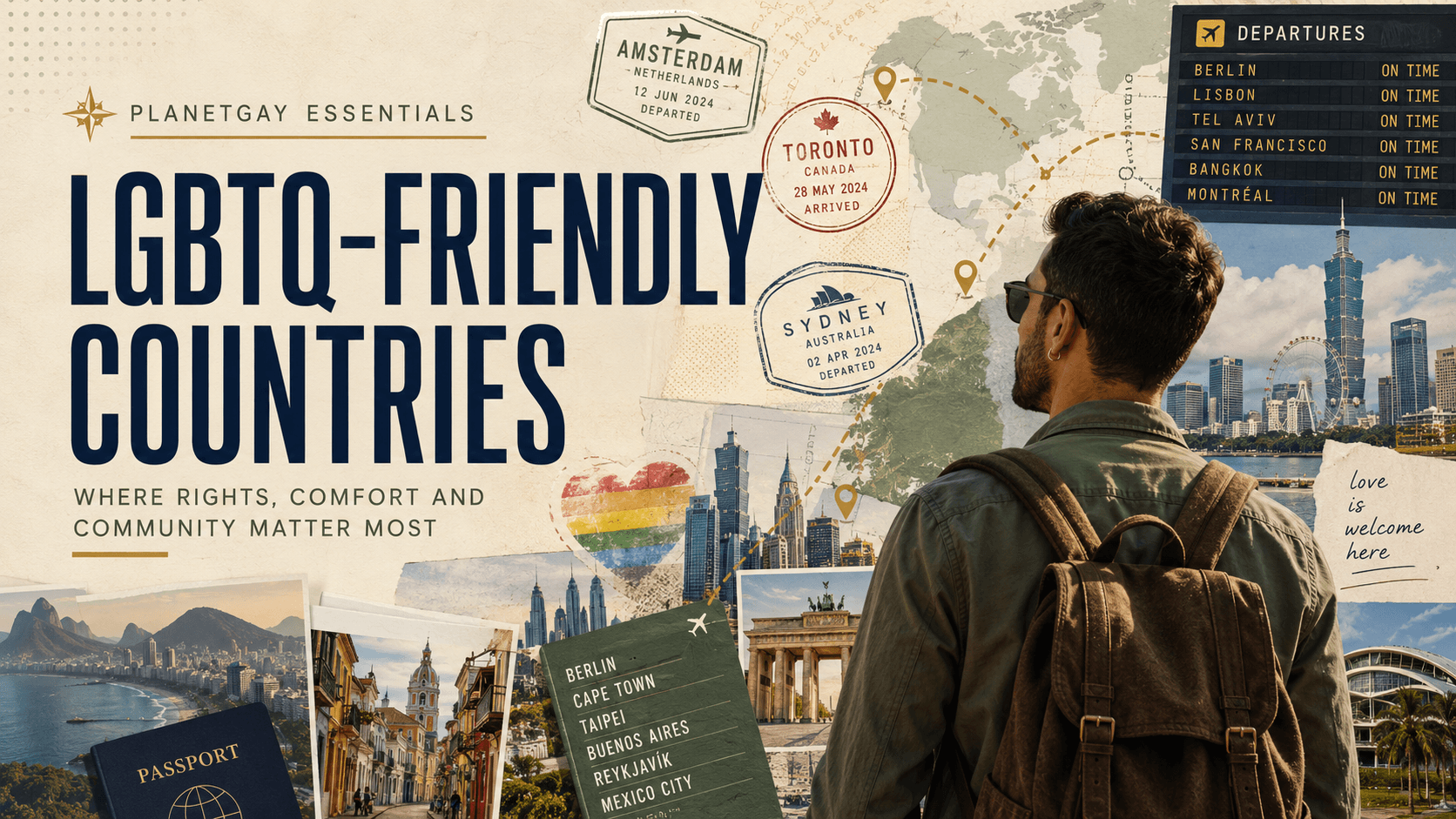
The following countries are regularly cited in LGBTQ+ travel and rights contexts as having comparatively strong legal protections and social acceptance — verified against current sources as of June 2026. This is not an endorsement or guarantee.
**Netherlands:** Same-sex marriage recognised since 2001. Strong anti-discrimination law. Amsterdam is a major LGBTQ+ travel destination.
**Canada:** Same-sex marriage legal nationally since 2005. Strong federal and provincial protections. Major cities have established LGBTQ+ communities.
**Germany:** Same-sex marriage since 2017. Strong anti-discrimination law. Berlin is a major European LGBTQ+ destination.
**Spain:** Same-sex marriage since 2005. Barcelona and Madrid have established LGBTQ+ scenes.
**Australia:** Same-sex marriage nationally since 2017. Strong state and federal anti-discrimination law.
**United Kingdom:** Strong legal protections in England, Scotland and Wales; Northern Ireland has some differences. London is a major LGBTQ+ city.
Note that even in these countries, rural and regional experiences can differ from major city experiences, and social attitudes vary geographically.
How to check current conditions before travel
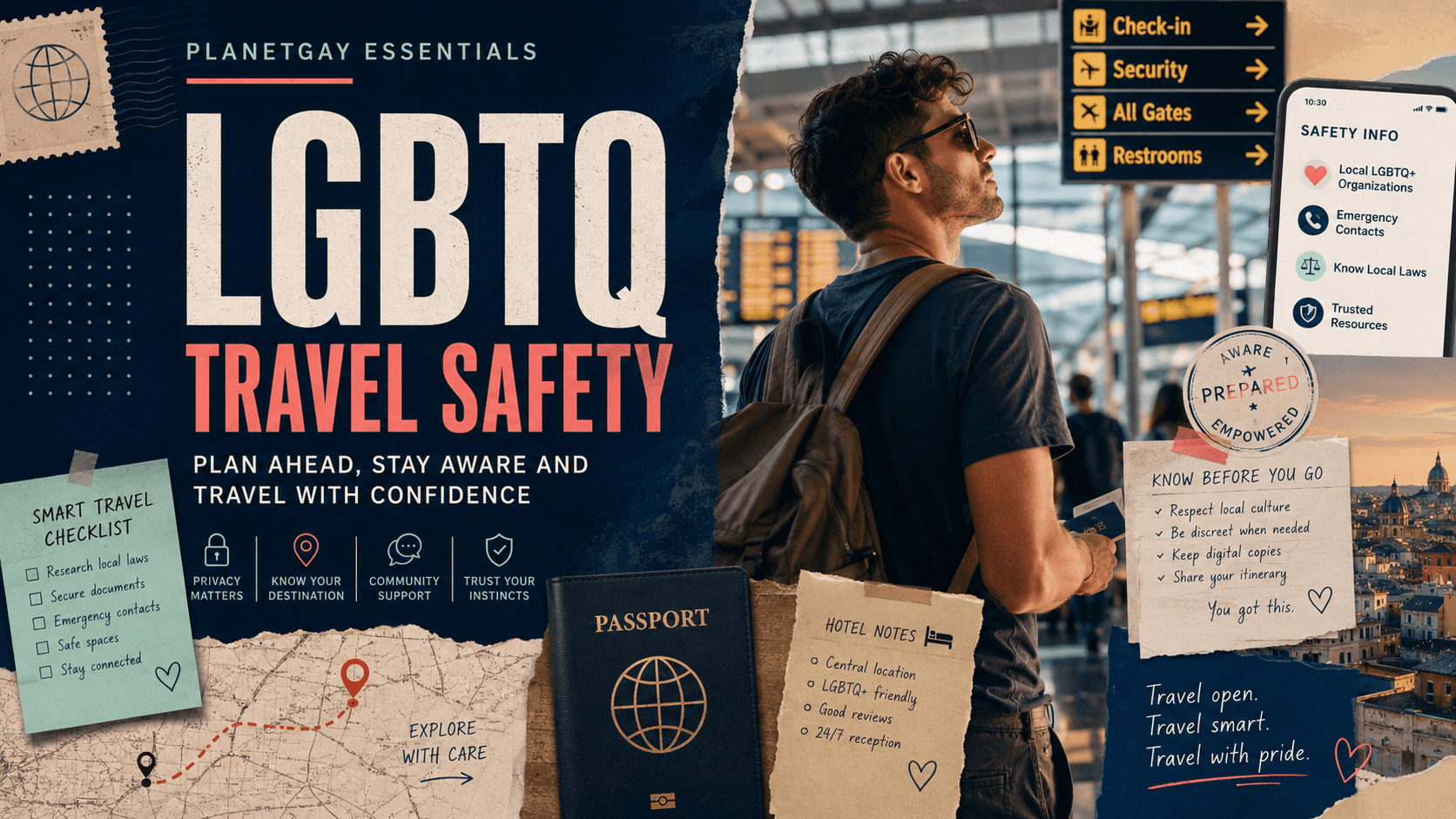
For any country you are visiting, check the following in sequence:
- **Your government's travel advisory** for the specific destination — particularly the LGBTQ+ note if one exists.
- **ILGA World database** for current legal status.
- **ILGA-Europe Rainbow Map** (for European destinations) for a broader rights picture.
- **Local LGBTQ+ organisations** for current social conditions.
- **Recent traveller reports** on LGBTQ+-focused travel communities.
Do not rely on guides that do not show their source-check date, or on country comparisons that have not been updated within the past 12 months. Conditions in several countries have changed materially in recent years in both directions.