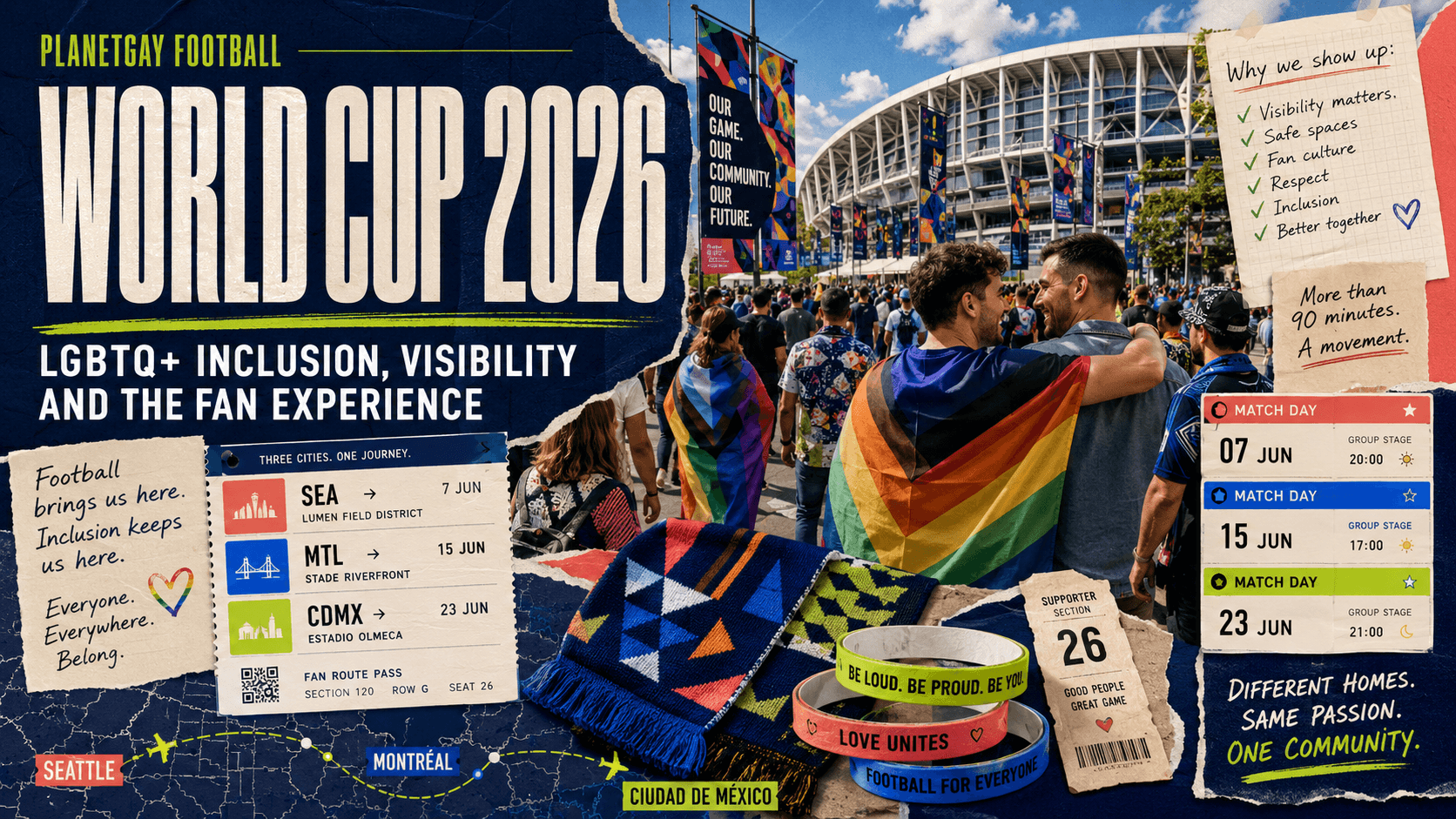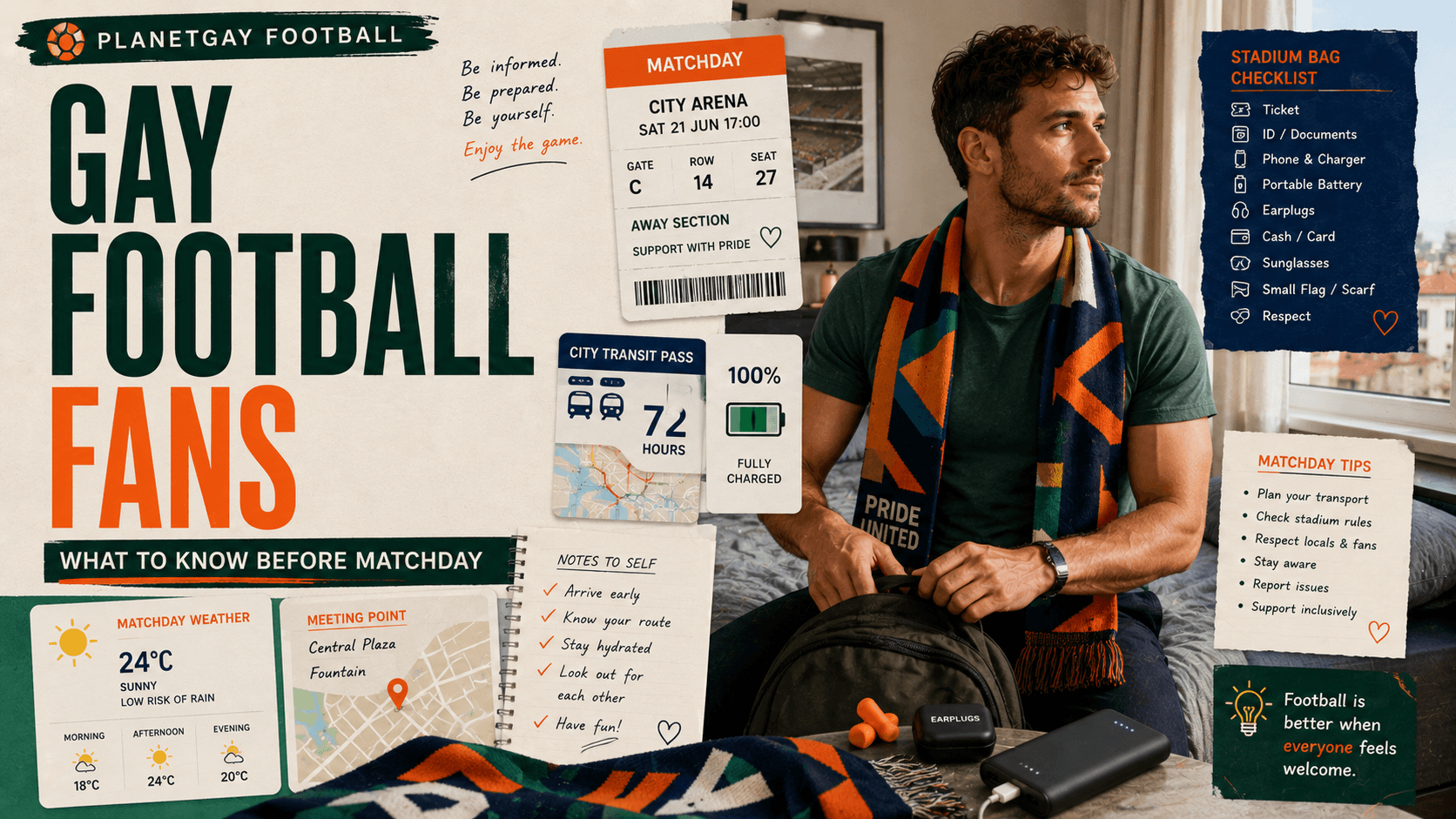
The tournament: an overview for LGBTQ+ fans
The 2026 FIFA World Cup runs from 11 June to 19 July 2026, hosted across the United States, Canada and Mexico — making it the first World Cup co-hosted by three nations and the first to feature 48 teams in an expanded group stage format. Matches are played across 16 cities: 11 in the United States, two in Canada (Toronto and Vancouver), and three in Mexico (Mexico City, Guadalajara and Monterrey).
For LGBTQ+ fans, the 2026 host arrangement is arguably the most favourable in World Cup history in terms of legal context. All three host countries have nationwide legalisation of same-sex relationships: the United States since Obergefell v Hodges in 2015, Canada since 2005, and Mexico where same-sex marriage is now legal in all states following a process completed in 2022. Each country also has significant LGBTQ+ urban communities, particularly in the major host cities.
This guide is for fans who want to attend matches and events with a clear sense of what to expect, what to plan for, and what to do if something goes wrong.
Legal context in each host country
Understanding the legal baseline in each country is the starting point for practical planning.
**United States:** Same-sex marriage is constitutionally protected nationwide. Federal law prohibits employment discrimination on the basis of sexual orientation and gender identity following the Supreme Court's 2020 decision in Bostock v Clayton County. The legal picture at state level on other issues is more varied; some states have laws affecting LGBTQ+ people in specific contexts. For visitors attending the World Cup in American cities, the key practical reality is that you are operating under federal and city/state law, and in most of the host cities — New York, Los Angeles, San Francisco, Atlanta, Miami, Seattle — LGBTQ+ life is very publicly visible and legally protected. Check the US State Department's guidance and your country's advisory for any current developments before travelling.
**Canada:** Canada has comprehensive federal protections for LGBTQ+ people across employment, housing and services (Canadian Human Rights Act), as well as nationwide marriage equality since 2005. Toronto and Vancouver, the Canadian host cities, both have large and active LGBTQ+ communities. See the PlanetGay guide to Canada for detailed context.
**Mexico:** Same-sex marriage is now legal in all Mexican states. Mexico City in particular has a large, established and very visible LGBTQ+ community, including one of the largest Pride events in Latin America. The legal framework is strong; social attitudes vary more widely than in urban contexts, and LGBTQ+ travellers in less urban parts of Mexico may have a different experience than in the host cities. The Guadalajara and Monterrey contexts are discussed in the host city guide.
Planning your trip: documentation and practical preparation
Before travelling from your home country, check your country's official travel advisory for the specific host country or countries you're visiting. This is particularly important for fans travelling from countries with complex visa relationships with the US, Canada or Mexico, and for fans from countries where LGBTQ+ status might create complications with home country authorities (this affects some fans, not most).
For same-sex couples: all three host countries recognise same-sex marriages and partnerships for the purposes of tourist entry. A same-sex marriage certificate will not create complications at the border in any of the three host countries. If you are travelling from a country that does not recognise your relationship, this has no bearing on your status as a tourist in the US, Canada or Mexico.
Ticketing and accommodation: official FIFA World Cup ticketing is managed through FIFA's platform. LGBTQ+-friendly accommodation exists widely in all host cities; the IGLTA (iglta.org) directory lists member accommodation providers with a formal commitment to LGBTQ+ inclusivity. In cities like New York, San Francisco, Los Angeles, Toronto, Vancouver and Mexico City, accommodation close to LGBTQ+ neighbourhoods is available and many properties are openly LGBTQ+-welcoming.
Medication: if you carry HIV medication, PrEP or any other medication, carry documentation from your prescribing doctor and ensure it is in labelled original packaging. This reduces the possibility of complications at customs, though the three host countries do not typically restrict entry based on HIV status.
At the stadiums and fan events
FIFA's official anti-discrimination framework applies at all 2026 World Cup venues. This includes provisions on discriminatory abuse, discriminatory banners and conduct toward fans on the basis of a number of grounds including sexual orientation. The practical implementation and reporting mechanisms are managed by FIFA and venue operators.
If you experience or witness discriminatory abuse at a stadium or official fan zone, you can report it to stewards or security on duty, use any FIFA-provided reporting mechanism at the venue, and contact your country's consulate or FIFA's official fan conduct channels. Documenting incidents with video or photos where safe to do so can assist any formal complaint.
Fan culture at World Cups is diverse and international — the match environment typically includes fans from dozens of countries and is by its nature a large, mixed public event. The behaviour of individual fans varies. LGBTQ+ fans attending World Cup matches have generally reported positive experiences at recent tournaments hosted in countries with strong legal frameworks, but incidents do occur and it is worth knowing the reporting route in advance.
LGBTQ+ community resources in host cities
The host cities include several with large, well-established LGBTQ+ communities and infrastructure:
**New York/New Jersey:** The New York area has one of the largest LGBTQ+ communities in the world, centred in neighbourhoods including the West Village, Hell's Kitchen and Jackson Heights. A wide range of community organisations, health services and social spaces exist.
**Los Angeles:** The Los Angeles LGBTQ+ community is large and dispersed; West Hollywood has a particularly visible scene.
**San Francisco/Bay Area:** San Francisco has a historically significant LGBTQ+ community, particularly in the Castro neighbourhood.
**Seattle:** Capitol Hill is Seattle's LGBTQ+ neighbourhood; the city has a welcoming community and active Pride events.
**Miami:** Wilton Manors (near Fort Lauderdale) and South Beach in Miami are established LGBTQ+ areas.
**Atlanta:** Atlanta has an established LGBTQ+ community, particularly in Midtown.
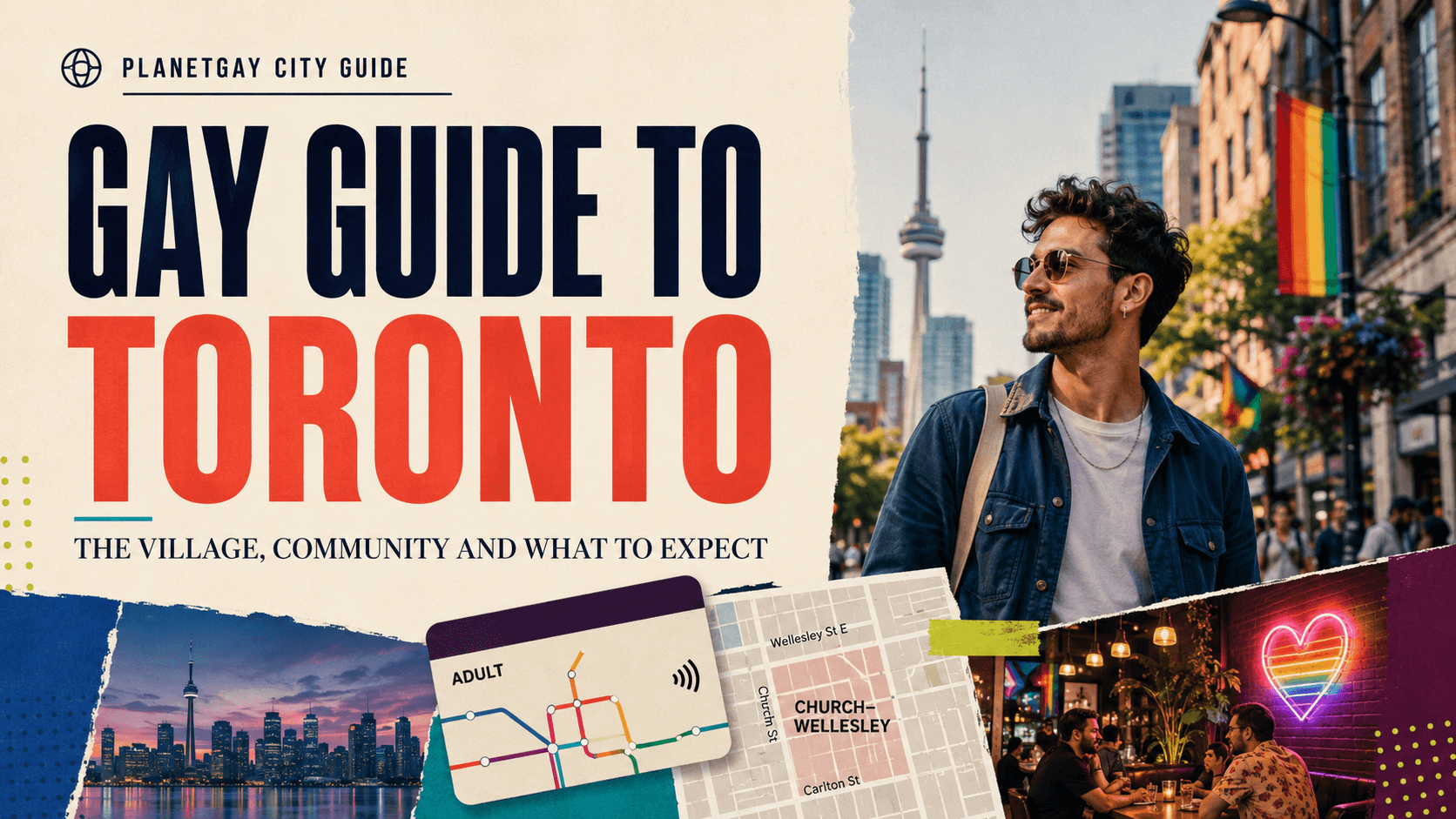
**Toronto:** See the PlanetGay gay guide to Toronto for community and health service details.
**Vancouver:** Davie Village in the West End is Vancouver's LGBTQ+ neighbourhood; active community organisations exist.
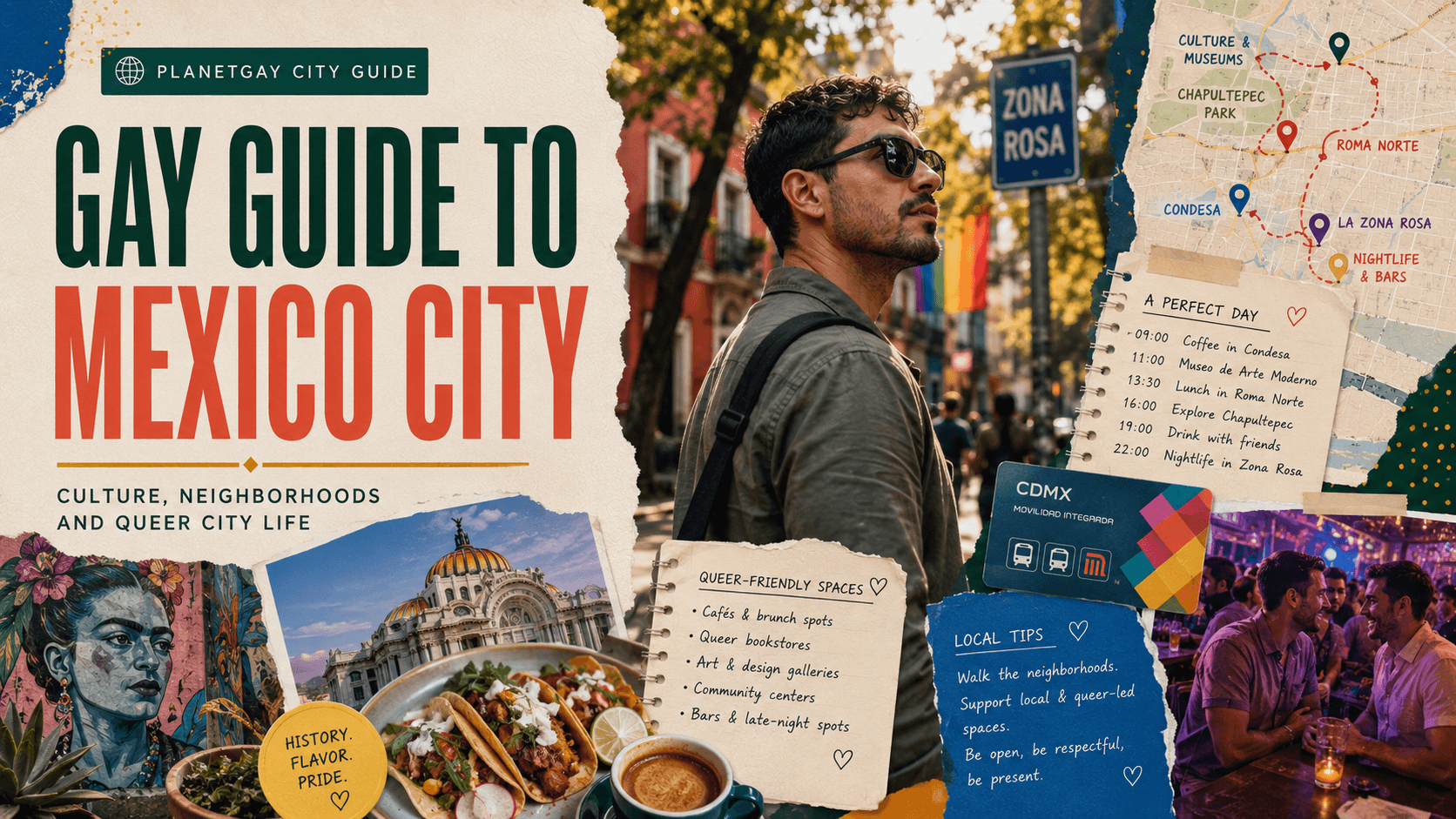
**Mexico City:** Zona Rosa is the central LGBTQ+ neighbourhood and one of the most established in Latin America. See the PlanetGay gay guide to Mexico City.
For health services in any host city, LGBT+ community health centres can typically advise on sexual health, mental health and other services. If you need HIV-related medication refills while travelling, bring sufficient supply from home and documentation, and contact a community health centre if you need assistance.
If something goes wrong
Know your consulate: before travelling, identify the location and emergency contact number for your country's nearest embassy or consulate in the city or cities you're visiting. This is the first point of contact if you are a victim of crime, lose documentation, or face an emergency.
If you experience a hate crime or bias-motivated incident: in the United States, reporting to local police is the standard route; bias-motivated crimes are covered under federal and state hate crime laws. In major cities, police departments typically have specific liaison units for LGBTQ+ communities. In Canada, similar reporting mechanisms exist. In Mexico, report to local police; tourist police (touristic police units) operate in major cities and are the recommended first contact for tourists who have been victims of crime.
If you need emergency medical assistance, the emergency number is 911 in all three host countries.
Practical advice: travel with digital copies of your identification, insurance, and important documents. Ensure you have travel insurance that covers medical care in the host countries. Know your insurance provider's emergency contact number.