Research before you decide
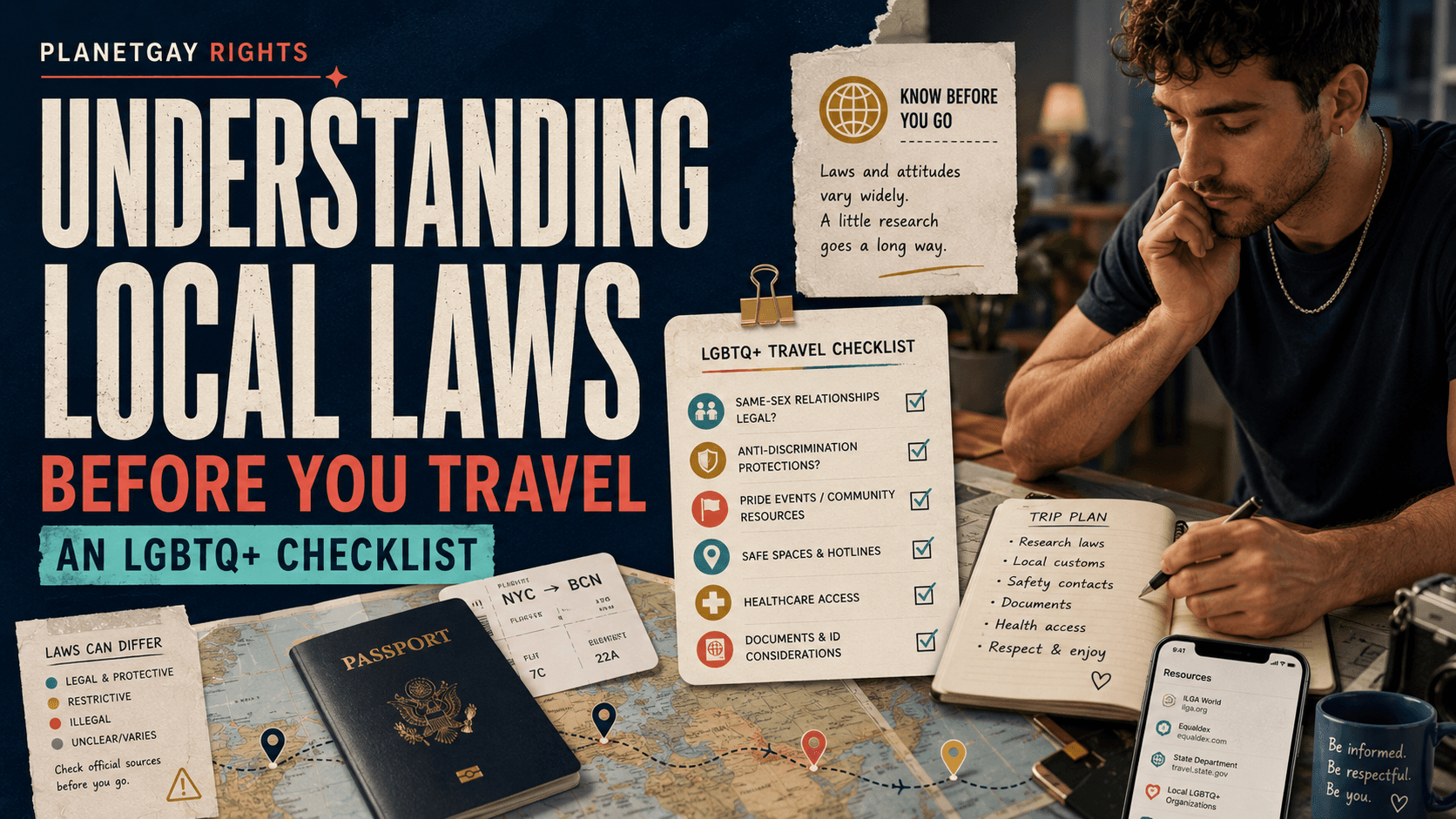
The practical research phase for LGBTQ+ relocation covers more ground than standard expat research. In addition to standard considerations — cost of living, job market, language, climate — you need accurate current information about the legal framework for LGBTQ+ people in your destination country, the actual social conditions, and what your specific situation (solo, partnered, family) means for your legal status there.
The ILGA World database (database.ilga.org) is the standard reference for legal status of same-sex relationships by country. The ILGA-Europe Rainbow Map is useful for European destinations. Both reflect law more than social conditions — for the lived experience, current community sources (local LGBTQ+ organisations, recent expat accounts) are more useful.
Do not rely on a single source or a guide that does not show its source date. Conditions change, and the consequences of acting on outdated legal information are higher in relocation than in travel.
Immigration and partnership rights
If you are relocating with a same-sex partner, immigration and partnership recognition become directly relevant in ways they are not for solo relocation.
The key questions are: Does your destination country recognise same-sex partnerships for immigration purposes? Will a civil partnership or marriage from your origin country be recognised? If your relationship is not legally recognised in the destination, can you both obtain independent visas through employment or other routes?
These questions do not have universal answers — they depend on your specific countries of origin and destination, the type of relationship recognition involved, and the current immigration rules. This article cannot give legal advice. For specific immigration questions, consult an immigration lawyer with LGBTQ+ and international experience before making commitments.
Human Dignity Trust and other international LGBTQ+ legal organisations can sometimes advise on jurisdiction-specific questions or refer to appropriate legal resources.
Healthcare in a new country
Healthcare access is one of the most practically significant aspects of relocation for gay and bisexual men. Planning needs to cover:
**Continuity of medication.** If you are on PrEP, antiretroviral therapy or other ongoing medication, verify that the medication is available in your destination country, whether your existing prescription will be accepted or whether you need a new one, and how to access the service that prescribes it in your new location. Allow significant lead time.
**Finding affirming providers.** Establishing a GP and a sexual health clinic that are LGBTQ+-affirming is more complex in a new country where you don't have personal referrals. Local LGBTQ+ community organisations are the most reliable source of provider recommendations; expat LGBTQ+ groups (where they exist) can also be useful.
**Insurance and access.** Healthcare insurance requirements vary by country. In some countries, public healthcare access is tied to residency or employment status. Establish your access route before you need urgent care rather than during a health situation.
Housing and employment
Anti-discrimination law in housing and employment varies significantly between countries, and between legal protection and actual enforcement even within the same country.
For housing: in countries without explicit LGBTQ+ anti-discrimination protection in housing, you may have less recourse if a landlord or seller declines to deal with you because of your relationship or identity. Knowing the legal framework in advance lets you make informed decisions — and may affect whether you disclose partnership status on housing applications.
For employment: same-sex relationships and sexual orientation are irrelevant in most professional contexts, but are material in some: roles that require government security clearance in countries where LGBTQ+ status is legally relevant, roles in religious organisations, and roles in countries where employment law contains specific LGBTQ+-related exclusions. Researching your specific sector in your specific destination is more useful than general country rankings.
For both housing and employment, international cities tend to have more established norms and protections than smaller cities and rural areas in the same country.
Privacy and long-term planning
Longer-term planning as an LGBTQ+ person in a new country involves questions that compound over time: what happens if the political or legal situation in your destination changes? What are your rights if a relationship ends in a country that does not recognise it? What does healthcare access look like as you age?
Privacy in a new country may also need more active attention than at home — depending on your workplace, housing situation and local community context, you may be navigating disclosure decisions repeatedly in ways that are less necessary once you are established.
Making the relocation on a trial basis — a fixed-term assignment or rental, rather than a permanent move immediately — allows you to assess the actual experience before committing fully. Many people who relocate internationally find the actual conditions different from what research suggested, in both positive and negative ways.