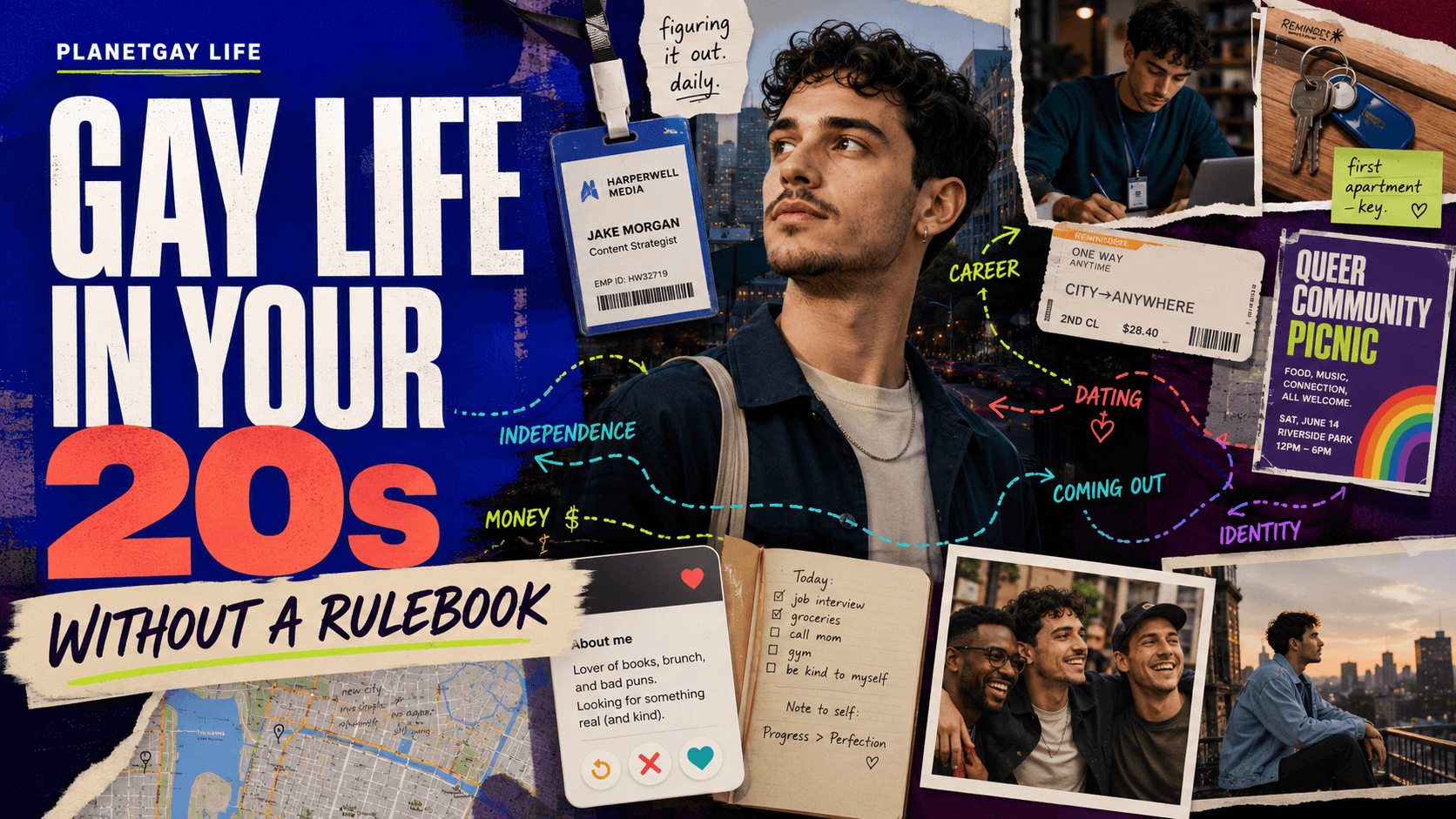
The 20s as a gay man are different
The conventional 20s narrative — figure out your career, date around, settle down around 30 — is a script that was mostly written for straight people. For gay men, the 20s often involve something more compressed and more complicated: building an adult identity, coming out (sometimes for the first time), constructing a social world largely from scratch, navigating romantic and sexual relationships without the cultural scaffolding that straight peers have access to, and processing a set of experiences from earlier in life that may never have been fully addressed.
None of this makes gay 20s worse than straight 20s. For many men, this decade contains first experiences of genuine community, first relationships on honest terms, the relief of living more fully as themselves. But the lack of a ready-made script — the absence of a clear cultural template for what a gay man in his 20s is supposed to be doing and wanting — is both a freedom and a source of confusion.
Coming out at various points in the decade
Men come out at very different points in their 20s, and the social and emotional context differs significantly depending on when. A man who came out at 19 in university has a different experience from one who comes out at 25 after years of navigating adult life without being out; the latter is often managing a social identity reconstruction alongside the other demands of adult life.
For men who come out later in their 20s, the experience of being newly out in a world where many gay peers have been out for years can feel like arriving late to something everyone else already understands. Feeling behind, or feeling like you are doing something for the first time that you 'should' have done years ago, is a common experience. It is also largely unhelpful — there is no correct timeline, and men who come out at 27 do not have to compress the experiences of a 19-year-old into a few years of catch-up.
Whatever your timeline, your 20s are your own — not a comparison to a hypothetical version of you who did things differently.
Dating in your 20s: realistic expectations
Dating in your 20s as a gay man involves learning — about what you actually want, what you can offer, what kind of relationship suits you — in a context where the answers to these questions are genuinely open and often changing. This is true for straight people too, but the specific forms of this learning in gay dating carry their own patterns.
Some honest observations: apps are a significant portion of the available infrastructure for meeting gay men, particularly in cities. Apps are not designed for the slow development of connection — they reward quick decisions and have structural features that can be dehumanising over time. Using them as one tool among several, rather than the primary mechanism for all social and romantic contact, tends to be healthier.
Relationships in your 20s often don't last. This is statistically true across orientations and is not evidence of a specific gay relationship failure pattern. First serious relationships are learning experiences that teach you what you need in ways that are hard to know in advance. Treating a relationship that ends as a failure rather than an experience is a framework worth questioning.
Health and sexual health in your 20s
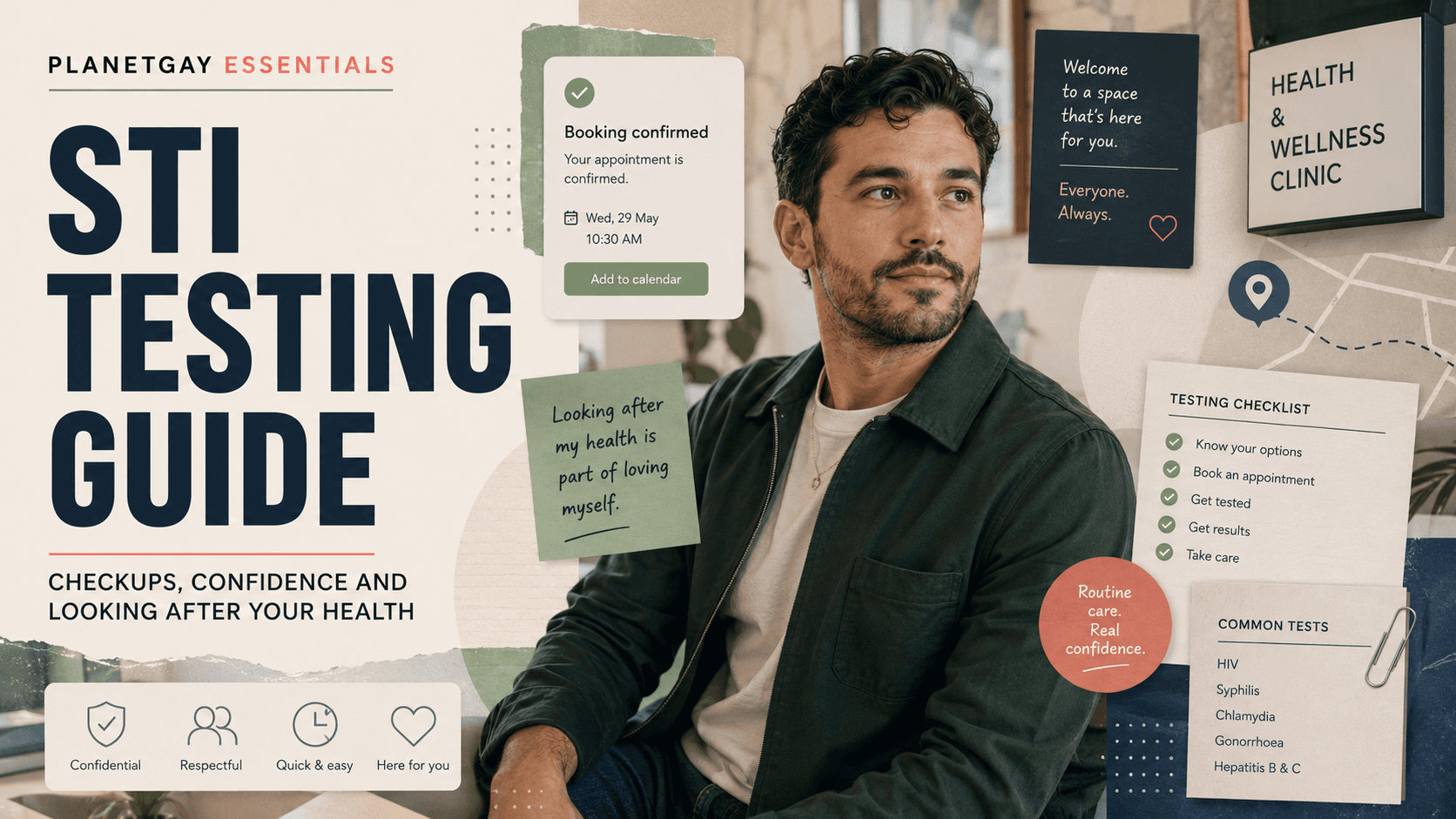
The 20s are statistically the period of highest sexual activity and corresponding sexual health risk for gay and bisexual men. Regular HIV and STI testing — at least every three months for men who are sexually active with multiple partners, per NHS and CDC guidance — is one of the most important health habits to establish in this decade.
PrEP, if you are HIV-negative and sexually active with risk factors, significantly reduces HIV transmission risk. It is available through sexual health clinics in the UK, Canada and many other countries, and is worth discussing with a sexual health clinician. The PlanetGay sexual health guides on HIV testing, STI testing and PrEP cover this in detail.
Mental health in your 20s is also worth attending to. Minority stress — the cumulative psychological toll of navigating discrimination, concealment and social difference — affects gay men at higher rates than straight men for depression, anxiety and substance use. This is not inevitable; it is a known risk factor that can be managed through community, therapy, and conscious attention to wellbeing.
The permission you are looking for
Many gay men in their 20s are looking, consciously or not, for permission: permission to not have a life that looks like the conventional 20s narrative; permission to be uncertain about relationships, career and identity without that uncertainty meaning failure; permission to prioritise their own needs without constant justification.
There is no institution that will formally provide this permission. What replaces it is a combination of community (being around people who recognise your experience as legitimate), models (seeing gay men who have built lives that work, in whatever form), and personal experience (learning through living that your specific path has value even if it doesn't match the template).
Your 20s do not have to look like anyone else's. This is a freedom that is often experienced as confusion before it is experienced as freedom.