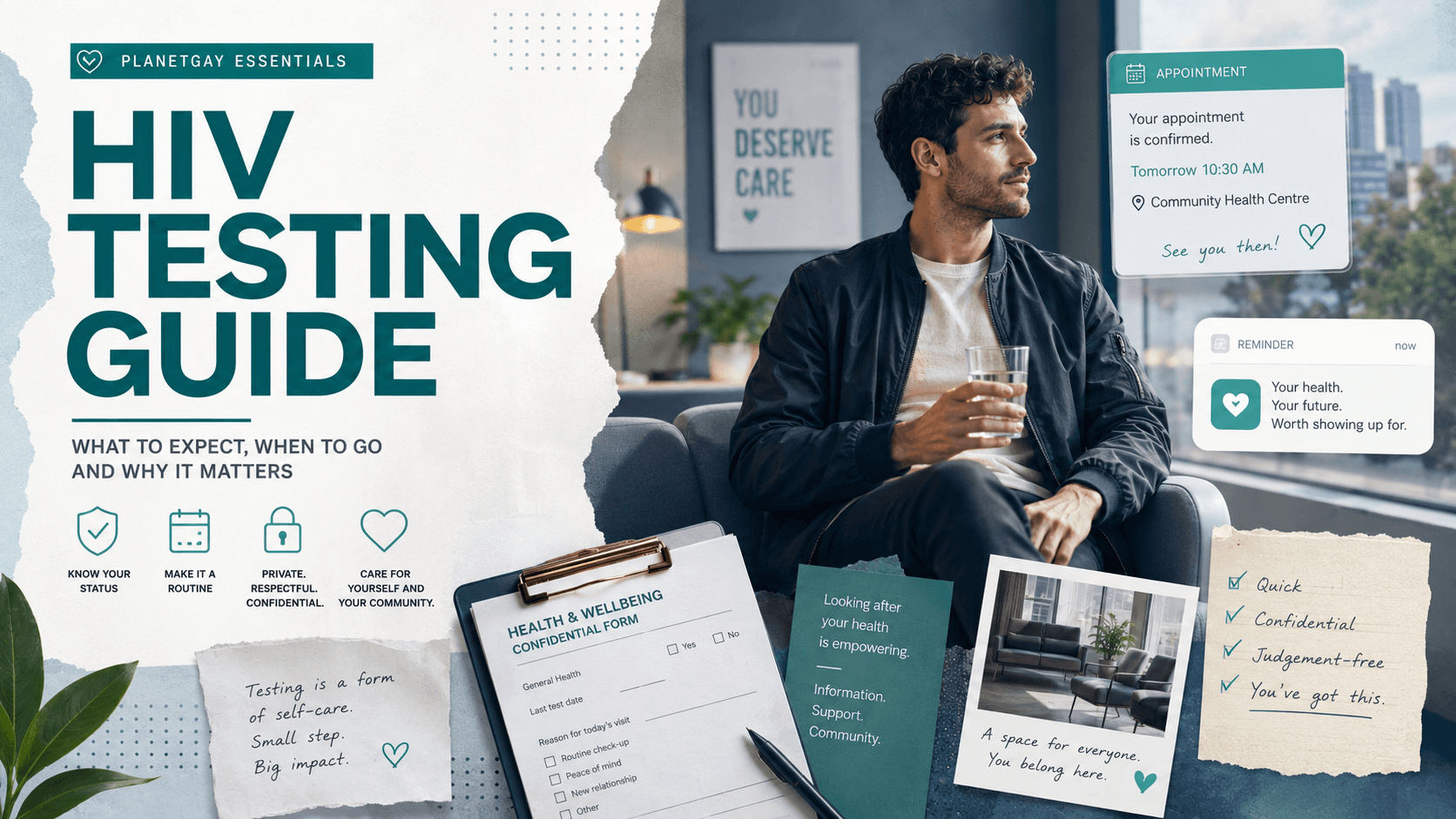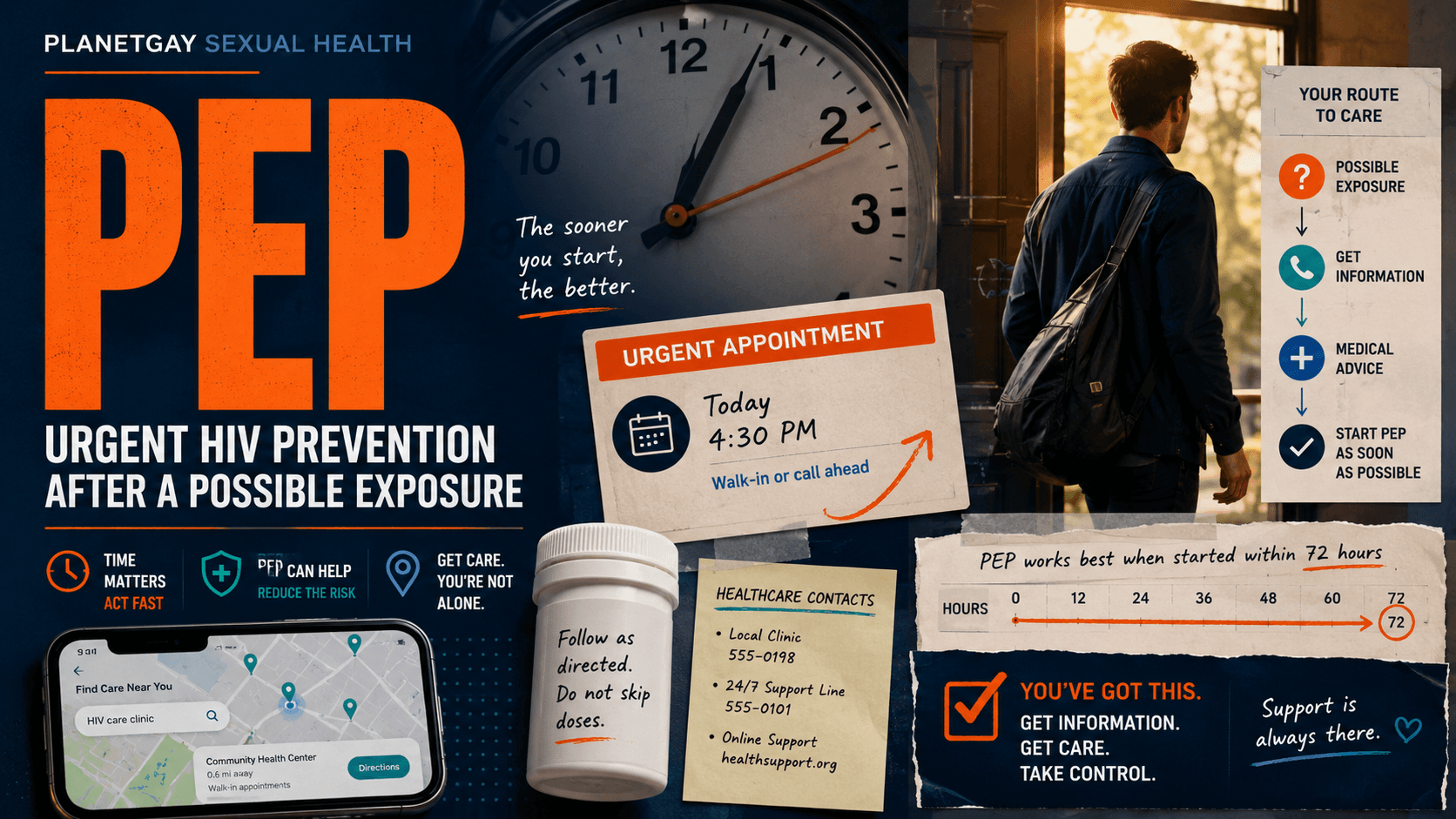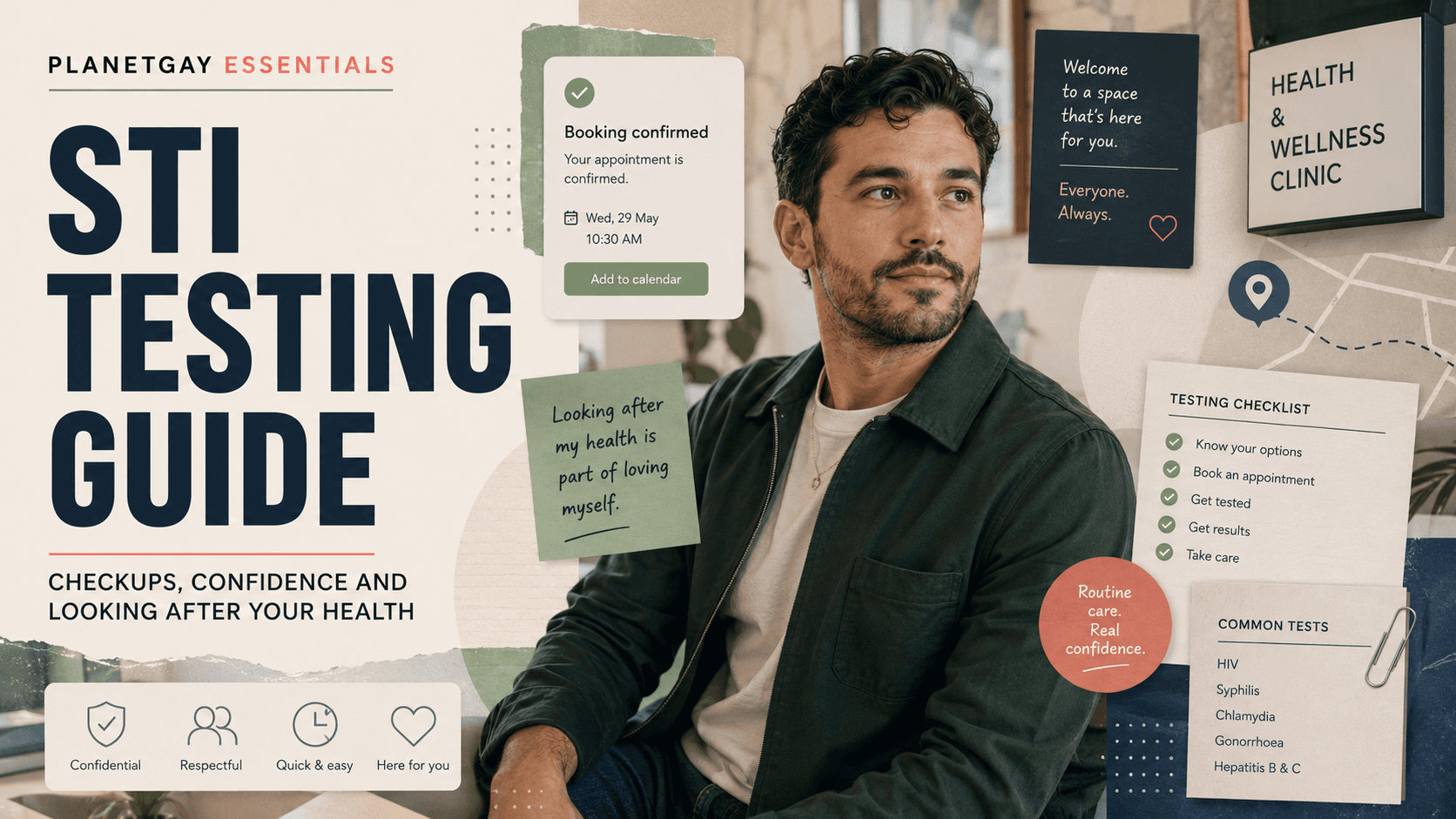
STI testing is routine healthcare
This article is educational information only. It is not medical advice and does not replace a consultation with a qualified healthcare professional. Readers should discuss their individual circumstances, testing history and health questions with a doctor, nurse or sexual-health clinician.
Regular STI testing is a normal part of healthcare for sexually active people. For gay and bisexual men, specialist sexual health services are available in many countries through sexual health or GUM (genitourinary medicine) clinics. The NHS in the UK, public health services in Canada, the CDC in the United States and the ECDC in Europe all provide guidance on recommended testing frequency and practice, though specifics vary by country, region and individual circumstances.
Why standard testing may not be enough
A standard sexual health check may not automatically include all the tests that are relevant for gay and bisexual men. Testing requirements depend on the type of sexual contact — anal, oral, urethral — which means that a standard urine test alone will not detect infections at other sites.
For example, gonorrhoea and chlamydia can infect the throat and rectum as well as the urethra, and these require separate swab tests. Syphilis requires a blood test. HIV requires a blood or self-test. Hepatitis A, B and C testing may also be relevant depending on individual circumstances.
When attending an appointment, being specific about the kind of sexual contact you have had — even if it feels awkward — allows the clinician to advise on the most appropriate tests. Clinicians in sexual health settings are accustomed to these conversations.
Window periods: when testing can and cannot detect infection
Window periods are the time between infection and when a test can reliably detect it. Testing before the window period ends may produce a negative result even if infection is present. Window periods vary by infection and test type.
As a general indication — which should be confirmed with a clinician, as guidelines and test technologies are updated: for HIV using a fourth-generation antigen/antibody test, major health organisations indicate a window period of approximately 18 to 45 days, with most infections detectable by 45 days. For chlamydia and gonorrhoea, testing is typically accurate from around 1 to 2 weeks after exposure. For syphilis, testing is typically reliable from around 3 to 6 weeks, though some tests may take longer.
If you have had a recent potential exposure and are concerned, contact a sexual health clinic directly rather than waiting for a scheduled check — they can advise on whether testing now is appropriate or whether a later repeat test is needed.
Where to get tested
Sexual health clinics, GUM clinics and LGBTQ+-friendly healthcare providers are the recommended starting points for testing. In the UK, the NHS provides free sexual health services and online testing services through local clinics. In Canada, sexual health services are available through provincial public health systems; some are specifically LGBTQ+-friendly. In the United States, Planned Parenthood and community health centres, as well as LGBTQ+-specialist clinics, offer testing.
Some clinics offer online or at-home STI testing kits that can be completed without attending in person. These can be useful in terms of access and privacy, though they typically test for a limited range of infections. If you have symptoms, or if your exposure was recent and urgent, attending a clinic in person is usually the better option.
If cost or access is a barrier, many sexual health services in the UK, Canada and other countries with public health systems are free or subsidised. Charities and community health organisations sometimes provide additional support.
Hepatitis B and vaccination
Hepatitis B is a viral infection transmitted through blood and sexual fluids. It can be prevented by vaccination, which is offered to gay and bisexual men as a recommended intervention in many countries, including the UK, Canada and the United States. In the UK, the NHS hepatitis B vaccination is offered through sexual health clinics and some GP practices.
Hepatitis A can also be transmitted sexually and is also vaccine-preventable. If you have not been vaccinated against hepatitis A and B, a sexual health clinician or GP can advise on whether vaccination is recommended for your situation.
Neither vaccination nor previous infection information in this article constitutes medical advice. Consult a clinician for personalised guidance.
Testing frequency
Recommended testing frequency varies based on individual circumstances, level of sexual activity, number of partners, and whether preventive medications such as PrEP are being used. Different health organisations give different baseline recommendations.
As a general orientation — not as advice for any individual — many sexual health organisations recommend that sexually active gay and bisexual men with multiple partners consider testing for HIV, syphilis, gonorrhoea and chlamydia at least every three to six months. Those using PrEP are typically required to attend regular testing as part of their PrEP monitoring schedule.
A clinician who knows your situation can advise on the frequency that is appropriate for you.
Attending an appointment: what to know
When attending a sexual health appointment, being as accurate as possible about your history — types of sexual contact, approximate number of partners, any symptoms — helps the clinician determine which tests are appropriate. Confidentiality in sexual health settings is generally protected by professional standards and, in most countries, by law.
If you have not disclosed to your GP that you are gay or bisexual, you are not required to in order to access sexual health services. Sexual health clinics see patients independently of GP referrals in many countries. You can attend as a self-referral.
If you experience symptoms — discharge, sores, rashes, burning, unusual swelling — attend a clinic promptly rather than waiting for a routine screening appointment. Symptoms warrant earlier investigation.