Medical disclaimer
This article is educational information only. It is not medical advice and does not replace a consultation with a qualified healthcare professional. PrEP eligibility, regimen, access and monitoring vary by country, healthcare system and individual circumstances. Readers should discuss their situation with a doctor, nurse or sexual health clinician before starting, stopping or changing PrEP use. Information here is drawn from CDC, NHS, PHAC and WHO guidance.
What PrEP is
PrEP stands for pre-exposure prophylaxis. It refers to medication taken by people who are HIV-negative in order to reduce the risk of acquiring HIV. According to the CDC, when taken as directed, PrEP reduces the risk of HIV infection from sex by approximately 99 percent. This figure reflects consistent and correct use — the level of protection depends on adherence to the prescribed regimen.
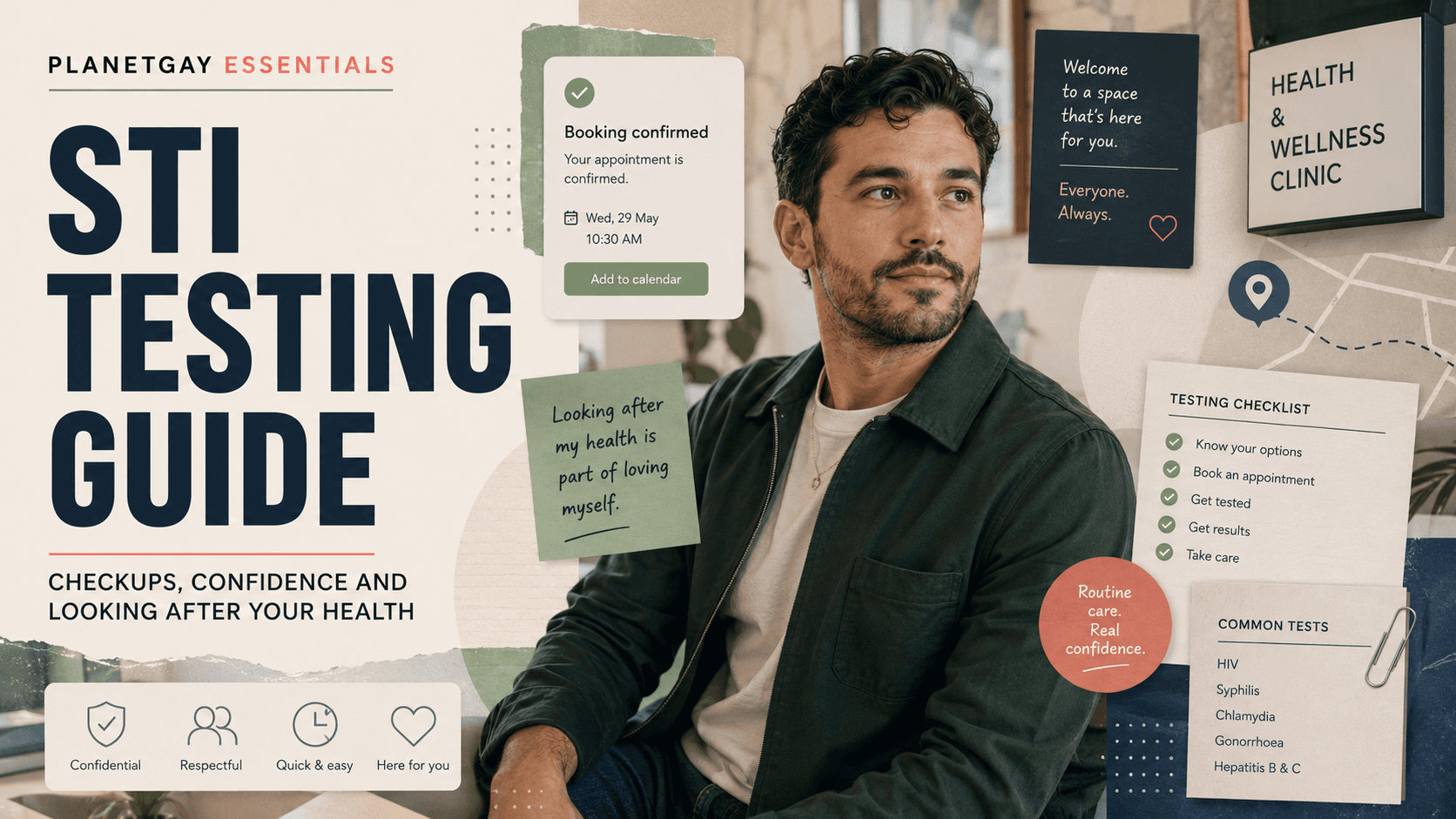
PrEP does not protect against other sexually transmitted infections. People using PrEP are generally advised to continue using condoms for protection against gonorrhoea, chlamydia, syphilis, hepatitis and other infections, and to attend regular STI screening appointments as part of their PrEP care. A clinician involved in prescribing PrEP can advise on this.
PrEP has been available in various forms in the UK since 2020 through NHS sexual health clinics, in Canada through various provincial access programmes, and in the US through prescription from a healthcare provider.
How PrEP is taken
There are different PrEP regimens, and which is appropriate for an individual depends on their circumstances and the guidance of a clinician. The most widely used form is daily oral PrEP, typically a tablet containing tenofovir and emtricitabine. In some countries and for some individuals, an on-demand or event-driven regimen (sometimes called 2-1-1) has been approved, where tablets are taken around the time of sexual activity rather than every day.
Not all regimens are licensed or appropriate in all countries or for all individuals. Injectable PrEP (long-acting cabotegravir) has been approved in some countries and is an alternative for people who find daily tablets difficult to maintain consistently.
A healthcare provider will advise on which regimen is appropriate for your circumstances, eligibility and the current options available in your country.
What PrEP monitoring involves
Starting and continuing PrEP typically involves regular medical appointments. At a minimum, most PrEP programmes require: an HIV test before starting (to confirm HIV-negative status), testing for other STIs, kidney function testing (because some PrEP medications can affect kidney function in some individuals), and regular follow-up appointments — typically every three months — which include HIV testing, STI screening and kidney function review.
These requirements exist to protect the individual and to ensure PrEP is working as intended. Missing monitoring appointments or stopping PrEP without clinical advice are not recommended.
A clinician overseeing your PrEP will guide you through the specific monitoring requirements for your situation.
Accessing PrEP
Access to PrEP varies considerably by country. In the UK, PrEP is available free through NHS sexual health clinics in England, Scotland and Wales, with services in Northern Ireland also providing access. In Canada, PrEP is approved and available, but access and cost vary by province and prescription status; some provincial drug plans cover it and some do not. In the United States, PrEP is available by prescription, and some federal programmes provide assistance with cost.
If you are interested in starting PrEP, a sexual health clinic is the most direct starting point in most countries. They can assess your eligibility, prescribe if appropriate, and set up the monitoring schedule. In some countries, GP practices can also prescribe PrEP, though availability varies.
For general guidance on access in your country, search for 'PrEP access' plus your country name, or contact a local LGBTQ+ health organisation.
What PrEP does not do
PrEP is specifically designed to prevent HIV. It does not provide any protection against gonorrhoea, chlamydia, syphilis, herpes, hepatitis A, hepatitis B, hepatitis C, HPV or any other sexually transmitted infection.
PrEP is not a replacement for the broader range of sexual health care that gay and bisexual men benefit from: regular STI testing, discussion of vaccination (hepatitis A and B, HPV where available), and, where relevant, condom use.
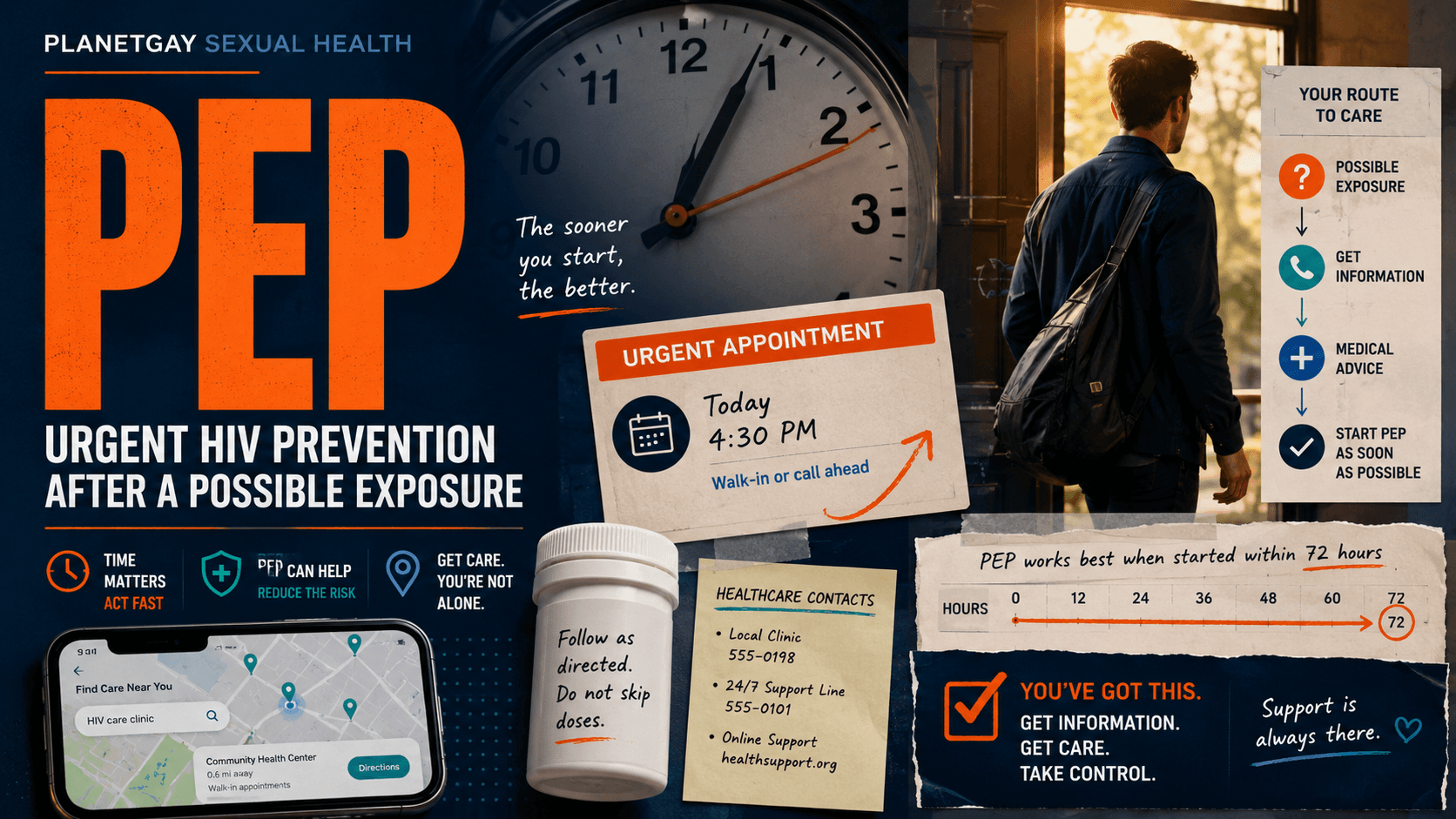
PrEP is also not effective as post-exposure prophylaxis — it should not be used after a possible exposure as an emergency measure. For urgent HIV prevention after a possible exposure, PEP (post-exposure prophylaxis) is the relevant medication and is time-sensitive. See the PEP guide on this site.