Medical disclaimer — urgent care note
This article is educational information only and is not medical advice. PEP is time-sensitive. If you believe you have been exposed to HIV and may need PEP, seek urgent medical advice immediately — do not read this article first and then call. Go to an emergency department, sexual health clinic or urgent care service now. The sooner PEP is started after a possible exposure, the more effective it is. This article is background information to understand what PEP is — it is not a guide to deciding whether you need it. That decision must be made with a clinician.
What PEP is
PEP stands for post-exposure prophylaxis. It is a course of antiretroviral medication taken after a possible exposure to HIV in order to prevent infection from establishing. It is different from PrEP (pre-exposure prophylaxis), which is taken before and during periods of potential exposure.
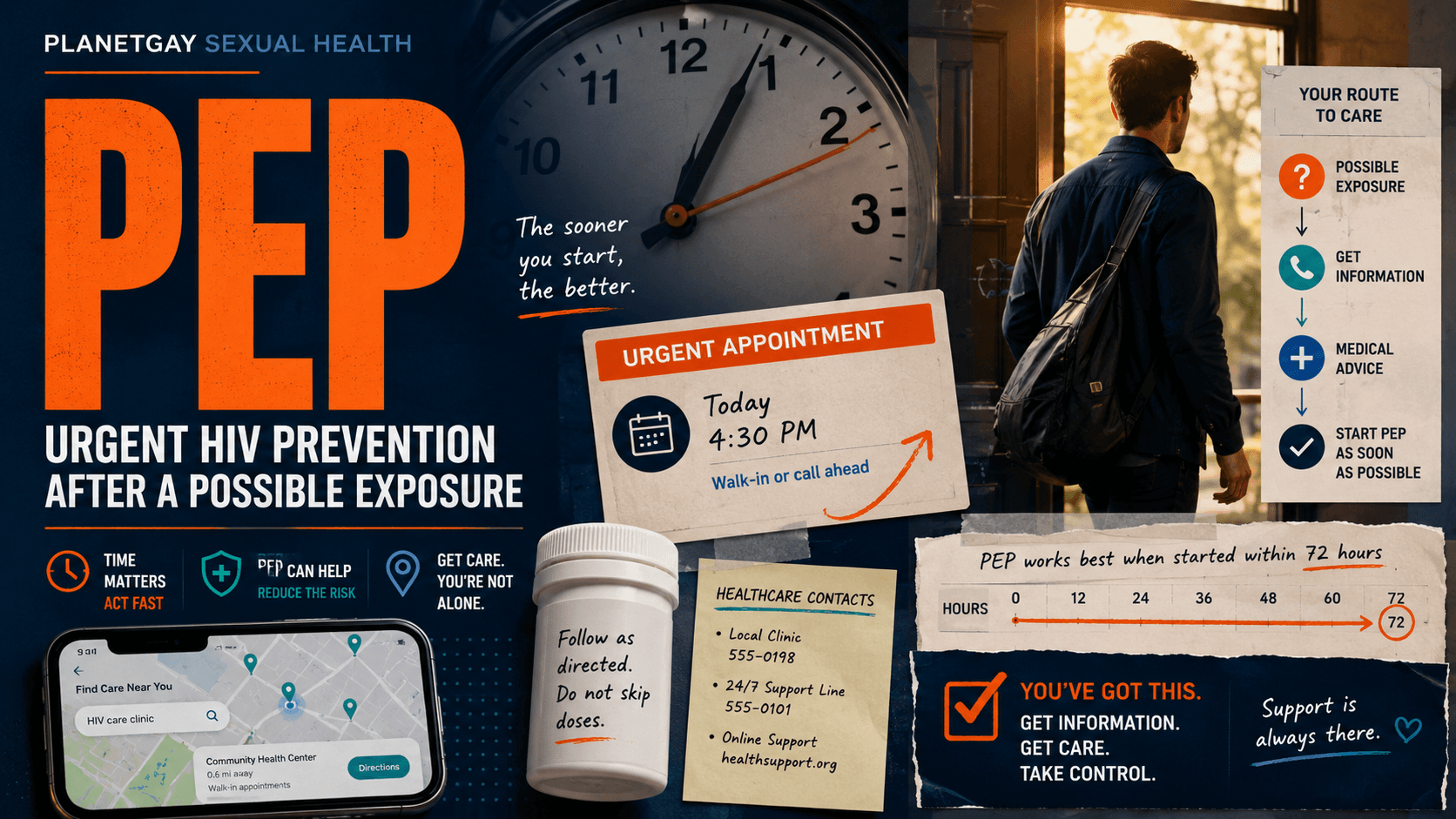
PEP is not a substitute for regular HIV prevention. It is an emergency intervention for specific situations where a possible exposure has occurred. According to the CDC, PEP is effective when started as soon as possible after a possible exposure and when taken consistently for 28 days. Its effectiveness decreases the longer it is delayed and is not recommended for use beyond 72 hours after exposure.
PEP does not provide 100 percent protection, and it is not a guarantee of HIV prevention. Its role is to significantly reduce the likelihood of infection in a time-critical situation.
The 72-hour window
PEP must be started within 72 hours of a possible exposure — that is, within three days. After 72 hours, it is generally not offered because the evidence for its effectiveness beyond that window is insufficient.
Within those 72 hours, earlier is better. The NHS advises starting PEP as soon as possible after exposure. Waiting until the end of the 72-hour window reduces its likely effectiveness.
If you are reading this and you think you may need PEP, the first thing to do is stop reading and contact an emergency or sexual health service immediately.
Where to access PEP
In the UK, PEP is available through NHS emergency departments (A&E), sexual health clinics that offer emergency appointments, and some NHS urgent treatment centres. The NHS advises going to A&E if it is outside sexual health clinic hours, as A&E can provide PEP or refer you to a service that can. It is generally free through the NHS.
In Canada, PEP is available through hospital emergency departments and sexual health clinics. Access and cost vary by province; some provincial programmes cover the cost. If you are in Canada and need PEP, go to an emergency department.
In the United States, PEP is available through emergency departments and some sexual health clinics. Cost and insurance coverage vary. If cost is a barrier, some programmes provide financial assistance; a clinician at an emergency department can advise.
In other countries, emergency departments and public sexual health services are the starting point. If you are unsure what is available, go to the nearest emergency hospital and explain the situation — they can either provide PEP or direct you to a service that can.
What to tell the clinician
When you attend an emergency service or clinic for PEP, the clinician will need information to assess whether PEP is appropriate. This may include: the nature and timing of the possible exposure, any known information about the HIV status of the other person if available, your current HIV status (a test will typically be done), your current medications and any health conditions.
The clinician will assess the risk level and make the decision about whether PEP is appropriate. You do not need to know the answer to every question — tell them what you know and let them guide the assessment.
You will also typically be tested for other STIs and, depending on the context of the exposure, for hepatitis B and hepatitis C.
What PEP involves
PEP is a 28-day course of antiretroviral medication — typically a combination of two or three drugs, depending on local guidelines and availability. It must be taken consistently every day for the full 28 days. Missing doses reduces its effectiveness.
Some people experience side effects, which may include nausea, fatigue, headache or diarrhoea. These vary by individual and by the specific medications prescribed. A clinician can advise on managing side effects and should be contacted if they are severe.
At the end of the 28-day course, follow-up HIV testing is recommended to confirm the outcome. The clinician who prescribed PEP will advise on the timing and process.
After PEP: longer-term prevention
If you have needed PEP, a conversation with a clinician about longer-term HIV prevention — including whether PrEP is appropriate for you — is a useful part of the follow-up appointment. PEP is designed for emergency situations; if the circumstances that led to the possible exposure are likely to recur, PrEP may offer more consistent protection.
PEP does not prevent other STIs. Regular STI screening as part of ongoing sexual health care remains important regardless of whether PEP was needed.