Medical disclaimer
This article is educational information only and is not medical advice. It does not replace a consultation with a qualified healthcare professional. Readers who have concerns about HIV or who have had a potential exposure should speak with a doctor, nurse, sexual health clinician, or — if the exposure was recent — attend an emergency or urgent-care service promptly. Information in this article is drawn from guidance published by WHO, CDC, NHS and PHAC and reflects general educational content rather than guidance for any individual's circumstances.
Why HIV testing matters
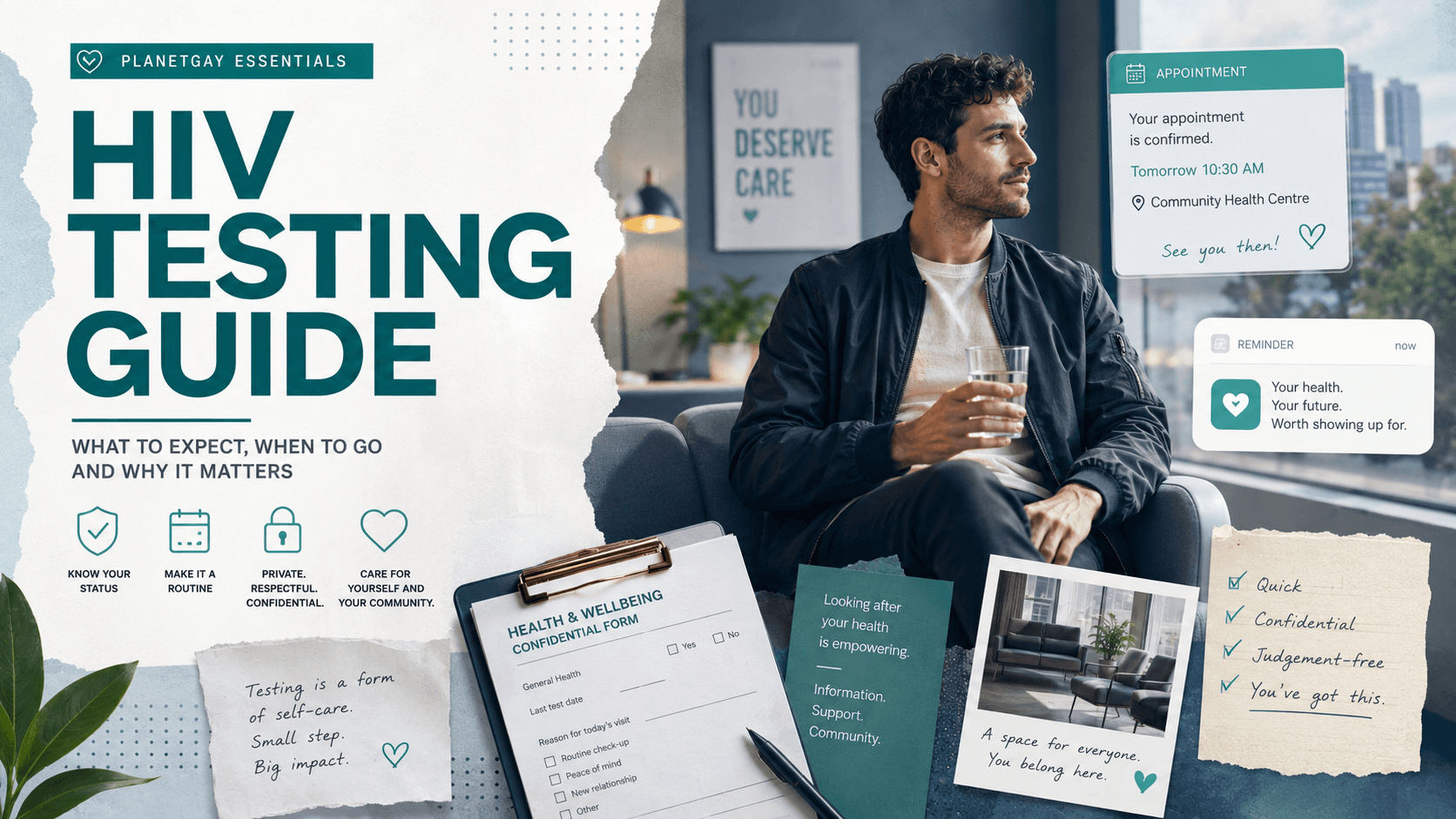
HIV testing is the only way to know your HIV status with certainty. According to the World Health Organization, early diagnosis and treatment of HIV significantly improves health outcomes and, when viral load is undetectable through effective treatment, transmission to a partner becomes effectively prevented. For gay and bisexual men who are sexually active, regular HIV testing is recommended by major health organisations in many countries as a standard part of sexual health care.
Many people with HIV are unaware of their status, particularly in the early period after infection when symptoms may be absent or mild. Testing is the route to knowing, and knowing is the route to care, treatment and protecting your own health.
Types of HIV test
There are several types of HIV test in use. The most widely used in clinical settings are fourth-generation antigen/antibody tests, sometimes called combination tests or Ag/Ab tests, which detect both the p24 antigen (present shortly after infection) and the antibodies the body produces in response to HIV. These are currently the recommended test type in many national guidelines because they detect infection earlier in the window period than older antibody-only tests.
Nucleic acid tests (NATs) detect the virus itself and have a shorter window period than antigen/antibody tests, but they are more expensive and typically reserved for specific clinical situations, such as following a very recent high-risk exposure.
Self-tests, including oral-fluid tests and fingerprick blood tests, are available in several countries for home use. These are generally antibody-only and have a longer window period than fourth-generation clinical tests. They are a useful option for regular monitoring and for people who prefer not to attend a clinic, but a negative self-test result taken shortly after a possible exposure may need to be repeated.
A reactive result on any test — whether clinical or self-test — requires confirmatory testing through a clinic before it constitutes a diagnosis.
Window periods
The window period is the time between HIV infection and when a test can reliably detect it. Testing during the window period may produce a false-negative result.
As a general indication from current guidance — which should be confirmed with a clinician, as recommendations are updated: fourth-generation antigen/antibody tests used in most UK sexual health clinics are described by the NHS as conclusive at 45 days post-exposure; earlier results can be indicative but may need confirmation. The CDC notes that most people will test positive within 23 to 90 days of infection using these tests. NATs have shorter window periods.
These figures are general guidance, not individual medical advice. If you are concerned about a specific exposure, contact a sexual health clinic or clinician who can advise on the right test and the right timing for your situation.
Where to get tested
In the UK, HIV testing is available free through NHS sexual health services, and free self-testing kits are available to order online in many parts of England. In Canada, HIV testing is available through public health units, sexual health clinics and, in some provinces, self-test kits. In the United States, testing is available through community health centres, Planned Parenthood, local health departments and private providers; cost varies by setting and insurance status.
If you do not know what services are available in your area, a search for 'sexual health clinic' or 'HIV testing' plus your city or postal code will typically surface local options. LGBTQ+-friendly clinics or community health organisations often provide a more comfortable environment for gay and bisexual men, and some specialise in HIV and sexual health care.
Many clinics offer same-day appointments for people with specific concerns or symptoms. If you believe you may have been recently exposed to HIV, do not wait for a routine appointment — contact a clinic or emergency service immediately.
Understanding a positive result
A reactive or positive screening result is not a final diagnosis. It requires confirmatory testing, which a clinic will organise. Waiting for confirmatory results is understandably anxiety-provoking, and clinics that provide HIV testing should also provide counselling and support through this process.
A confirmed HIV-positive result means that HIV is present. It is not a prognosis for a shortened life. With effective antiretroviral treatment, which is widely available in many countries, people living with HIV can expect a normal life expectancy. Treatment is highly effective at suppressing viral load, and many people on treatment achieve an undetectable viral load — meaning the virus cannot be transmitted sexually.
A positive result warrants prompt contact with a clinician to discuss treatment options, monitoring, and next steps. There is effective medical support available.
Privacy and confidentiality
In most countries, sexual health and HIV test results are treated as confidential medical information. In the UK, sexual health clinic records are not automatically shared with your GP. In Canada and the US, privacy laws govern how health information can be shared.
Some HIV tests require notifiable reporting to public health authorities — this is a public health measure and does not involve identifying information being shared publicly. If you have specific concerns about privacy and testing, a clinic can explain their confidentiality policies before you test.
Self-testing at home provides the most privacy, at the cost of a less sensitive test and no immediate support if the result is reactive. If privacy is your primary concern, combining home self-testing with a trusted contact who can support you if the result is positive is worth planning.