What the 40s actually involve
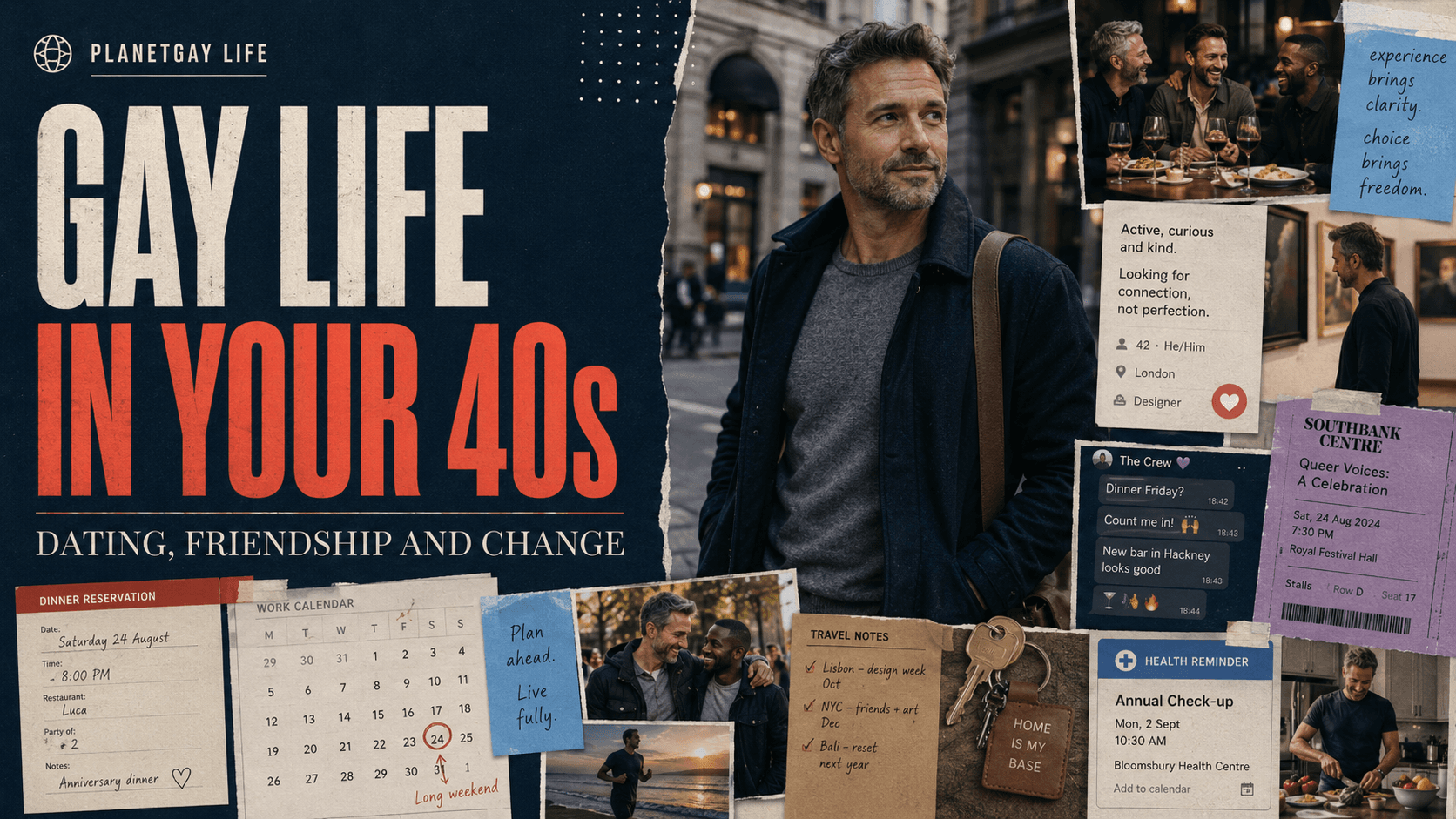
Gay culture has historically had a complicated relationship with ageing. The youth-orientation of gay bar culture, of dating apps, and of certain aesthetic standards has created a set of narratives about gay men in their 40s that do not match the lived experience of most men in this decade. The 40s, for most gay men, are not a period of decline or diminishment — they are typically a decade of greater clarity, more settled identity, stronger community connections, and a considerably healthier relationship with the anxious striving of earlier decades.
This is not universally true. Some men in their 40s are navigating difficult circumstances — the aftermath of late coming-out, relationship endings, health concerns, family complexity. But the default narrative that positions the 40s as past-peak does not serve most gay men's actual experience and is worth naming as the partial fiction it is.
Dating in your 40s
Dating in your 40s as a gay man is different from dating in your 20s — generally in ways that are more positive than the common cultural account suggests. Most men in their 40s know more clearly what they want and what they don't. They are less likely to spend time in relationships that aren't working because of social pressure, fear of being alone, or uncertainty about their own needs. They have the advantage of experience.
The practical landscape differs: dating apps are still the primary infrastructure for meeting gay men, and some apps have age dynamics that feel less welcoming to men over 40. This is real, but it is not the whole picture. Longer-term gay relationships often form between men in their 40s and older; the apps that exist are not the only mechanism. Social connections through community organisations, sports leagues, and peer networks produce relationships at this age too, often more reliably than apps.
For men who are newly single in their 40s — through a relationship ending, through coming out after marriage, through a period of being partnered followed by loss — re-entering a dating landscape after years out of it can be disorienting. This is a genuinely different experience from dating in your 20s, and that difference deserves acknowledgement rather than the expectation that the approach should be the same.
Friendship and community in the 40s
By their 40s, most gay men have had enough time and experience to have built some community connections — friends from earlier decades, possibly a partner network, community organisations they are involved with. The quality of these connections often deepens in the 40s, as the more superficial social activity of younger decades becomes less attractive and the investment in specific meaningful relationships becomes more intentional.
For men who moved cities, changed relationships or life circumstances in their late 30s or early 40s — or who came out later and are building community from scratch — the 40s can involve significant social rebuilding. The mechanisms for this (sports leagues, community organisations, interest groups) are the same as at any age; the experience of entering them for the first time at 42 is different than at 22, and that difference is worth acknowledging.
By the 40s, some of the men in your social world may have moved to a more suburban or rural life, may have priorities that look different from yours, or may have changed in ways that create distance. Maintaining close friendships across life-change requires more active effort as everyone ages. This is not a gay-specific phenomenon, but it interacts with the already more effortful work of adult gay friendship in specific ways.
Health in your 40s
The 40s are a good decade to become more intentional about health. For gay and bisexual men specifically:
Sexual health: regular HIV and STI testing remains important throughout sexually active adulthood. PrEP, for men who are not on it and who have relevant risk factors, is worth discussing with a sexual health clinician. The rates of HIV diagnosis among gay and bisexual men over 40 are not negligible — the assumption that sexual health is a young person's concern is incorrect.
Mental health: the 40s can bring specific challenges — the cumulative weight of minority stress over decades, relationship transitions, changes in how you relate to community, health changes. Accessing therapy or support proactively, rather than only in crisis, is worthwhile. Finding an LGBTQ+-affirming therapist with experience of midlife issues is worth the effort.
General health: preventive care — blood pressure, cholesterol, screening — becomes more relevant in the 40s. Discussing your sexual history and risk factors with a GP or primary care provider who is LGBTQ+-competent allows appropriate screening.
Ageing in gay culture
Gay culture's age dynamics are well-documented and not entirely comfortable: a significant portion of gay social culture, particularly in bars and on apps, assigns less value to men as they age in ways that do not apply equally in other contexts. The terms used (silver, daddy, bear) create niche categories that some men find affirming and others find reductive.
How much this matters depends on where you invest your social energy. Men who are primarily invested in the nightlife-and-apps dimension of gay life will experience age dynamics differently from men who have built community through organisations, friendships, and shared activities where age is less legible as a ranking criterion.
The communities where older gay men are most visible and valued are not always the communities that are most visible in media representations of gay life. That gap is worth knowing about — the cultural account of gay ageing is partial and is not the account that most men in their 40s and older would give.