What burnout actually is
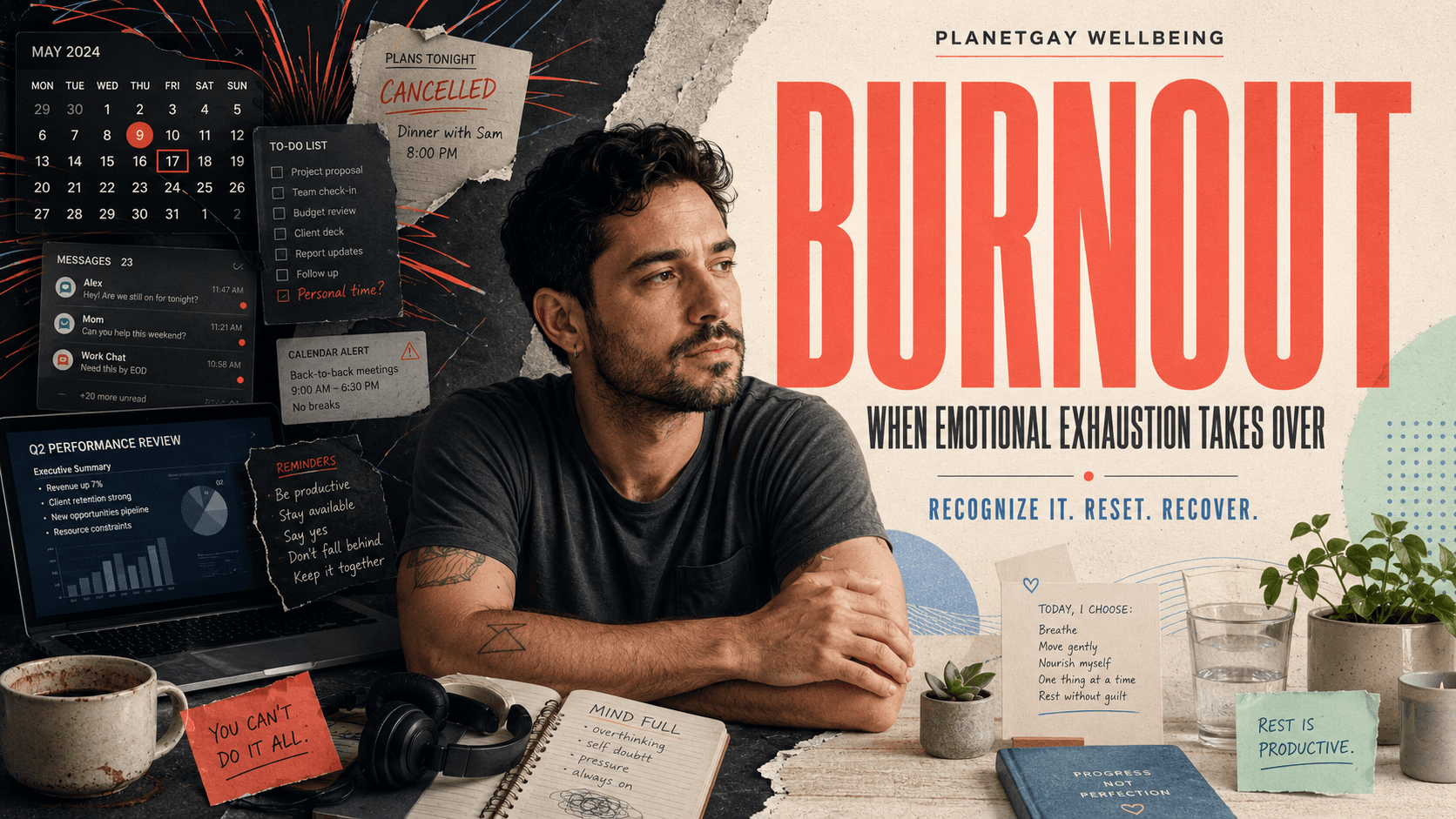
Burnout is a state of chronic depletion that results from sustained stress — particularly stress that involves giving, performing or functioning at a level that exceeds your recovery capacity. It is not the same as tiredness, which resolves with rest. It is not the same as depression, which it can resemble and with which it can co-occur. It is a specific state with specific characteristics.
The three components recognised in the clinical literature are: exhaustion (persistent low energy that doesn't resolve with normal rest), cynicism or detachment (a sense of distance or indifference toward things that used to matter), and reduced efficacy (a feeling that you're not effective or competent in the things you're trying to do).
Burnout can be occupational — arising primarily from work demands — but can also result from sustained effort in other domains: caring responsibilities, social performance, identity management, or the combined load of living under chronic stress.
Why gay and bi men may be more vulnerable
LGBTQ+ people face elevated rates of burnout and emotional exhaustion compared to the general population. The mechanisms are well-documented:
**Minority stress.** The chronic low-level stress of being in a minority group — navigating discrimination, managing identity disclosure, monitoring safety, experiencing microaggressions — consumes psychological resources that are not available for other demands. This is not acute crisis stress; it is the background load that does not turn off.
**Emotional management.** Many gay and bi men invest significant energy in managing their presentation in different contexts — being out with some people and not with others, adjusting their level of visibility depending on the environment, reading situations for safety. This ongoing effortful management is depleting in a way that is easy to underestimate.
**Community caregiving.** Gay men often find themselves providing significant support to friends and community members dealing with health, identity and mental health issues. While meaningful, this can contribute to emotional exhaustion when it is not balanced with restorative experience.
**Workplace and social performance.** Being out in a professional context involves ongoing identity management and, often, being a representative or educator in ways that are tiring over time.
Recognising the signs
Burnout is often gradual and easy to rationalise. Some signs to recognise:
- Feeling exhausted even after sleep or rest
- Increasing cynicism or irritability toward people or situations you previously valued
- Difficulty caring about things that used to matter
- Reduced satisfaction from work or activities that previously brought it
- Physical symptoms: headaches, gastrointestinal problems, frequent minor illness (burnout is associated with reduced immune function)
- Increasing use of alcohol or other substances to cope
- Withdrawing from social contact rather than finding it restorative
- Procrastinating on tasks that don't feel overwhelming but somehow can't be started
Burnout can look like depression, and the two can co-exist. If you are experiencing persistent low mood, hopelessness, or thoughts of harming yourself, this warrants a conversation with a GP or mental health professional rather than a self-managed recovery approach.
Recovery: what actually helps
Burnout recovery takes longer than most people expect, and the evidence on what helps is reasonably consistent:
**Reducing the source load.** This is the most effective intervention and the hardest. Recovery from burnout while continuing to operate at the level that produced it is very slow. Reducing demands — even temporarily, even partially — is not an optional extra; it is the central action.
**Quality recovery activities.** Recovery does not mean doing nothing. It means doing activities that are genuinely restorative — exercise (with strong evidence for burnout recovery), activities that produce genuine absorption and engagement, social connection with people who are supportive rather than demanding, time in nature. Screen time, alcohol, and passive consumption are not effective recovery, even if they feel soothing in the short term.
**Sleep.** Chronic burnout disrupts sleep, and poor sleep deepens burnout. Prioritising sleep quality — consistent schedule, reduced screen time before bed, alcohol reduction — has direct burnout benefits.
**Professional support.** Therapy is useful for burnout that has become severe, for identifying the patterns and expectations that contributed to it, and for building more sustainable approaches to demands.
Prevention over recovery
Recovery from burnout is considerably more effortful than preventing it. The structural conditions that make gay and bi men more vulnerable are not within individual control to fully eliminate — but some practices that reduce vulnerability:
**Monitoring your own state.** Regular honest assessment of your energy, mood and motivation — not as a performance anxiety but as genuine monitoring — helps catch depletion before it becomes severe.
**Sustainable commitments.** Being selective about what you take on, and honest about your capacity to sustain it, matters over time. Overcommitting produces short-term benefit and medium-term cost.
**Community that replenishes.** Not all social connection is restorative. Connection with people who are supportive and energising rather than primarily demanding is protective. This requires some honest assessment of where your social energy goes.