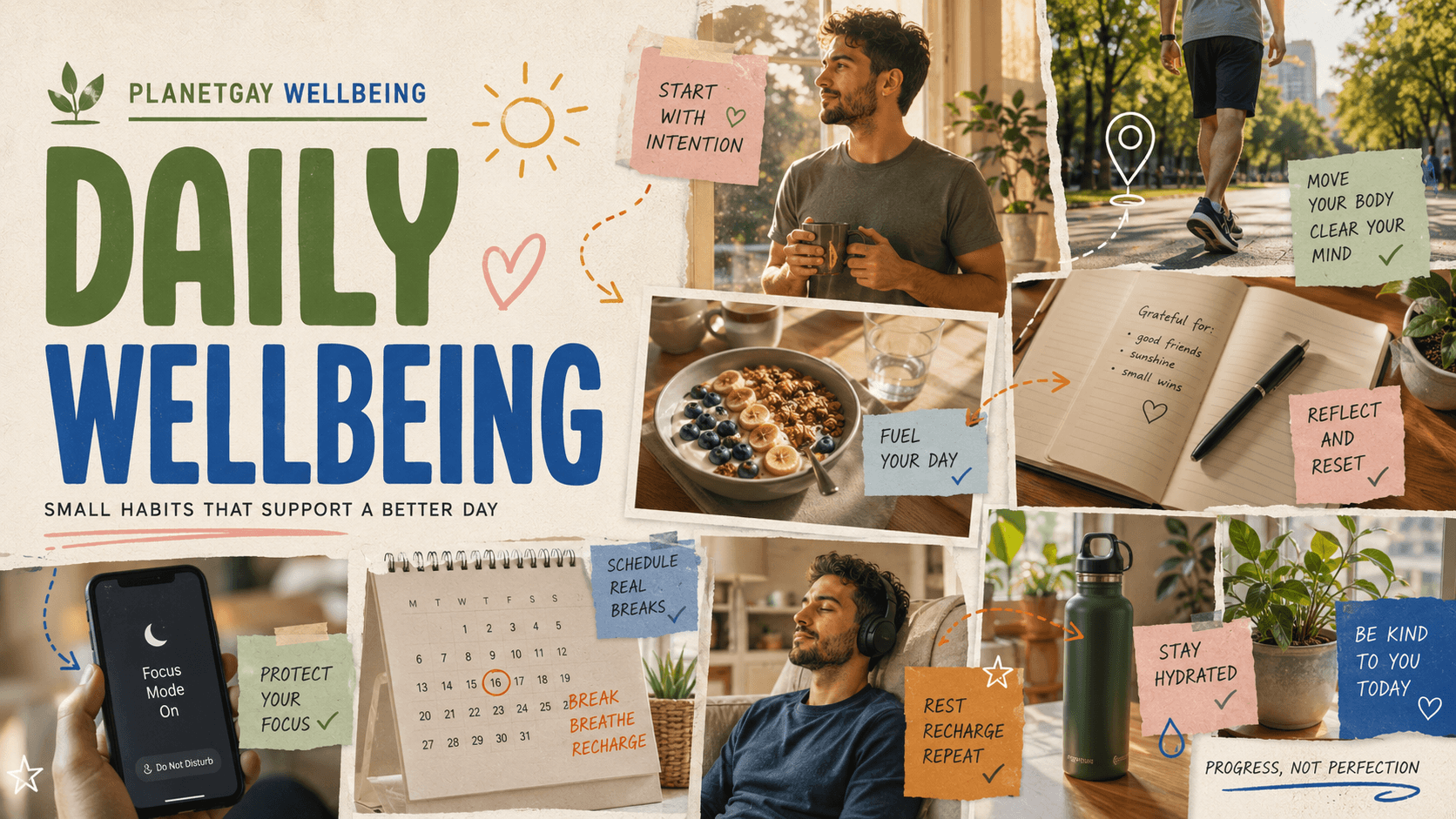
Why daily habits matter more than occasional interventions
Wellbeing is sustained primarily through what you do consistently, not through occasional significant interventions. A holiday or retreat can be genuinely restorative, but it does not substitute for a daily life that is broadly sustainable. Conversely, a daily life with decent sleep, movement, social connection and some psychological space is genuinely protective against the stress that will inevitably occur.
For gay and bi men, whose baseline mental health statistics reflect the accumulated effects of minority stress, daily habits matter particularly. The minority stress that comes from navigating discrimination, managing identity disclosure and monitoring safety cannot be eliminated — but its impact on mental health is significantly moderated by how the rest of life is structured.
Sleep
Sleep is the single most well-evidenced factor in psychological wellbeing. Sustained poor sleep is associated with increased anxiety, reduced emotional regulation, impaired decision-making and elevated depression risk. It is also the most underestimated intervention — partly because its effects are immediate and partly because improvements are modest and cumulative rather than dramatic.
What actually helps sleep quality: - Consistent wake time (more important than consistent bedtime) - Limiting alcohol, which disrupts sleep architecture despite feeling sedating - Reducing bright screen exposure in the hour before bed - Physical exercise during the day - A cool, dark sleeping environment
For men with persistent sleep difficulty, brief behavioural interventions (cognitive behavioural therapy for insomnia — CBT-I) have strong evidence and are available digitally as well as in person.
Physical movement
Exercise is the most robust evidence-backed intervention for depression and anxiety available — comparable to medication for mild-to-moderate severity, and with no adverse effects. The evidence is also clear that the psychological benefits do not require intense or performance-oriented exercise: 30 minutes of moderate movement, most days, produces significant mental health benefits.
For gay men, exercise sometimes carries additional complexity — gyms can be social spaces with their own dynamics around appearance and performance, and body image concerns are elevated in gay male culture compared to the general population. Finding movement that you genuinely enjoy and that doesn't carry those pressures is more sustainable than forcing yourself to do exercise you associate primarily with appearance management.
This means: swimming, walking, cycling, group sports, yoga, dancing, team sports — any sustained moderate movement — works as well as gym training for mental health purposes.
Alcohol and other substances
LGBTQ+ populations have elevated rates of problematic alcohol and drug use compared to the general population — partly because gay social culture is historically centred around venues and party contexts, and partly because substances are used as a management strategy for minority stress.
This is worth flagging not to be alarmist but because regular use of alcohol or other substances as a wellbeing tool — to manage anxiety, to facilitate social connection, to cope with stress — tends to increase rather than reduce those underlying pressures over time. The relief is real and the dependency develops gradually.
If you notice that social situations without alcohol feel significantly more difficult, or that you're regularly using substances to manage mood, those are worth taking seriously. The Drinkline (0300 123 1110, UK) and FRANK (0300 123 6600, UK) provide confidential support. LGBTQ+-specific support is available through alcohol and drug services that serve this community.
Managing digital and app use
Dating apps, social media and constant connectivity are features of most gay men's daily lives that have real wellbeing implications. Some honest observations:
Social media that consists primarily of curated appearance and lifestyle content tends to increase social comparison and reduce wellbeing. Following accounts that you feel worse for having seen is a choice that can be changed.
Dating apps, used as the primary or only social outlet, often produce anxiety rather than reducing it. App use works best as one component of a social life rather than its entirety.
Screens in general — particularly the combination of sedentary activity, blue light, and infinite scroll — are associated with disrupted sleep and increased anxiety when used heavily, particularly in the evening. Reducing screen time is easier said than done but the evidence for its effect is genuine.
Social connection
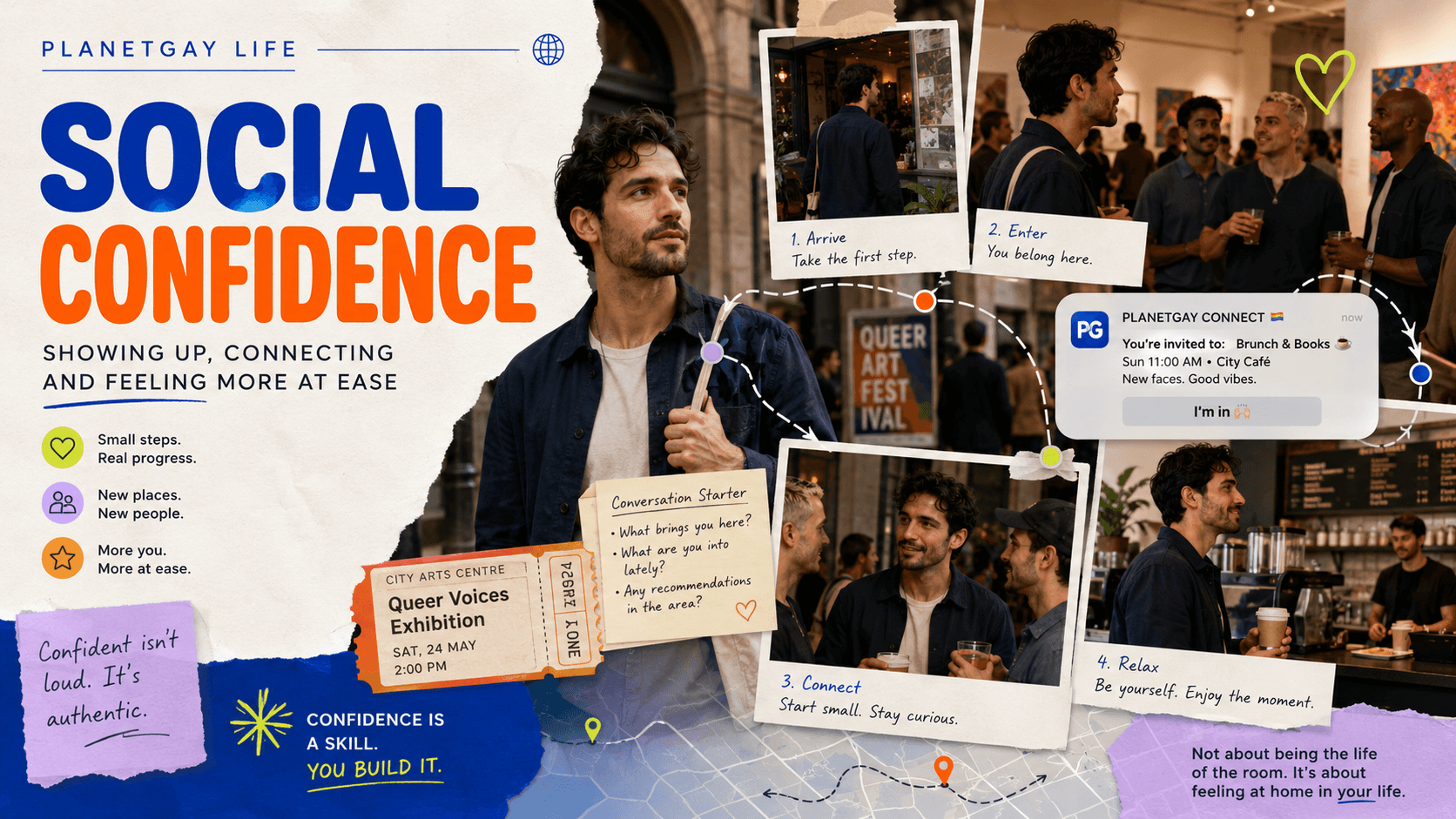
Social connection is consistently protective against depression and anxiety, and consistently associated with better physical health outcomes over time. Isolation is a genuine risk factor, not a lifestyle preference with neutral outcomes.
For gay men, the relevant social connection includes connection with other LGBTQ+ people — which provides a specific kind of normalisation that general social connection doesn't provide. Spending time regularly with people for whom your identity is an unremarkable given reduces the ongoing effort of identity management that general social environments often require.
Quality matters more than quantity. A small number of close relationships with genuine mutual support is more protective than a large social network with shallow engagement. If your social life consists primarily of large group settings but you don't have relationships where you can be honest about difficulty, that is a gap worth noticing.