The feedback loop
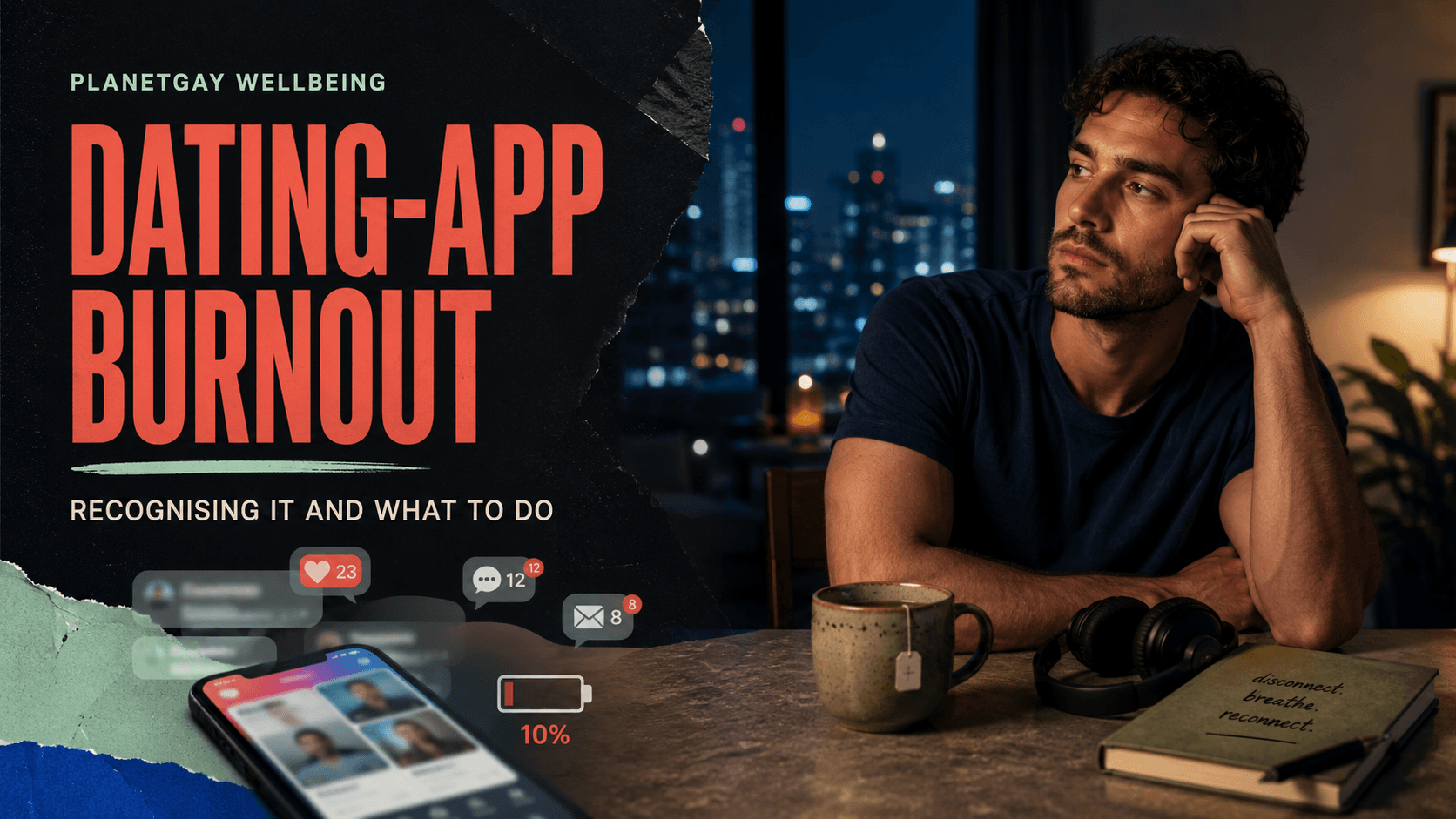
Dating apps are designed to be used frequently. The variable-reward structure — the possibility of a match, a message, a connection — produces patterns of use that are similar to other variable-reward digital environments. For many gay men, checking apps becomes habitual across the day and particularly in the late evening, which affects sleep and contributes to a low-level chronic stress that is rarely attributed to the apps themselves.
The mechanism works like this: elevated use of apps, particularly in the hour before sleep, activates a level of social attention and evaluation anxiety that is incompatible with winding down. Poor sleep accumulates; stress reactivity increases; the apps become more compelling as a distraction from stress; use increases further. The loop is recognisable even when the specific experience varies.
Sleep and digital habits
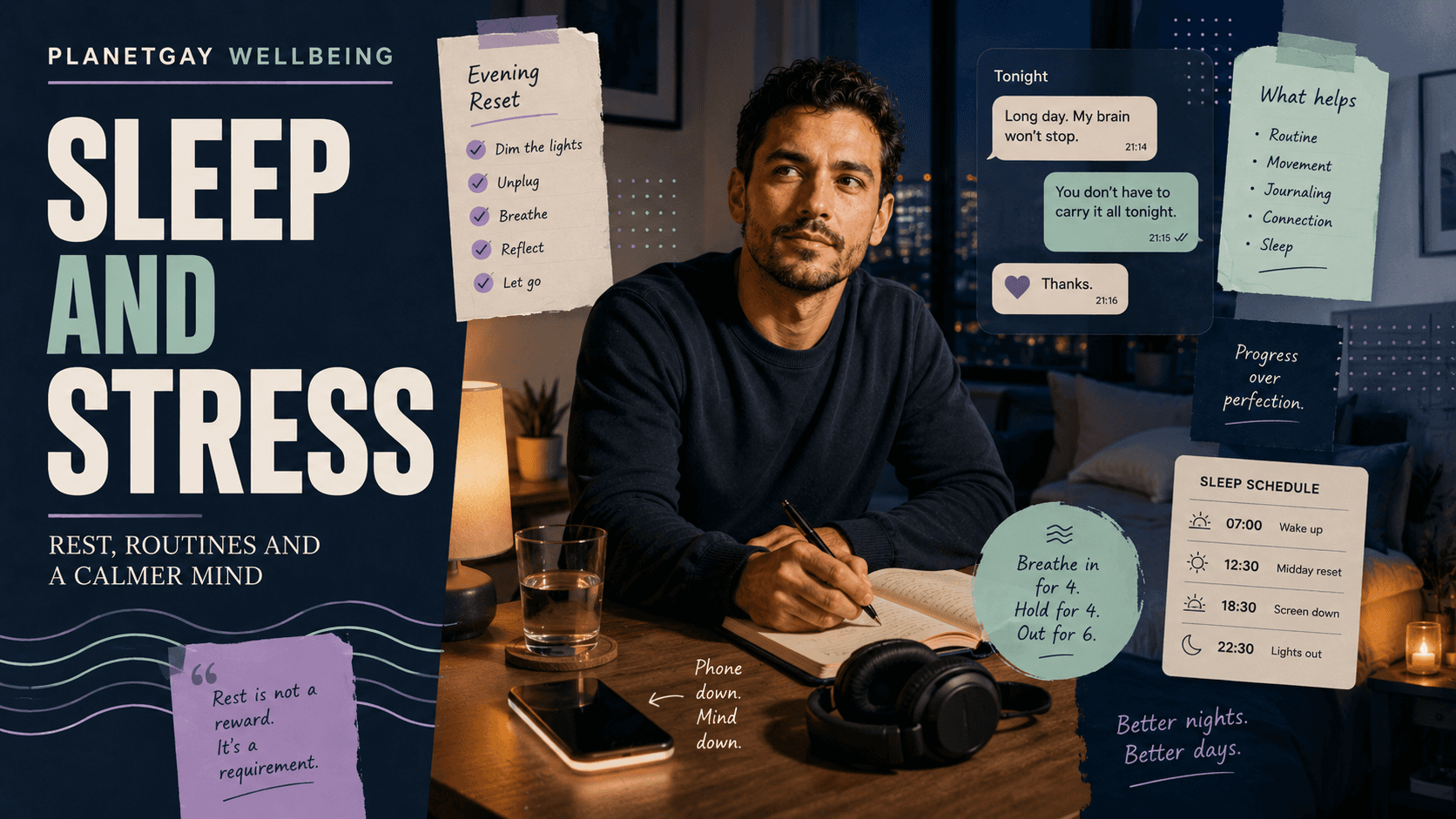
The research on screen use before sleep is consistent: use of phones and screens in the hour before bed is associated with delayed sleep onset and lower sleep quality. The specific content of the screens matters too — socially activating content (messages, matches, social comparison) is more disruptive than neutral content.
For gay men using dating apps, the before-sleep period often combines several sleep-disruptive factors: social comparison (how do I present relative to other profiles), evaluation anxiety (will I match, why didn't that conversation continue), and the activation of attention that comes with any social interaction possibility.
Setting a specific cut-off time for app use — an hour before your intended sleep time, or when you get into bed, or whatever suits your schedule — is a practical and achievable change. This is not about stopping using apps; it is about timing the use differently so it is not competing directly with sleep onset.
Dating app stress
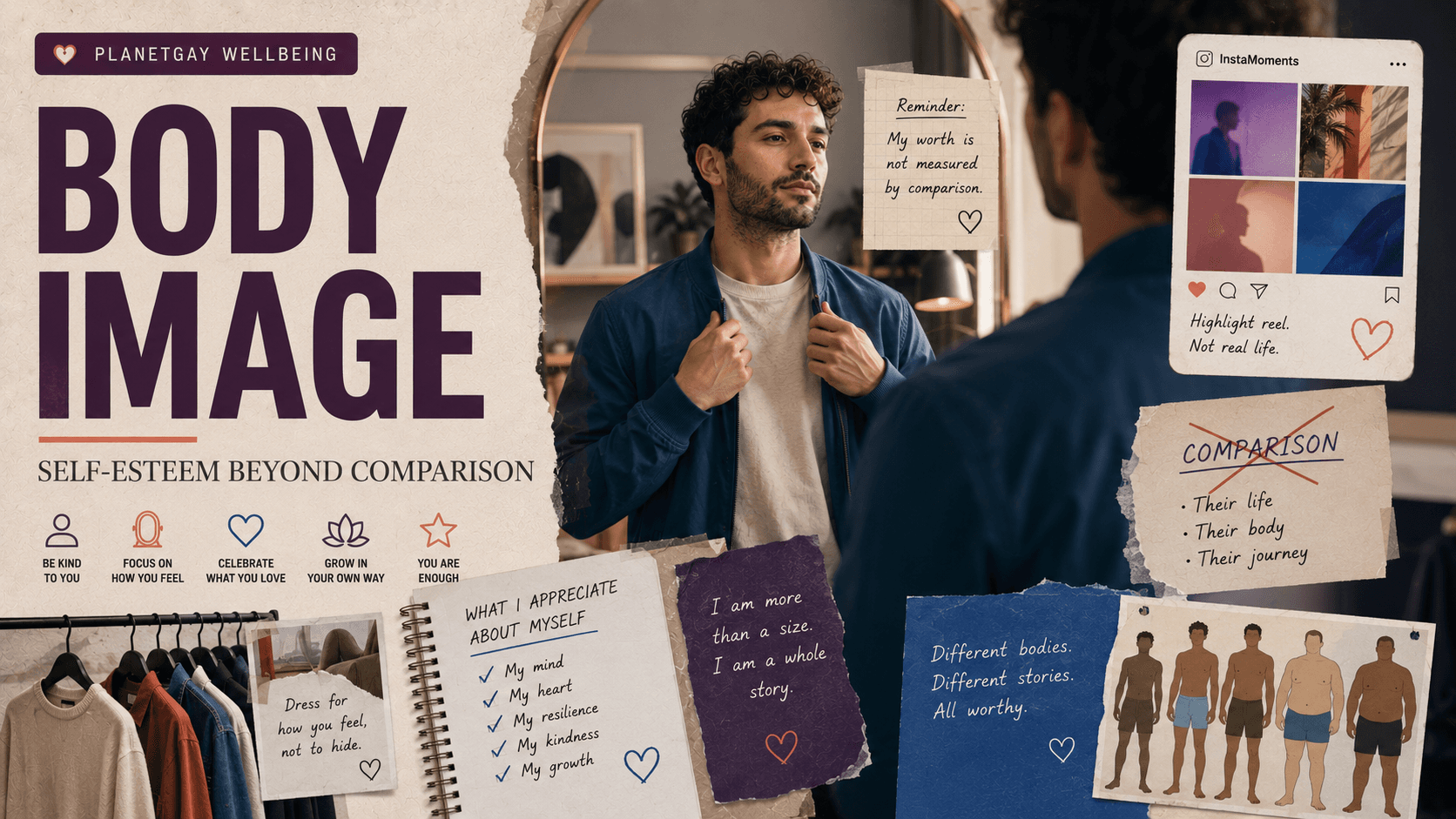
Apps create a specific kind of social evaluation context that is different from most other social environments. Every profile is simultaneously being evaluated and evaluating; appearance, age, body type, perceived social value — all of these are legible in seconds and influence responses. For gay men who are navigating appearance-related pressures specific to gay culture, the apps can be a setting where minority stress (discrimination, comparison, rejection) is concentrated and frequent.
The cumulative effect of regular exposure to this environment — not any single interaction, but the accumulated experience of frequent evaluation — can manifest as low-level anxiety, reduced self-esteem or irritability that is not obviously attributable to the apps. Many men notice that they feel worse after extended app use but continue because the use is habitual.
The approach that most directly addresses this is changed use patterns rather than willpower. Apps that allow you to pause or hide your profile for set periods, limiting the hours during which you check, or spending time on the apps actively engaging rather than passively scrolling are all structural changes that reduce exposure without requiring constant active resistance.
Stress and its management
Chronic low-level stress — the kind that doesn't feel dramatic but that persists across weeks and months — affects sleep, mood, decision-making and physical health. For gay and bisexual men, minority stress is a documented additional source: the cumulative effect of navigating discrimination, managing identity in contexts that are not designed for you, and processing repeated small experiences of difference or exclusion.
The evidence for what manages stress effectively is not primarily about relaxation techniques in isolation. The most robust stress-management tools are: regular physical activity (the evidence for this across mental health outcomes is very strong); adequate sleep (which stress also affects, creating a cycle); social connection; and regular access to meaning or purpose. These are not novel claims — they are consistent across the psychological research.
For gay men dealing with minority stress specifically, community and connection are particularly important: the experience of being in environments where your identity is normal rather than managed reduces the accumulation of minority stress over time. This is one of the documented reasons why community connection is so protective for LGBTQ+ mental health.
When to seek support
The combination of poor sleep, elevated stress and compulsive app use can escalate to the point where it significantly affects functioning. Sleep problems that persist over several weeks, stress that is affecting work or relationships, or app use that feels out of control rather than habitual — these are situations where professional support is appropriate rather than self-management alone.
A GP can assess and refer for sleep concerns. A therapist with experience in anxiety and digital habits can address the stress-app loop directly. CBT (cognitive behavioural therapy), which has a strong evidence base for both anxiety and sleep, can be delivered in person or online; the NHS offers CBT through IAPT services in England, and equivalent services exist in other countries.
Mind's mental health resources (mind.org.uk) and the mental health section of the NHS website provide guidance on accessing support.