Why adult friendship is particularly hard for gay men
Making new friends as an adult is difficult for most people. After the built-in structures of school, university or early workplaces dissolve, the mechanisms for meeting people who might become friends are less obvious, less frequent and require more active effort. For gay men, there are additional complications.
Many gay men came out later than their straight peers, which means they lost the teenage social period that often produces lifelong friends — or they were not fully themselves during it, which limits the depth of those early bonds. Men who came out in their 20s or 30s often find themselves building an adult social life almost from scratch. The existing social infrastructure for meeting gay men — apps, bars, sex-adjacent spaces — is designed primarily around dating and sex, not friendship. The community spaces that do exist require knowing they're there and feeling comfortable entering them.
The apps problem
Dating apps are poor tools for building friendships, but many gay men use them because the alternatives are less obvious. Most major apps have a 'friends' or 'networking' option somewhere in their interface, but the practical reality is that the transactional nature of the apps — the focus on physical appearance, immediate chemistry and the implied possibility of sex — makes genuine platonic connections difficult to initiate and sustain. Men messaging on Grindr with genuinely friendly intentions often encounter uncertainty about what the other person wants, and that uncertainty makes conversation awkward.
This is not a reason to avoid using apps to meet people who might become friends, but it is a reason to be realistic about the conversion rate. A small number of app conversations do turn into genuine friendships — often the conversations that become clearly platonic quickly, without either side feeling rejected about it.
Where friendships actually form
Friendships tend to form through repeated exposure — the same people encountered regularly in contexts with low stakes and some shared purpose. This is why workplaces, universities and shared housing produce so many friendships: the structure creates repeated contact without the social pressure of explicitly trying to make friends.
For adult gay men, the most reliable contexts for this kind of repeated low-stakes exposure are:
**Sports and fitness:** LGBTQ+ sports leagues exist in most cities with significant gay populations. Running clubs, cycling groups, yoga classes and LGBTQ+ sports organisations create regular contact with the same people in a context where conversation is natural and there is no subtext about dating. Outsports (outsports.com) maintains some information on LGBTQ+ sports organisations, and local LGBTQ+ community organisations typically know what exists locally.
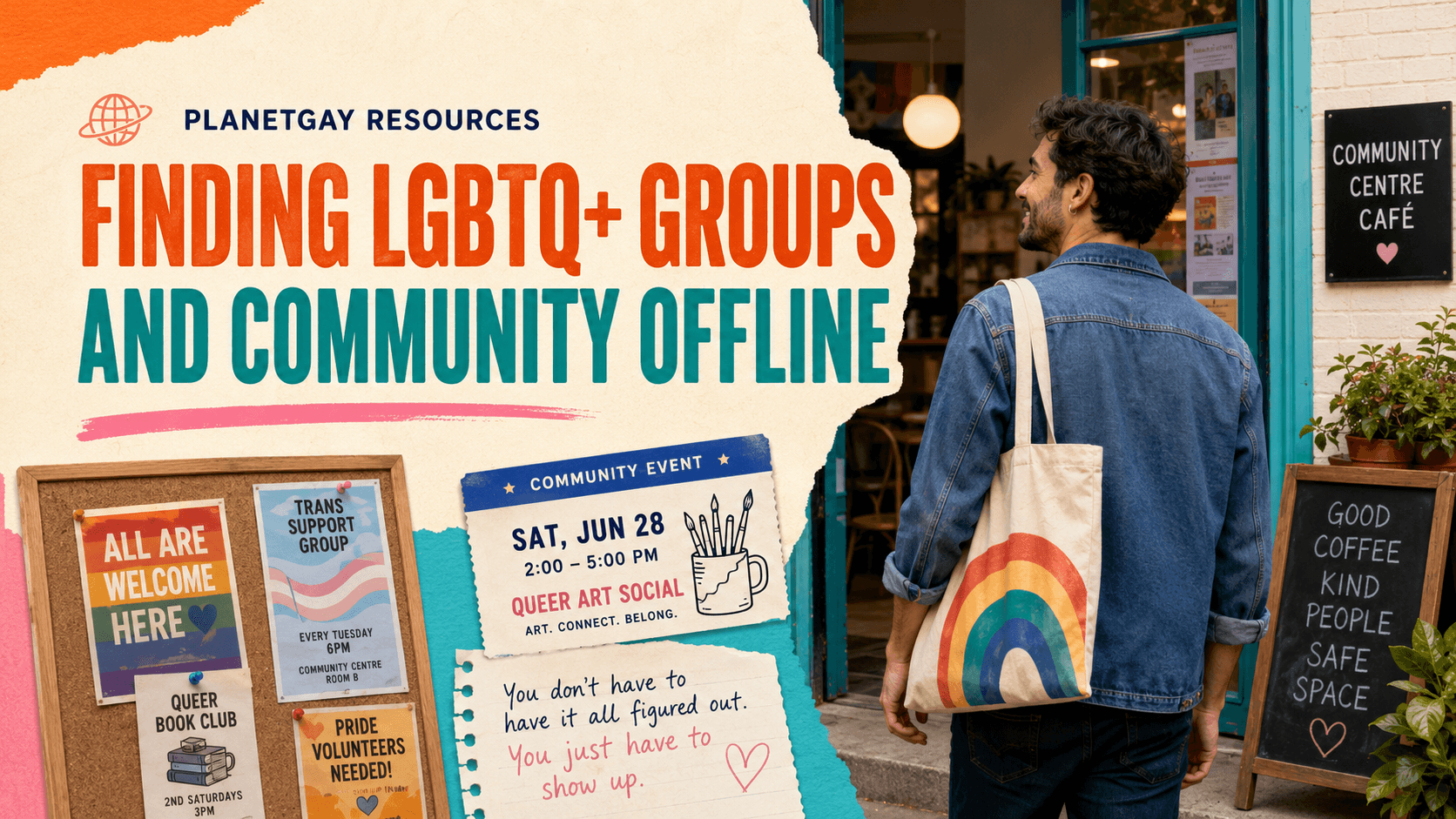
**Interest-based groups:** Book clubs, gaming groups, choir, photography groups and similar interest-based organisations create the same repeated-exposure structure. LGBTQ+-specific versions exist in most major cities; mixed groups where gay men are welcome also work.
**Volunteering:** LGBTQ+ organisations often rely on volunteers. Volunteering creates repeated contact with people who share a commitment, which is a reliable basis for friendship.
**Community events:** Regular community events — not one-off Pride weekends, but regular monthly or weekly gatherings — create the repetition that friendship formation requires.
The specific difficulty of bars and nightlife
Gay bars and nightlife play a real and historically important role in gay community life. For many men, gay bars are where they first met other gay men and built their earliest community connections. But bars are also a specific social environment that does not suit everyone, where alcohol is central, where the noise level limits conversation, and where the culture is often more oriented toward sex and romance than toward platonic connection.
For men who don't drink, who find bars loud or overwhelming, who have social anxiety or who feel out of place in nightlife culture, the reliance on bars as LGBTQ+ community spaces creates a practical problem. Friendships formed in bars tend to be bar-specific — they survive in that environment but may not translate elsewhere. The friends you make volunteering or in a sports league tend to be more durable.
None of this means bars have no value for friendship formation. Many lasting friendships have started in gay bars. It means that bars are one option among several, not the default setting that works for everyone.
Maintaining friendships
Adult friendships require maintenance in a way that early-life friendships often do not. Without institutional structures keeping you in regular contact, friendship maintenance is a choice — scheduling, following up, making the effort when it would be easier not to. For gay men navigating busy lives, potential dating pressures and variable social energy, this maintenance can slip.
Practical approaches that help: regular recurring commitments (the same person for a walk on Sunday mornings; a standing dinner) work better than relying on ad hoc scheduling. Accepting that some gaps in contact don't mean the friendship is over — it may just mean both people have been busy. Being explicit rather than hoping contact will happen naturally.
For men dealing with LGBTQ+-specific loneliness, the research consistently shows that close friendships are protective for mental health. The effort of maintaining adult friendships is worth it, and the direct investment in friendship — treating it as something worth prioritising — tends to produce more than hoping friendships will sustain themselves.
Online community as a bridge
For men in areas without significant LGBTQ+ community infrastructure, or who are not yet connected to local community, online spaces can function as a bridge. Online LGBTQ+ communities — forums, Discord servers, subreddits, interest-based social groups — can provide the sense of connection and shared experience that supports wellbeing while in-person connections are being built. They are not a full substitute for in-person friendship but they are better than isolation, and for some people they produce genuine in-person friendships through meetups and shared interest.
The 519 Community Centre in Toronto (the519.org) and similar LGBTQ+ community centres in many cities maintain referrals to community groups and social activities that can be starting points for finding community. Switchboard in the UK (switchboard.lgbt) can provide information on local LGBTQ+ organisations.