Why provider choice matters for LGBTQ+ patients
Research consistently finds that LGBTQ+ people are less likely to access preventive healthcare, more likely to delay care when needed, and more likely to withhold relevant information from providers — in part because they anticipate or have experienced negative responses to their identity. Healthcare that requires you to manage your provider's discomfort, correct assumptions about your relationships or body, or avoid mentioning relevant aspects of your life is less effective healthcare, not just less comfortable.
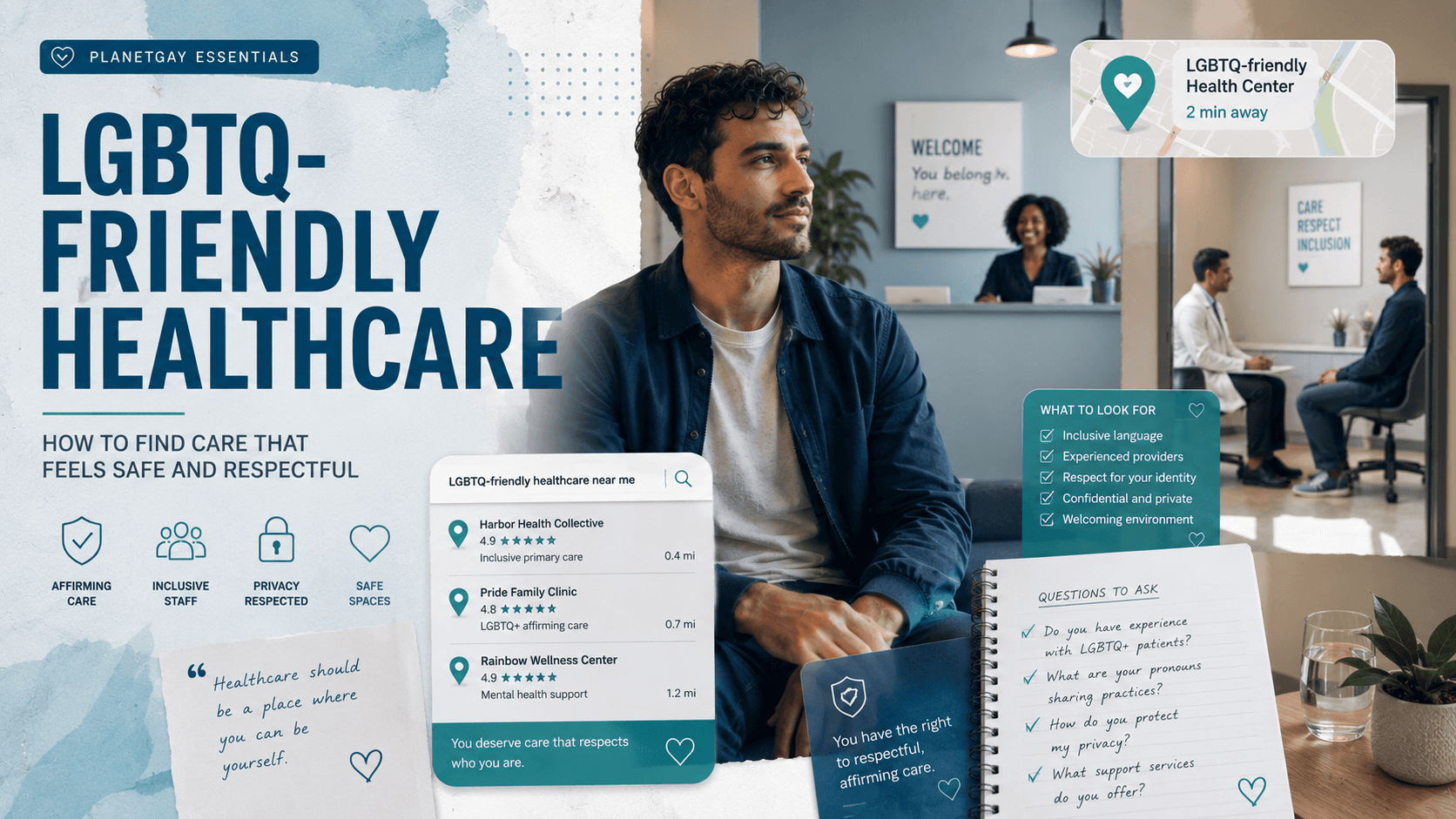
Finding providers who are genuinely affirming — not merely tolerant — is a practical health decision. This does not mean every healthcare interaction must be with a specialist; many health needs have nothing to do with sexual orientation. But for health concerns where your identity is relevant — sexual health, mental health, certain aspects of family and relationship health — provider competence in LGBTQ+ care genuinely affects the quality of what you receive.
Primary care: your GP or family doctor
Your GP or family doctor is often the first point of contact and the route to referrals and specialist care. For gay and bisexual men, the most immediately relevant questions are whether a GP will:
- Ask about and record sexual orientation and relevant relationship history without making assumptions
- Proactively offer or discuss appropriate sexual health screening
- Know about PrEP and be willing to discuss it or refer appropriately
- Not respond with discomfort or irrelevant moral opinion when relevant history is disclosed
You can ask a practice directly before registering whether they have specific LGBTQ+ training or a designated LGBTQ+ lead. Not all practices will, but asking signals what you need and gives you information before committing.
In the UK, you can change GP without explaining why. In many other countries, similar flexibility exists. If your current GP consistently falls short in ways that affect your care, finding a different provider is a reasonable option.
Sexual health clinics
Dedicated sexual health clinics typically offer the most competent and complete care for sexual health concerns for gay and bisexual men. Clinical staff in specialist sexual health settings generally have specific training in LGBTQ+ health, including appropriate testing at all relevant sites, PrEP advice and prescription, STI treatment, HIV care and signposting to further support.
In the UK, most sexual health clinics offer free services and can be accessed without a GP referral. Many offer online booking and some operate without requiring you to give a name. In the US, Planned Parenthood and local health departments provide sexual health services in many areas; community health centres often serve LGBTQ+ patients.
If you are unsure what is available in your area, your national health authority website or a call to a national LGBTQ+ health line can direct you to local services.
Specialist care
For specialist care — mental health, cancer screening, cardiovascular care — the question of LGBTQ+ competence is less universally critical, but remains relevant for contexts where your identity or relationship structure is directly relevant to your care.
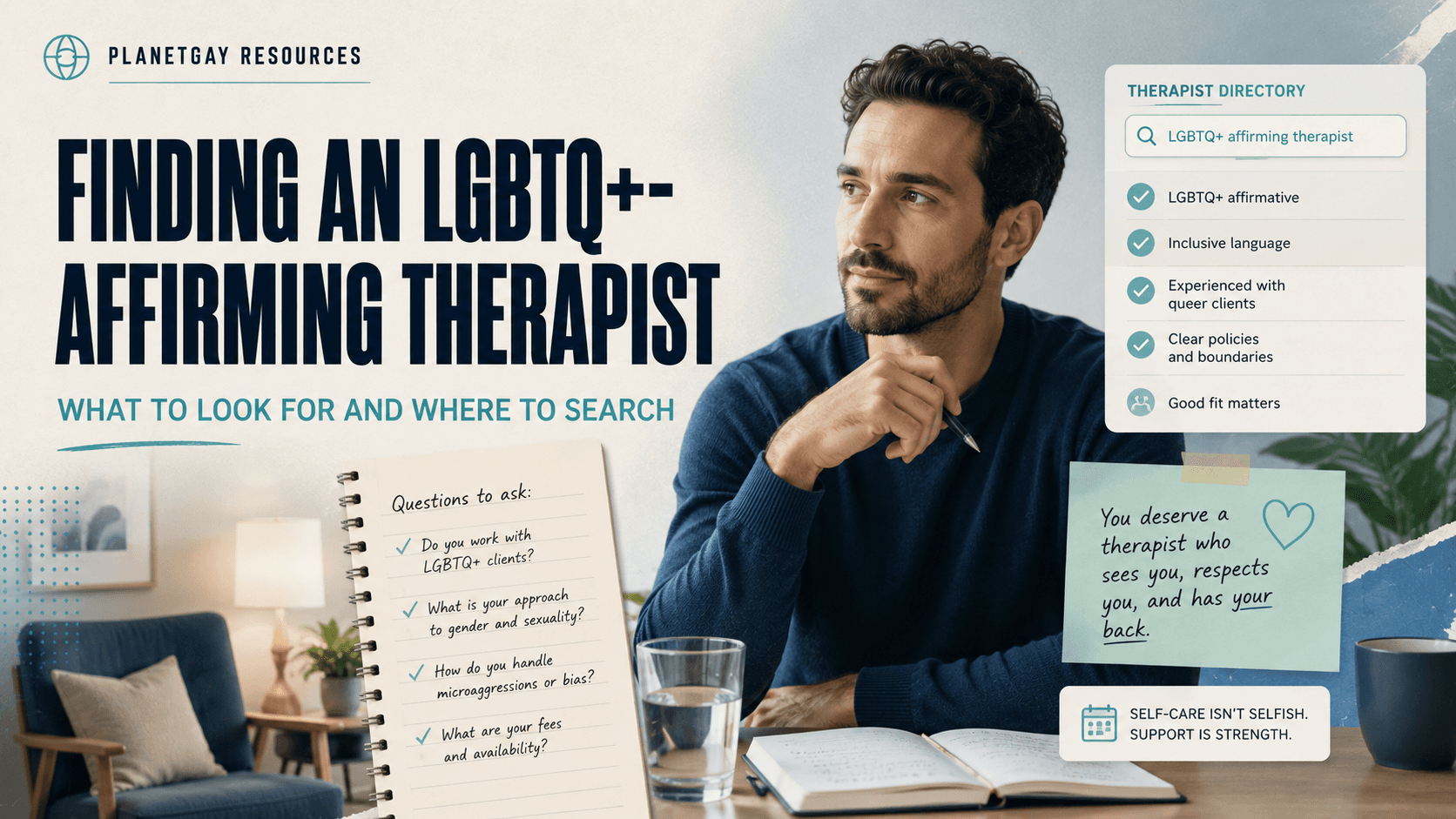
For mental health: LGBTQ+-affirming practice means more than tolerance — it means understanding minority stress, not pathologising sexual orientation, and not treating family rejection or discrimination as background noise to be managed away. Seek practitioners who specifically describe LGBTQ+ experience rather than just general affirming language.
For other specialists: being honest about your life, relationships and relevant history enables more accurate care. A specialist who responds to this with discomfort or irrelevant moral comment is not providing adequate professional care. You can and should raise concerns with the provider, their professional body, or the referring institution.
Directories that include LGBTQ+ specialist notation include the GLMA (US), Pink Therapy (UK therapists), and IGLTA health partnerships for travel health.
Privacy and disclosure
Healthcare providers in most countries are bound by confidentiality. In the UK, NHS confidentiality applies regardless of sexual orientation, and providers cannot share information with family members, employers or others without your consent. In other countries, similar protections generally apply, though enforcement and culture vary.
You are not required to disclose your sexual orientation to a healthcare provider. However, withholding relevant information limits the quality of your care — particularly for sexual health, mental health and relationship-related health concerns. The question is less about whether to disclose and more about whether you have found a provider with whom you are comfortable doing so.
If you are seeking care in a context where your orientation could put you at risk outside the clinical setting — in a country with criminalisation, in a small community with limited privacy, or in circumstances where disclosure to a family member could cause harm — you may need to navigate disclosure more carefully. An LGBTQ+ travel health service or local community organisation can advise on what is safe in a specific local context.
If care is inadequate: what to do
If a healthcare provider responds to your identity with discomfort, makes assumptions about your relationships or sexual history that you have corrected and that persist, refuses to discuss relevant treatments, or provides care that is clearly inadequate because of their response to your being gay or bisexual:
**Within the appointment:** naming what has happened directly is often the most efficient response — 'I notice you have not asked about [relevant information], which is relevant to what we are discussing' or 'I would like you to treat this [symptom/concern] with the same attention as any other patient.'
**After the appointment:** you can raise a concern with the practice or service formally. In the UK, each NHS trust has a Patient Advice and Liaison Service (PALS). In other countries, professional bodies and patient advocacy services fulfil a similar function.
**Longer term:** changing provider is always an option. No healthcare relationship requires you to stay with a provider who consistently falls short. Your health decisions are yours to make.