Understanding what kind of support you need
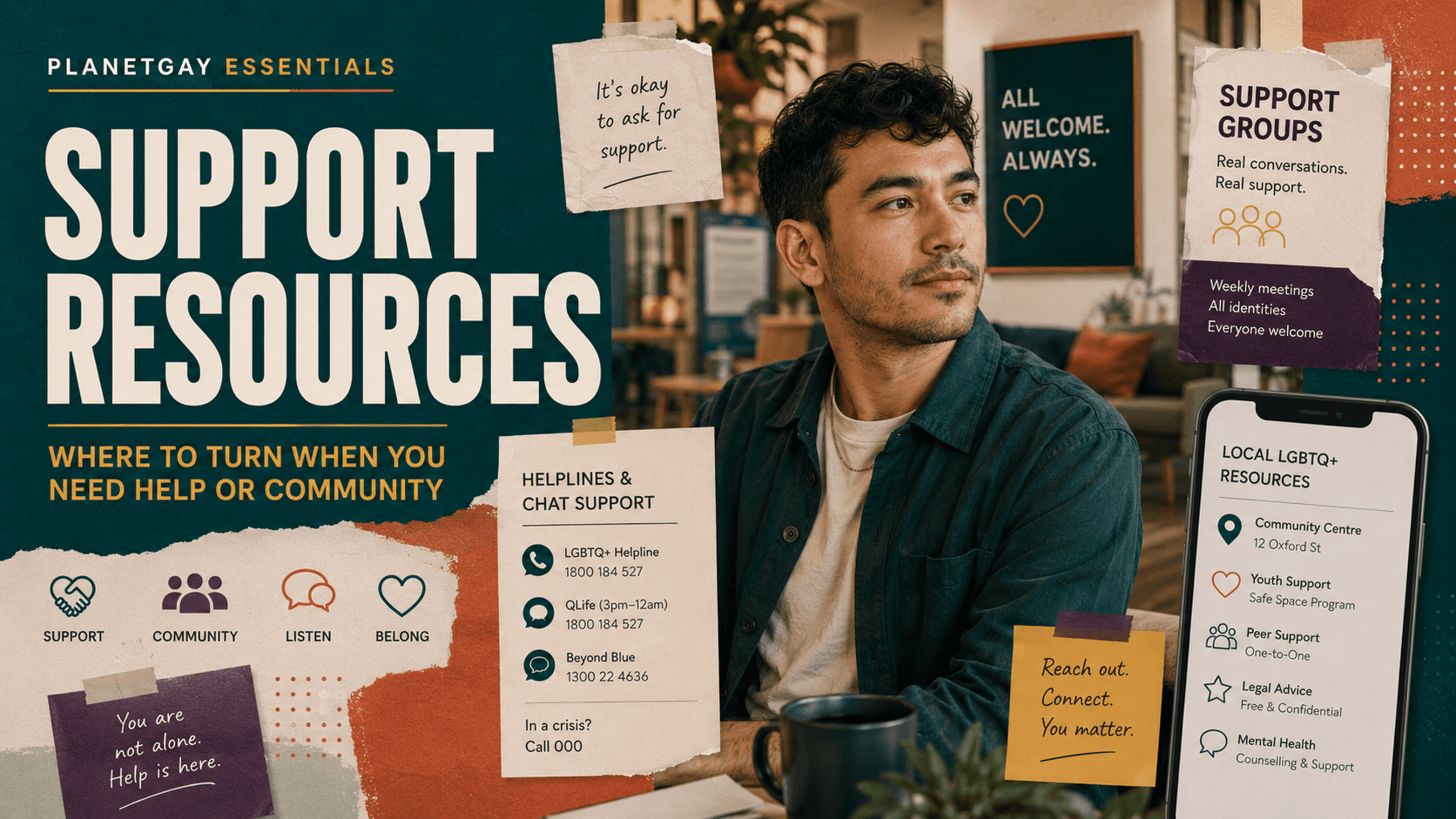
Support resources for LGBTQ+ people cover a wide range of needs — immediate crisis support, mental health access, community connection, legal advice, family support, and help accessing services. The first step is identifying which category fits what you are looking for, because the right resource for an immediate crisis is different from the right resource for ongoing community connection.
Before searching, it helps to ask: Is this urgent, or can it wait? Am I looking for professional support, peer connection, information, or advocacy? Is the need related to my identity specifically, or is it a general need where LGBTQ+-affirming delivery matters? Narrowing this down will make the search faster and more useful.
Crisis and immediate support
If you are in crisis — experiencing thoughts of self-harm, in immediate danger, or facing an emergency — contact emergency services (999 in the UK, 911 in North America, 112 in much of Europe) first. LGBTQ+-specific crisis lines are for support and de-escalation, not emergency response.
**Switchboard LGBT+ (UK):** 0300 330 0630, open daily 10am–10pm. General LGBTQ+ support and crisis line.
**The Trevor Project (US):** 1-866-488-7386. Dedicated to LGBTQ+ youth; also provides online chat. Available around the clock.
**LGBT Foundation (Manchester/UK-wide):** 0345 3 30 30 30. Advice and support across a range of issues.
**Crisis Text Line (UK):** Text SHOUT to 85258 — not LGBTQ+-specific but affirming and available 24 hours.
If you cannot immediately find an LGBTQ+-specific line, most general crisis lines are trained to support LGBTQ+ callers. Do not delay seeking help because you cannot immediately find a specialist line.
Mental health support
LGBTQ+-affirming mental health support takes different forms depending on your location and what is available:
**NHS (UK):** You can self-refer to NHS Talking Therapies (formerly IAPT) in England without a GP referral. Wait times vary. Many NHS services have specific LGBTQ+ provision or affirming practitioners; ask directly when you contact them.
**LGBT Foundation:** Provides counselling and mental health support in the Manchester area and some national services.
**MindOut:** An LGBTQ+ mental health charity based in Brighton providing online and in-person support across the UK.
**Pink Therapy (directory):** A UK directory of therapists with LGBTQ+ specialist experience — useful for finding private therapists if NHS waiting times are prohibitive.
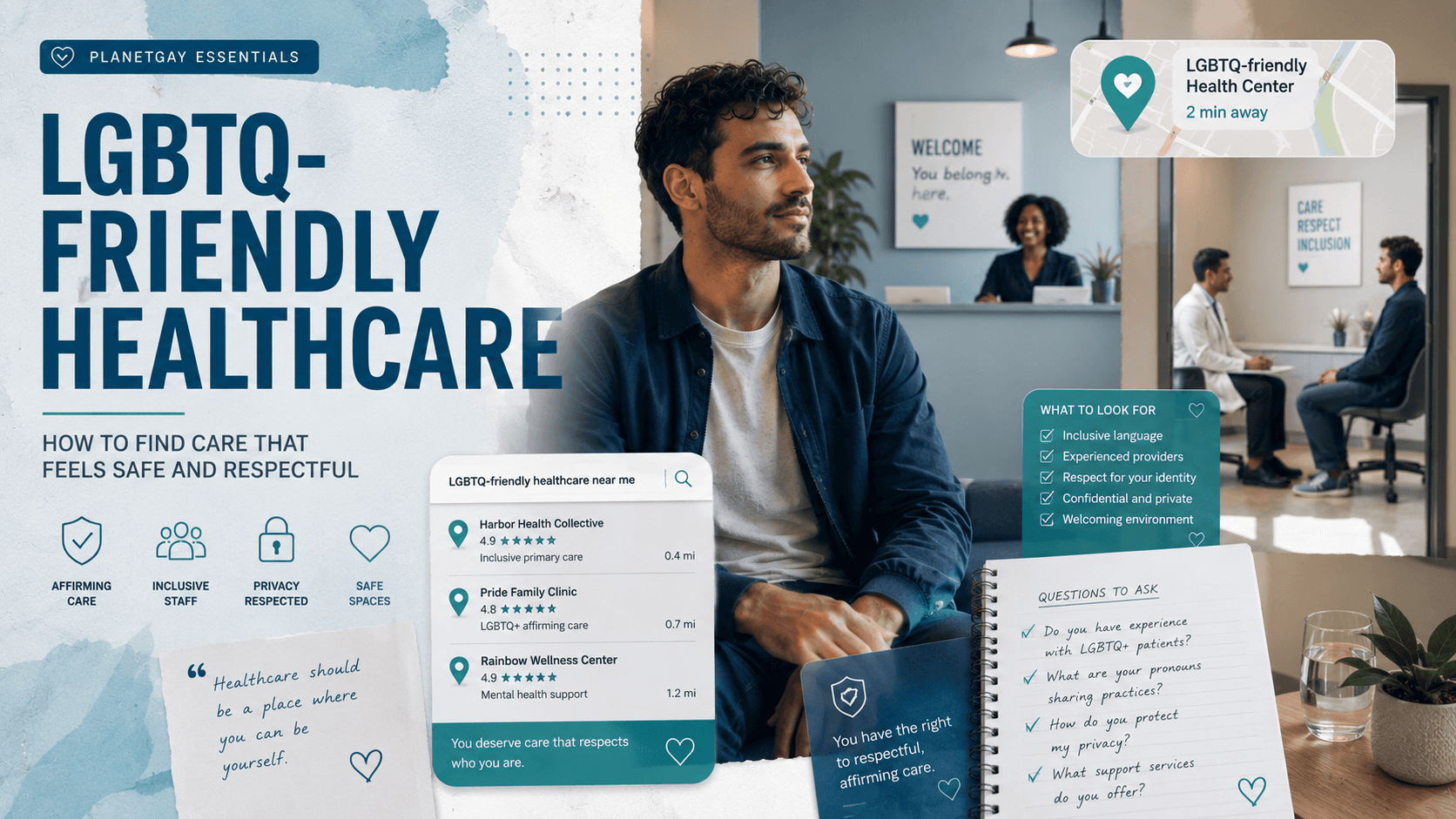
**GLMA (US):** The GLMA (formerly Gay and Lesbian Medical Association) directory helps find LGBTQ+-affirming providers.
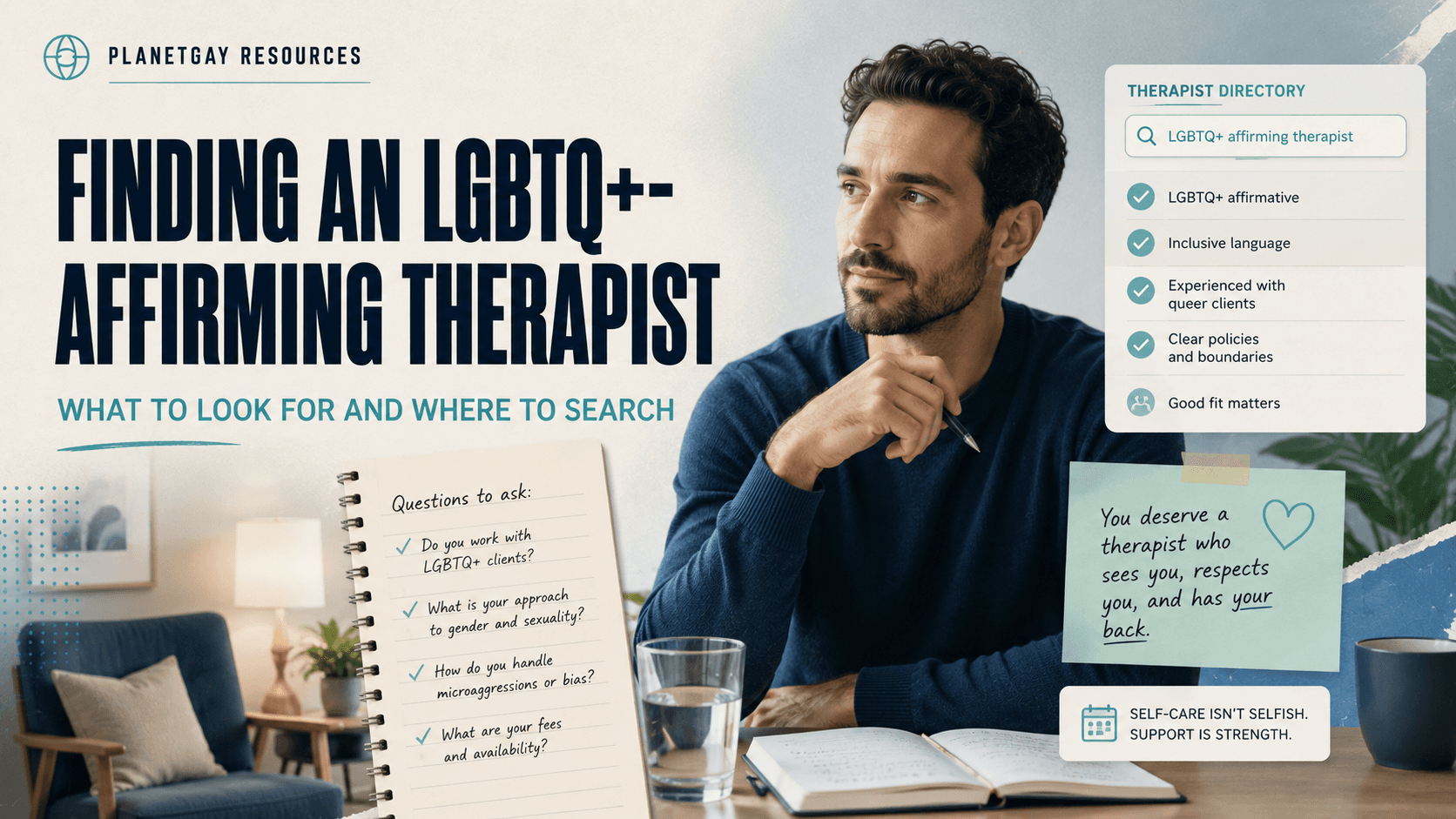
For finding a therapist specifically, the PlanetGay guide to finding an LGBTQ+-affirming therapist has more detailed guidance on what to look for and how to evaluate.
Community centres and peer support
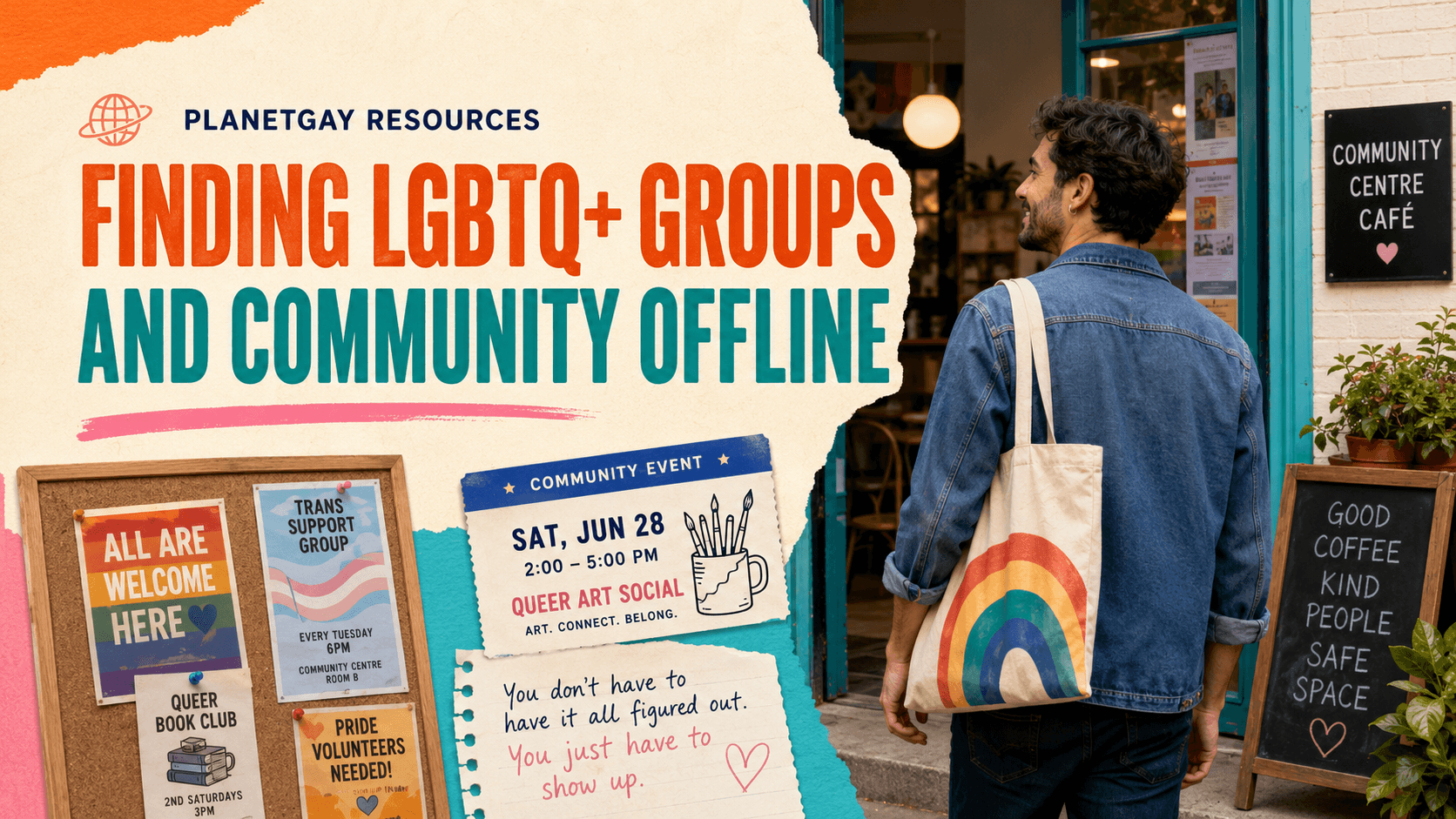
Community centres are a different form of resource from helplines or therapy — they provide social connection, drop-in support, peer programmes and a physical space. Many also have signposting services that can connect you with other resources.
**The 519 (Toronto):** A community centre serving the city's LGBTQ+ community, with programmes across social, mental health and settlement needs.
**London LGBTQ+ Community Centre:** Provides community space, support groups, and access to services.
**QMUNITY (Vancouver):** Community hub with programme space, counselling access and resource signposting.
In cities without a dedicated LGBTQ+ community centre, local LGBTQ+ organisations often serve a similar function. Searching for the name of your city or region with 'LGBTQ organisation' will often surface what is available. National organisations such as ILGA World maintain directories of member organisations by country that can help locate local resources.
Family support resources
Support for LGBTQ+ people dealing with family rejection or strained family relationships, and support for families learning to understand an LGBTQ+ family member, are both available through specific organisations.
**The Family Acceptance Project** (San Francisco State University) provides research-based resources on family acceptance and its impact on LGBTQ+ young people's wellbeing — accessible to both individuals and families.
**PFLAG (US and Canada):** The national organisation for family members, allies and LGBTQ+ people — provides local groups, resources and one-to-one support for navigating family relationships.
**Families and Friends of Lesbians and Gays (FFLAG, UK):** Similar function to PFLAG — provides support for both LGBTQ+ people and their families.
If family rejection is causing an immediate safety risk, housing or crisis services should take priority over family support resources.
How to check whether a resource is genuinely affirming
Not all resources that describe themselves as LGBTQ+-friendly or inclusive are genuinely affirming. Some may have conversion-therapy-adjacent approaches; some may be supportive of gay people but not trans or non-binary people; some may have good intentions but limited actual knowledge.
When evaluating a resource:
**Ask directly.** It is reasonable to ask a service or practitioner: 'Do you have experience working with gay men specifically?' and 'What is your approach to working with LGBTQ+ clients?' Evasive or vague answers are informative.
**Check organisational positions.** Does the organisation have a clear, explicit statement on LGBTQ+ inclusion? Does it have policies on conversion practices? Does it appear in directories maintained by LGBTQ+ organisations?
**Look for specific expertise.** 'I am inclusive' and 'I have experience working with LGBTQ+ clients and understand minority stress' are different things. Specificity is a better signal.
**Trust your instinct.** If an initial interaction with a service makes you feel judged, minimised or like you need to explain basic aspects of your identity, that is information about fit.