Why regular testing matters
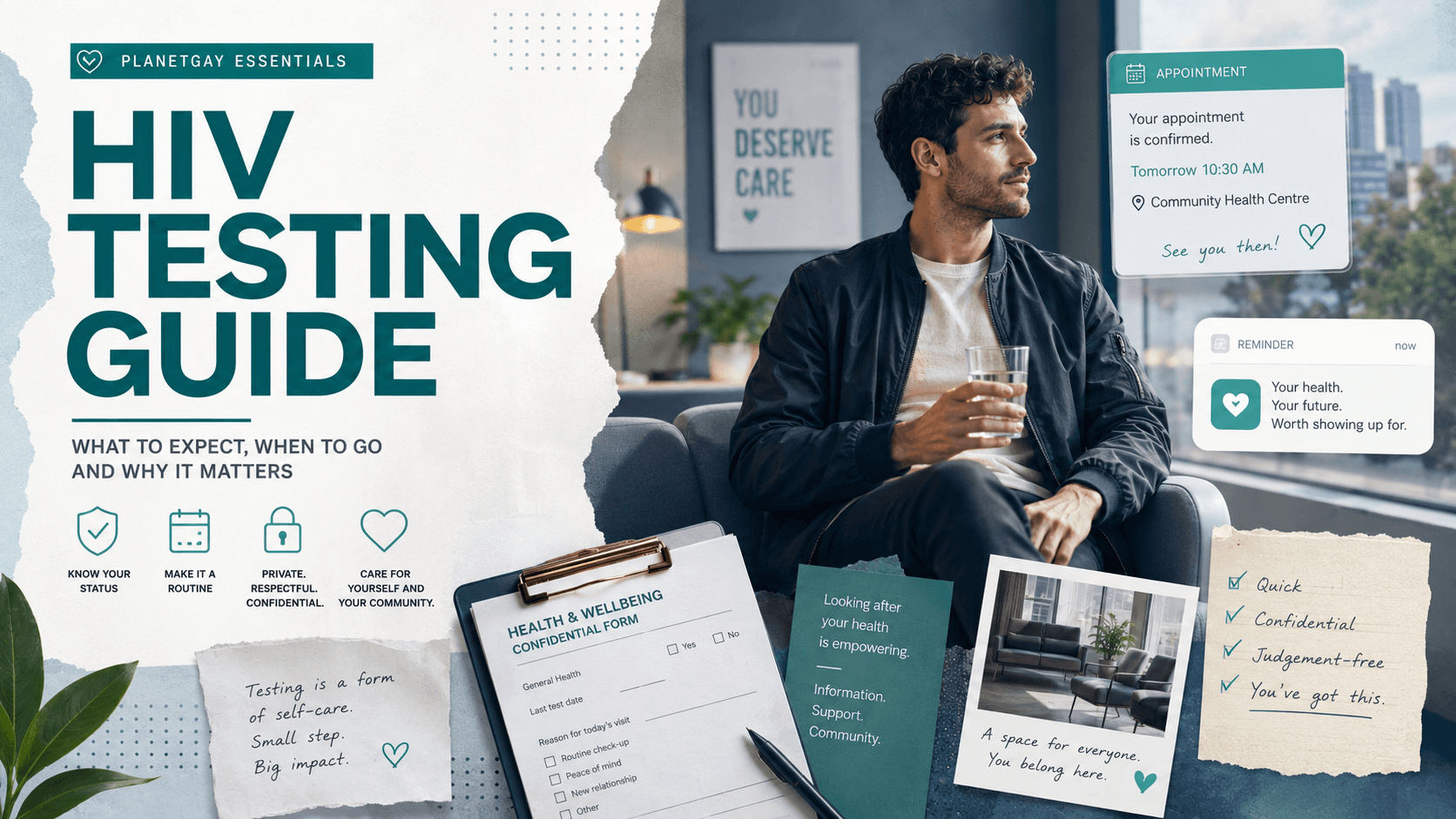
Many sexually transmitted infections (STIs) produce no symptoms, or produce symptoms that are mild, delayed or easily confused with other things. The only reliable way to know your status is testing. For gay and bisexual men who are sexually active, regular testing is a standard part of looking after your health — not an indicator of risk or irresponsibility, and not something that only needs to happen if something seems wrong.
The frequency of testing depends on your sexual activity and number of partners. Most health organisations recommend gay and bisexual men test for HIV and common STIs at least every three to twelve months depending on activity level. Services that provide free or low-cost sexual health testing for gay and bisexual men exist in many countries — your local sexual health clinic, GP or community health service can advise on what is available in your area.
What to test for
A standard sexual health screen for gay and bisexual men typically includes:
**HIV.** Testing is recommended even if you feel well — most people with HIV feel no symptoms for years. The sooner HIV is detected, the more effective treatment is and the lower the risk of transmission.
**Syphilis.** Cases of syphilis have increased significantly in many countries over recent years. It can affect multiple body systems if untreated and is effectively treated with antibiotics when caught early.
**Gonorrhoea and chlamydia.** Both are common, often asymptomatic, and can affect the throat and rectum as well as the genitals — sites that a partial test may not include. Make sure any test includes all relevant sites.
**Hepatitis B and C.** Hepatitis B is vaccine-preventable; hepatitis C can be transmitted sexually and is treatable. Both should be included in a full screen.
**Other STIs** may be relevant depending on your situation — ask at the clinic what else to consider. A good sexual health clinic will ask about your specific practices and advise accordingly.
Prevention tools
Prevention is not a single method — it is a combination of tools that you choose based on your situation.
**Condoms** remain effective against most STIs including HIV when used consistently and correctly. They are widely available and do not require a prescription.
**PrEP (pre-exposure prophylaxis)** is a medication that, when taken as directed, is highly effective at preventing HIV infection. It is not a treatment for existing infection and does not prevent other STIs. PrEP is available by prescription in many countries; some offer it free on national health systems. See the PlanetGay guide to PrEP for full detail.
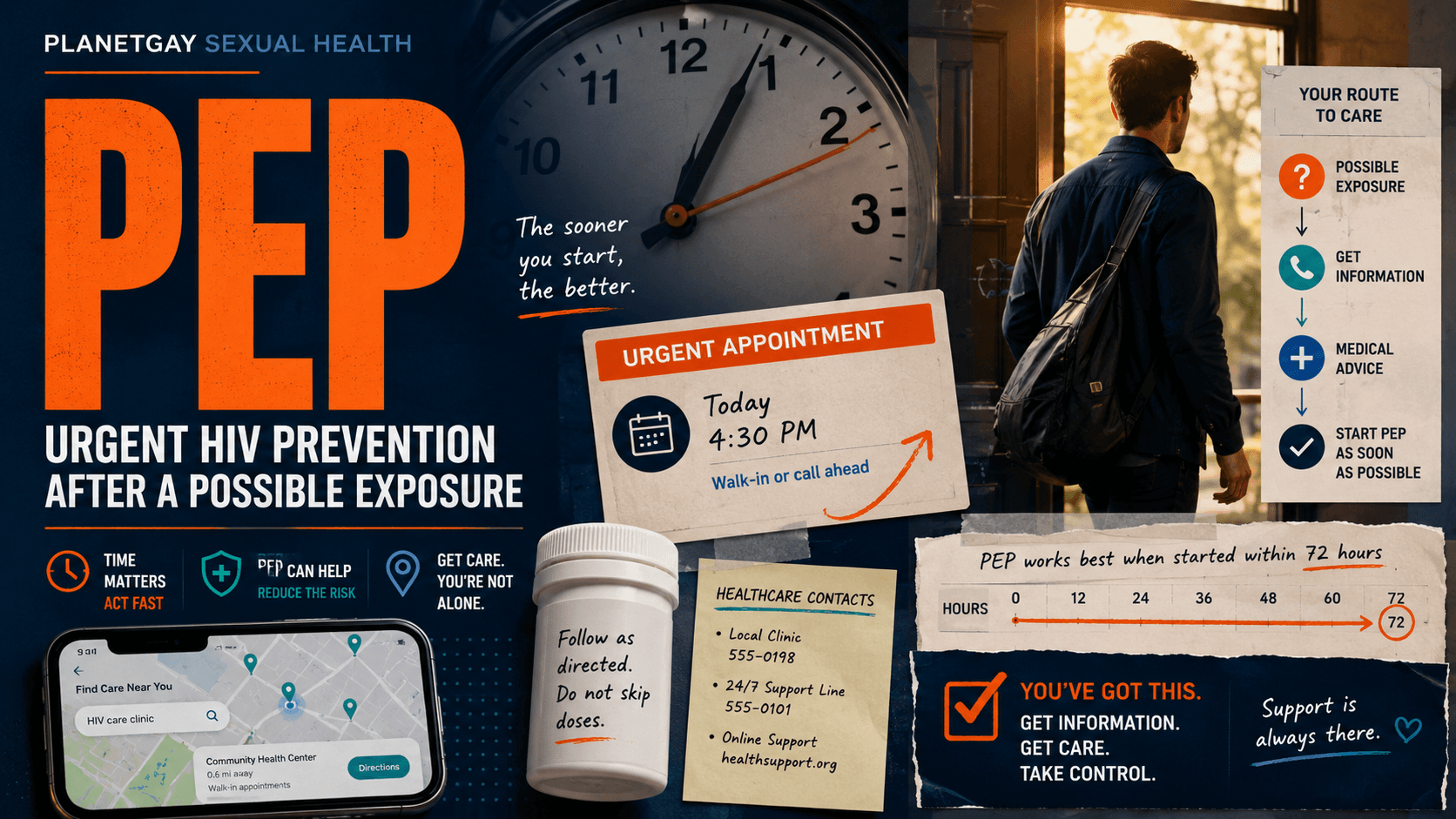
**PEP (post-exposure prophylaxis)** is an emergency medication started within 72 hours of a potential HIV exposure. It is not a substitute for regular prevention — it is for urgent situations. If you think you may have been exposed to HIV, do not wait: contact a sexual health clinic or emergency department immediately.
**Regular testing itself** is a prevention tool: knowing your status allows you to make informed decisions and access treatment early if needed.
Vaccination
Several infections relevant to gay and bisexual men are preventable by vaccination:
**Hepatitis A and B** — both are recommended for gay and bisexual men in most national immunisation guidelines. Hepatitis B is particularly important as it is a risk factor for serious liver disease and has no cure, only management. If you are not vaccinated, speak to your GP or a sexual health clinic.
**HPV (human papillomavirus)** — associated with anal and penile cancers, among others. HPV vaccination programmes have historically varied in whether they include gay and bisexual men; many countries have now extended or expanded coverage. Check what is offered in your country and whether you are eligible.
**Mpox (formerly monkeypox)** — vaccination programmes for mpox were launched in many countries during the 2022 outbreak, targeted in part at gay and bisexual men. Coverage and eligibility vary by country. Check with your local health service.
Consent and communication
Sexual health includes more than testing and prevention — it encompasses the conditions under which sex happens. Consent means affirmative, ongoing agreement from everyone involved. Pressure, coercion, and non-consensual removal of condoms (sometimes called 'stealthing') are forms of sexual harm. None of them fall within the scope of responsible or healthy sexual life.
Communicating openly about testing status, prevention choices and preferences is a normal part of sexual health. Many people find these conversations uncomfortable at first and easier over time — and they are significantly more useful than assuming alignment.
If you have experienced sexual coercion or assault, support is available through Survivors UK (survivors-uk.org) and similar organisations in other countries. You do not have to manage this alone.
Finding the right care
Access to sexual health care that is affirming and competent varies by location. In many countries, dedicated sexual health clinics offer services specifically for gay and bisexual men — including full STI screening at all relevant sites, PrEP advice, vaccination and non-judgmental care. These are preferable to general GP settings where staff may have less experience with gay men's health.
If your primary care doctor is not providing appropriate care — if they do not test all relevant sites, if they make you feel judged, or if they lack knowledge about PrEP — you have the option to seek a specialist sexual health clinic instead. Many operate walk-in or online booking without a referral.
If you are in a country where access to LGBTQ+-affirming healthcare is limited or where disclosing your sexuality to healthcare providers carries risks, see the PlanetGay guide to finding LGBTQ+-friendly healthcare globally.