The specific challenge of football travel
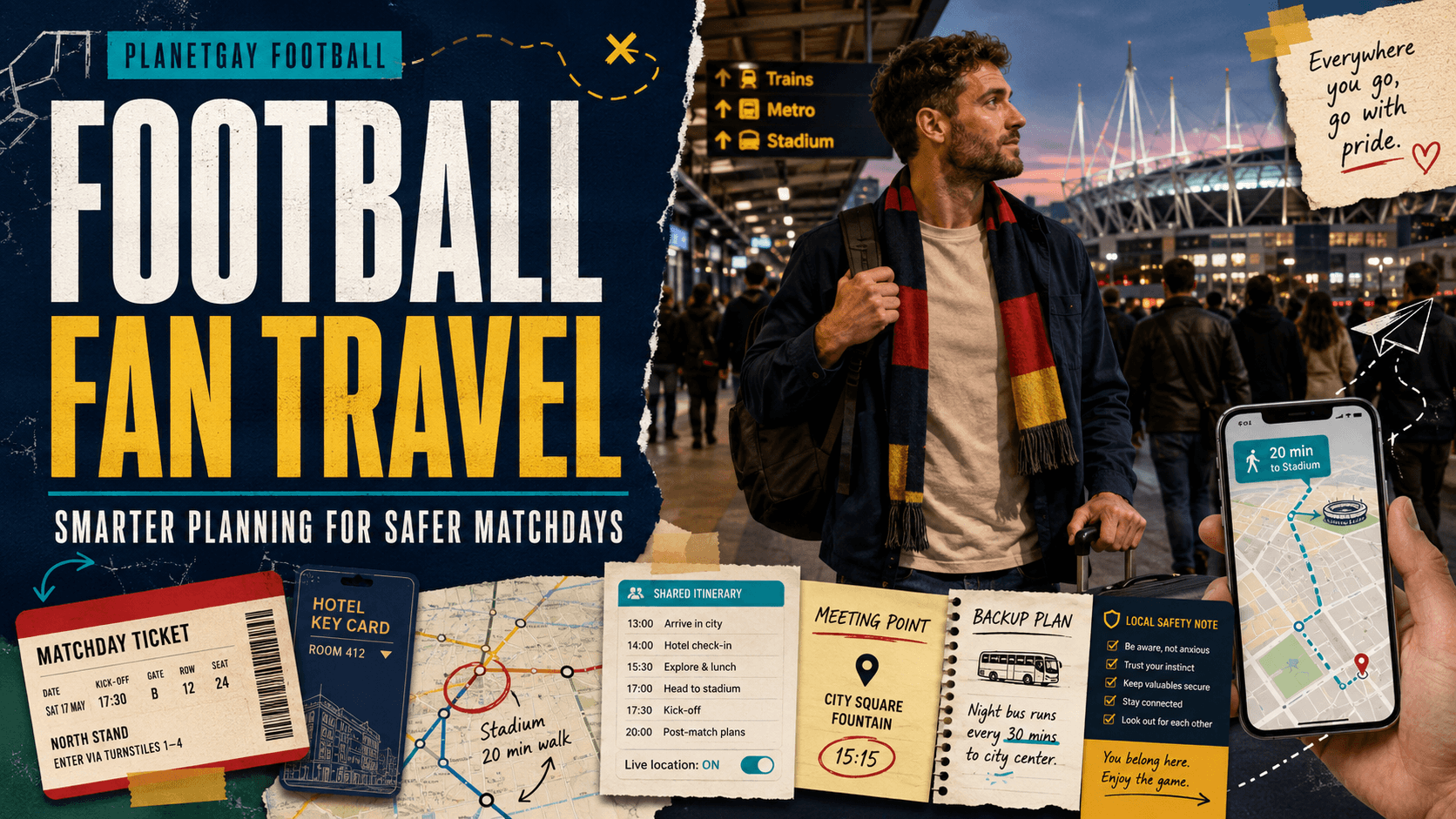
Football travel puts LGBTQ+ fans in situations that ordinary tourism does not. Away matches in domestic football can take you to cities with different social norms from your home ground. International travel for European competitions or national team matches takes you to countries with very different legal frameworks.
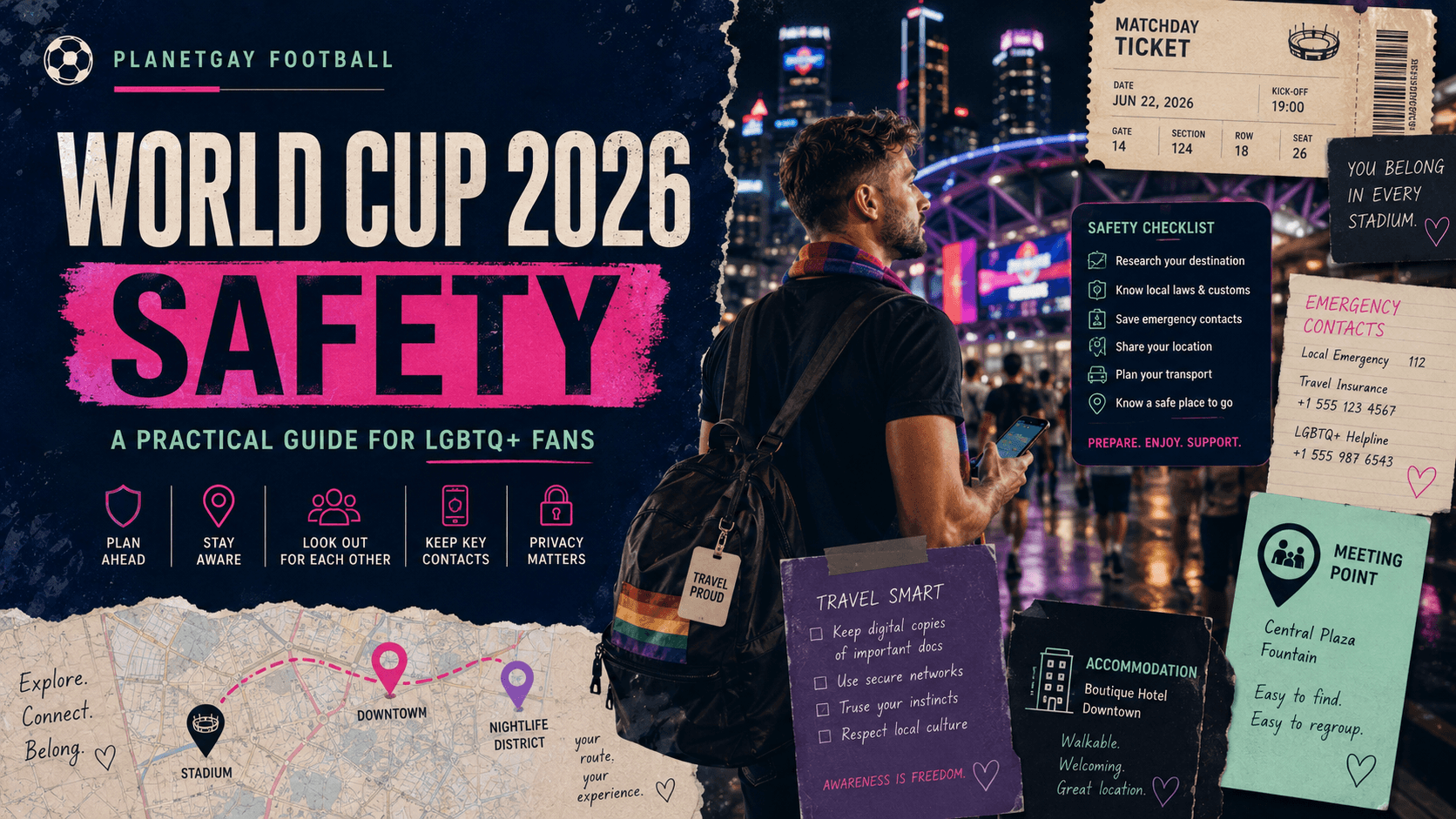
Fan culture itself adds a layer of complexity: large crowds of predominantly male fans, high-energy environments, and the social dynamic of terrace culture all create conditions that are different from ordinary tourist travel. The 2022 Qatar World Cup made the specific challenges of football travel for LGBTQ+ fans widely discussed for the first time at tournament level, but the issues are not limited to major tournaments — they apply to any football travel where you are not in your home environment.
This guide is intended to be evergreen — applicable to any football travel, at any level, anywhere. It is distinct from specific tournament guides for particular events.
Research before you travel
The first step for any football travel as an LGBTQ+ fan is understanding the actual legal and social conditions at your destination.
For international travel, the ILGA World database (database.ilga.org) provides current legal status for same-sex relationships by country. Your home government's travel advisory will often include LGBTQ+-specific notes for many destinations. These are your baseline.
For domestic travel within your home country, state and city level conditions vary. In the UK, England's LGBTQ+-related legal framework applies across England and Wales, but the social experience of LGBTQ+ fans varies significantly between cities and clubs. In the US, different states have very different legal frameworks.
Community sources — LGBTQ+ fan groups, supporter organisations and travel forums — often have the most current practical information, including which grounds and fan areas have specific histories of LGBTQ+ incidents.
Fan organisations and solidarity
LGBTQ+ fan groups exist at most major clubs — they provide community, solidarity and practical knowledge about what to expect at away matches. If you are travelling as an out LGBTQ+ fan, connecting with your club's LGBTQ+ supporters group before travel can provide both social connection and practical advice.
Organisations working on LGBTQ+ inclusion in football:
**Football v Homophobia (FvH):** A UK and international campaign working on homophobia, biphobia and transphobia in football. Provides resources and signposting for LGBTQ+ fans experiencing discrimination.
**Kick It Out:** UK equality in football charity, with a reporting mechanism for discrimination incidents at grounds and in fan environments. The Kick It Out reporting app allows incident reporting directly.
**Rainbow Laces:** The Stonewall/Kick It Out annual campaign, now embedded in the football calendar, with associated fan activities.
At international level, various national LGBTQ+ supporter groups exist (Pride in Football in the UK coordinates many of them). These groups can provide destination-specific advice.
Reporting incidents
If you experience homophobic or discriminatory behaviour at a football ground or in a fan environment:
**At the ground:** Most grounds have a designated safety officer or steward for discrimination incidents. Ask a steward for assistance or report at the stadium control point. In the UK, you can also use the Kick It Out app to report in real time.
**After the event:** Reports can be made to Kick It Out (UK), Football v Homophobia, your national football governing body, or the police where conduct crosses into criminal behaviour.
**For international incidents:** Your country's consular service can assist if you are abroad. The relevant national football association in the country where the incident occurred also has a responsibility to act on reports.
Reporting matters both for your specific situation and for the broader picture — documented incidents create the evidence base that pushes governing bodies to act.