Medical disclaimer
This article is general informational content only. It is not medical advice. All health decisions, including those related to sexual health testing, treatment and prevention, should be made in consultation with a qualified healthcare provider. If you have specific medical concerns, contact a medical professional.
Why this conversation is worth having well
Sexual health care for gay and bisexual men works best when the healthcare provider has accurate information about your sexual practices and risk factors. A doctor who does not know you have sex with men, or who assumes you are in a long-term monogamous relationship when you are not, may not recommend or offer the right screening, testing or prevention options.
Research on healthcare access for gay and bisexual men consistently finds that disclosure of sexual orientation and practices to healthcare providers improves the quality of care received — through more appropriate screening recommendations, more relevant conversations about prevention including PrEP, and more sensitive handling of sexual health concerns.
At the same time, healthcare providers vary in their comfort with and knowledge of gay men's sexual health. Not every GP or family doctor will be equally equipped to provide LGBTQ+-affirming care; knowing how to navigate this and when to seek a more specialist setting is part of accessing the care you need.
What to tell your doctor
The most useful starting point is disclosing that you are a man who has sex with men. You do not need to label your identity — the clinical information that guides care is the nature of your sexual practices, not the identity category you use. 'I have sex with men' is complete clinical information.
Beyond that, being specific is more useful than being vague. How many sexual partners have you had in the past three months? Do you always use condoms? What specific practices do you engage in? Are there specific concerns — symptoms, worries about exposure — that brought you to the appointment?
Many men feel awkward or embarrassed discussing these specifics. Doctors and sexual health clinicians have these conversations routinely and are not shocked by any of this information. Being specific makes the clinical assessment more useful. Vague or evasive answers make it harder to provide appropriate care.
What to ask for
Asking directly for what you need is more reliable than hoping the doctor will offer it.
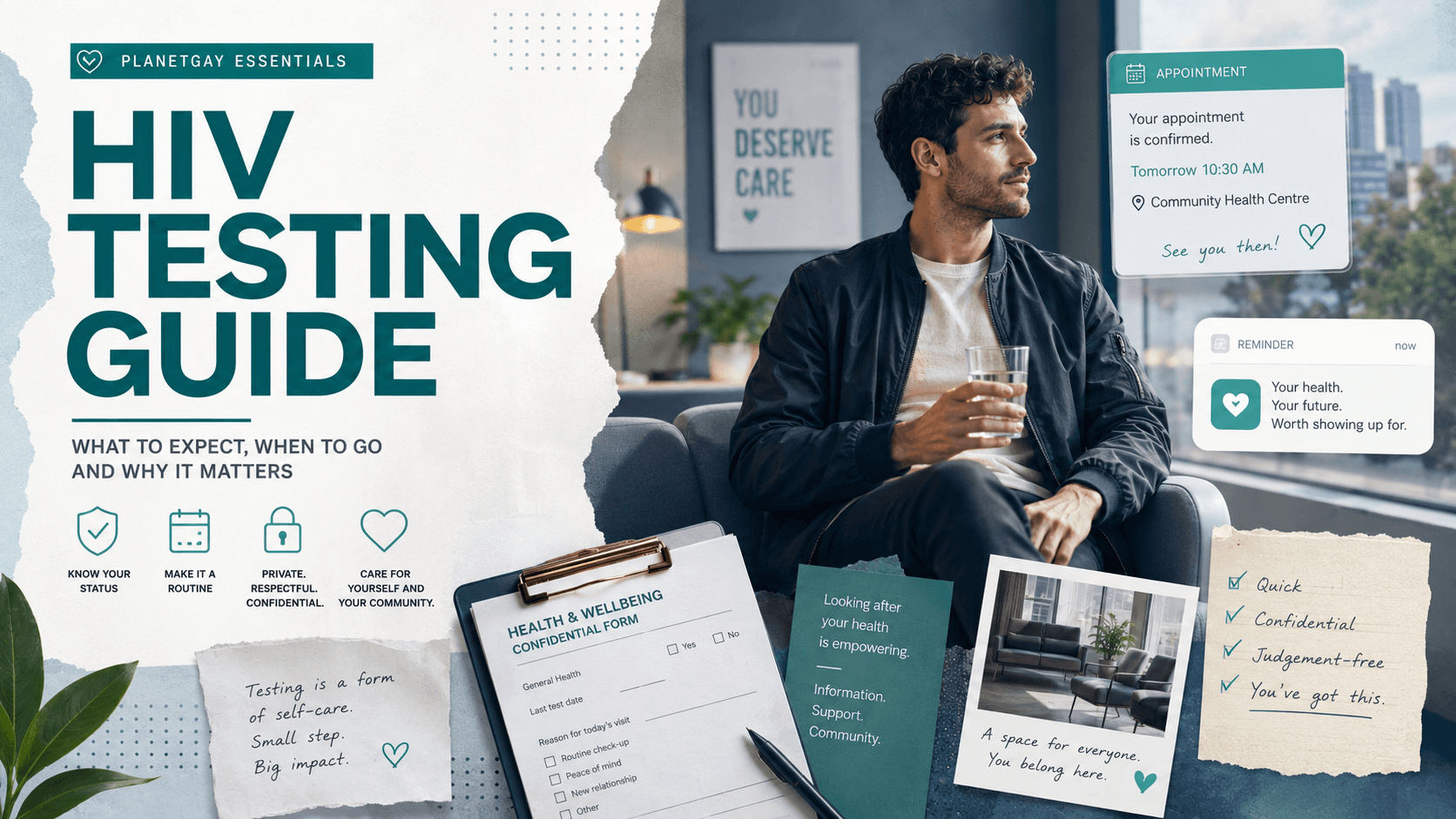
**HIV test:** If you are not regularly testing, ask for one. If your risk level is elevated, discuss testing frequency. The NHS recommends gay and bisexual men test at least annually, and every three months if you have multiple partners or are not using condoms consistently.
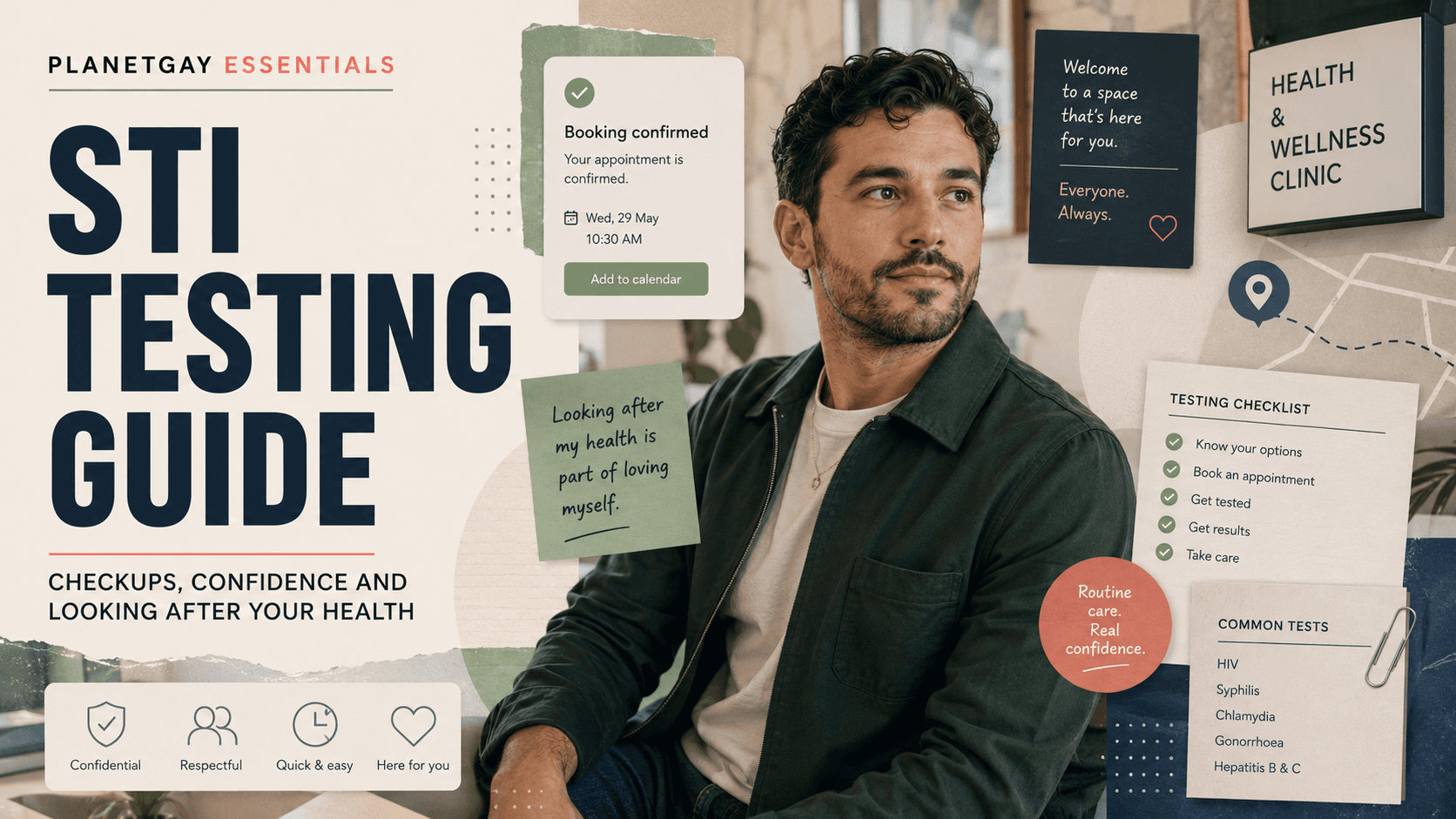
**STI screening:** Ask for a full STI screen that covers the relevant sites — throat, genital, anal — based on your practices. A screen that only covers one site will miss infections at others. Be specific about what practices you engage in so the clinician can advise on appropriate testing sites.
**PrEP:** If you are HIV-negative and sexually active with multiple partners or without consistent condom use, ask about PrEP. PrEP is highly effective at preventing HIV transmission when taken as prescribed. It is available through sexual health clinics in the UK, Canada and many other countries, and is worth discussing explicitly if you have not done so.
**Vaccination:** Ask about HPV vaccination if you have not had it — it is recommended for gay and bisexual men and is available on the NHS and in many other healthcare systems. Hepatitis A and B vaccination is also recommended.
When the interaction is not working
Not every healthcare interaction is straightforward. A GP who seems surprised or uncomfortable with the disclosure that you are gay; a clinician who does not know what a full STI screen for gay men involves; a consultation that moves too quickly to provide good care — these situations occur and are worth addressing.
In the moment: you can ask clarifying questions. 'I would like a screen that includes throat and anal testing' is a specific request that a clinician can act on even if they have not offered it. 'I've heard about PrEP — is that something I should be considering?' introduces the topic if it hasn't been raised.
If the interaction is genuinely not productive — if the clinician's discomfort is affecting the care they provide — a specialist sexual health clinic is a better setting than a GP for this conversation. Sexual health clinics have staff who are specifically trained and experienced in gay men's sexual health; the interaction is typically more efficient and more comfortable. In the UK, you can access a sexual health clinic directly without GP referral. The 'find a sexual health service' tool on the NHS website (111.nhs.uk or the NHS website) locates services in your area.
Finding LGBTQ+-affirming healthcare
If you are looking for a GP or primary care provider who is specifically LGBTQ+-affirming — and in some cities this is possible — local LGBTQ+ community organisations often maintain lists of healthcare providers who have LGBTQ+ competency. In the UK, some GP practices are accredited through the LGBT Foundation or equivalent. In Canada and the US, LGBTQ+ community health centres provide primary care with LGBTQ+ specific competency.
For sexual health specifically, sexual health clinics in cities with significant LGBTQ+ populations typically have specific experience with gay men's health and a non-judgmental approach to LGBTQ+ patients. This is often the most efficient route to comprehensive gay men's sexual health care.