Why this matters
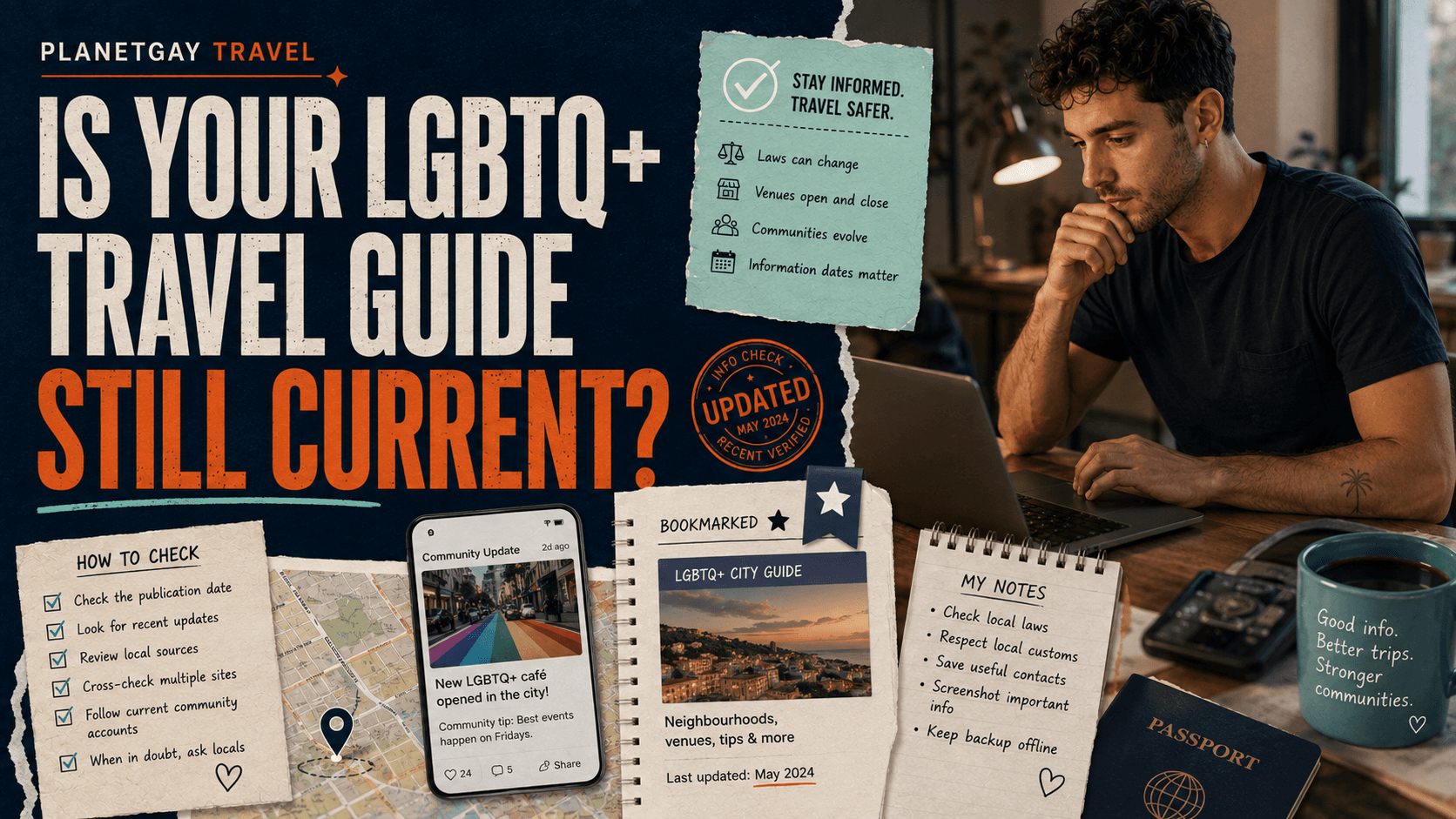
Travel guides about LGBTQ+ conditions — laws, enforcement, social attitudes, specific venues — have a shorter shelf life than most other travel content. Laws change; governments change; enforcement practices shift; specific venues close or change their character. A guide published two years ago may be accurate about the geography and culture of a city but significantly out of date about the legal and social context for LGBTQ+ visitors.
This is particularly important because the stakes of acting on outdated LGBTQ+ travel information can be higher than acting on outdated restaurant recommendations. A legal situation that has changed in the wrong direction — a country that has introduced new restrictions, a city where enforcement has intensified — can affect your safety, not just your experience.
Check the date first
The most basic verification step is finding out when a guide or article was last updated. Look for a 'last updated' date, a publication date, or a review cycle indication. For online guides, the web page metadata or the URL structure sometimes includes date information. For print guides, the edition year is the most recent date, but even a 2024 print edition may contain research from 2022.
If an article or guide does not show any date information, treat it as potentially outdated and verify the key claims independently. The absence of a date is a signal about the quality of the source, not just about the currency of the information.
Verify legal information against official sources
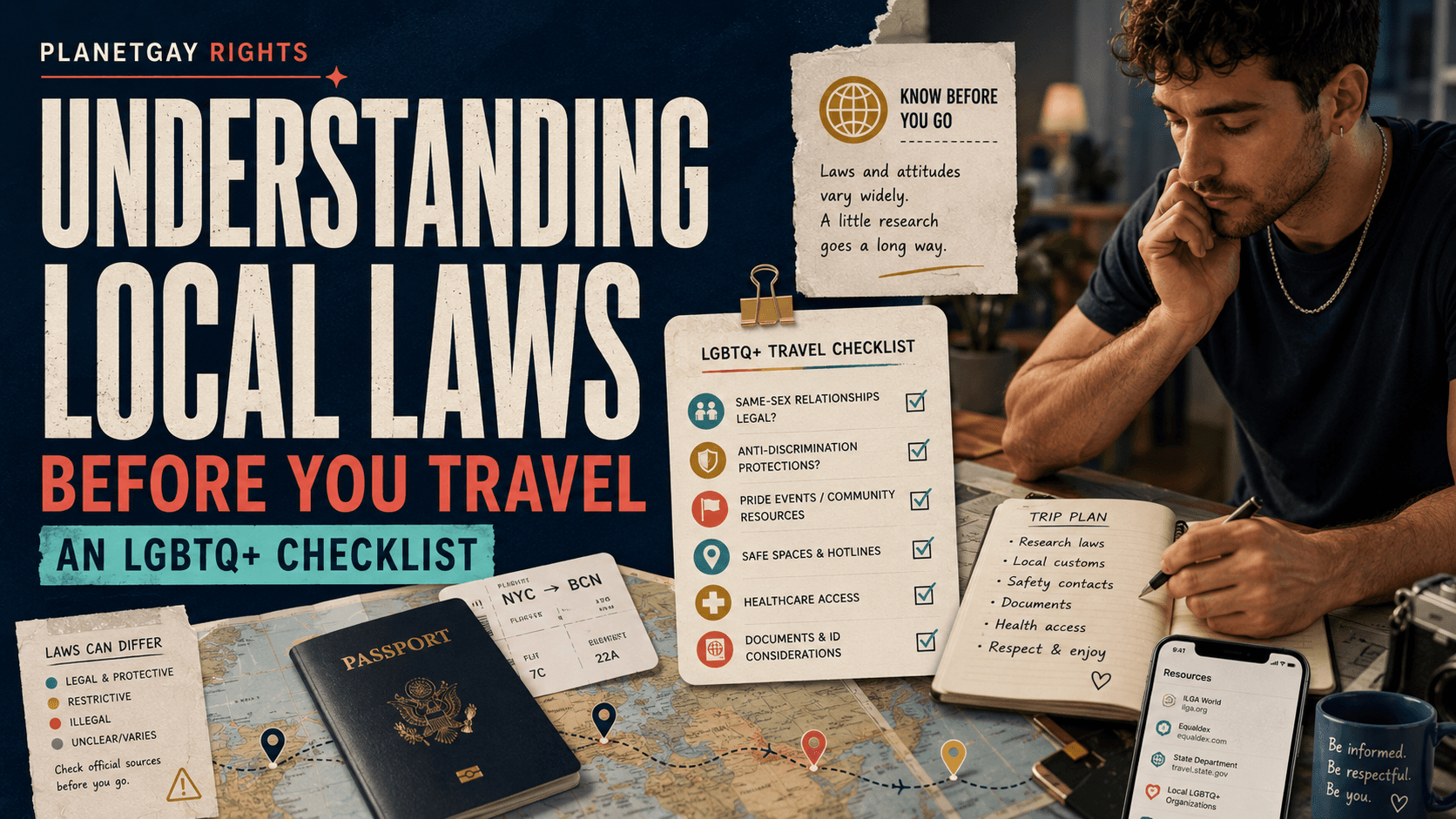
Legal information — whether same-sex relationships are legal, what the penalty is, whether there are anti-discrimination protections — should always be verified against current official sources rather than relying on a travel guide alone.
The three most reliable current sources for LGBTQ+ legal status by country:
**ILGA World database (database.ilga.org):** The standard global reference for legal status of same-sex relationships, updated regularly. Check the date of the specific country entry.
**Your country's official travel advisory:** The UK FCDO, US State Department, Government of Canada and equivalent agencies publish travel advisories that include LGBTQ+-specific notes for many destinations. These are updated when conditions change. Check the advisory for your destination directly, not a cached version.
**Equaldex (equaldex.com):** Tracks a broader range of LGBTQ+ rights and equality measures by country and allows comparison. Check the date of specific country entries.
If a travel guide's legal claims are not consistent with what you find in these sources, trust the official sources rather than the guide.
Venue information is the least stable
Specific venues — bars, clubs, community spaces, health clinics — are the information in travel guides that goes out of date fastest. LGBTQ+ venues close, move, change their character or their hours; health clinics change their services; community spaces relocate. A guide that lists specific venues as a core part of its content without showing recent verification dates should be treated with caution.
Before travelling, verify specific venue information through the venue's own website or social media, through the city's LGBTQ+ community organisation, or through a booking platform. A venue that was central to a city's LGBTQ+ scene when a guide was written may have closed, and a new one may have become more important.
This site's city guides deliberately avoid specific venue listings and focus instead on neighbourhood-level information and community organisations, which are more stable and verifiable than venue-level detail.
A quick checklist before travel
Before any LGBTQ+ travel, use this sequence:
- Check your country's official travel advisory for the destination — verify the LGBTQ+ section is current.
- Check the ILGA World database for the legal status of same-sex relationships.
- Search for recent (within the last 12 months) community reports or news about LGBTQ+ conditions at your specific destination.
- Identify the local LGBTQ+ organisation in your destination and check their website for current information.
- If any of the information you find is more than 12 months old and the destination has any uncertainty, contact the local LGBTQ+ organisation directly.
This takes 20-30 minutes and is far more reliable than relying on any single guide, including this one.